Shelf Stable Meal Pouches: The Pouch Goes Into the Pressure Cooker Too
A shelf stable meal pouch is not filled with cooked food. It is filled, sealed and then cooked, in the pouch, under heat and pressure, so the food keeps on a shelf without a fridge. That means the pouch goes through the same cook as the meal inside it. Plenty of strong, high barrier pouches cannot survive that, and the failures often show up weeks later. Here is how retort pouches work, what they need, and why they are winning shelf space from cans.
Overview
Rice and curry that sits in a pantry for months and tastes like it was made this week. Chili in a pouch you can toss in a backpack. Soup that never sees a refrigerator until it is opened. Shelf stable meals are one of the fastest ways for a food brand to reach customers who are camping, commuting, stocking up or just short on time.
What makes them possible is not a preservative. It is the way they are cooked. And that cook asks more of the package than almost anything else in food packaging.
How Does a Shelf Stable Meal Pouch Work?
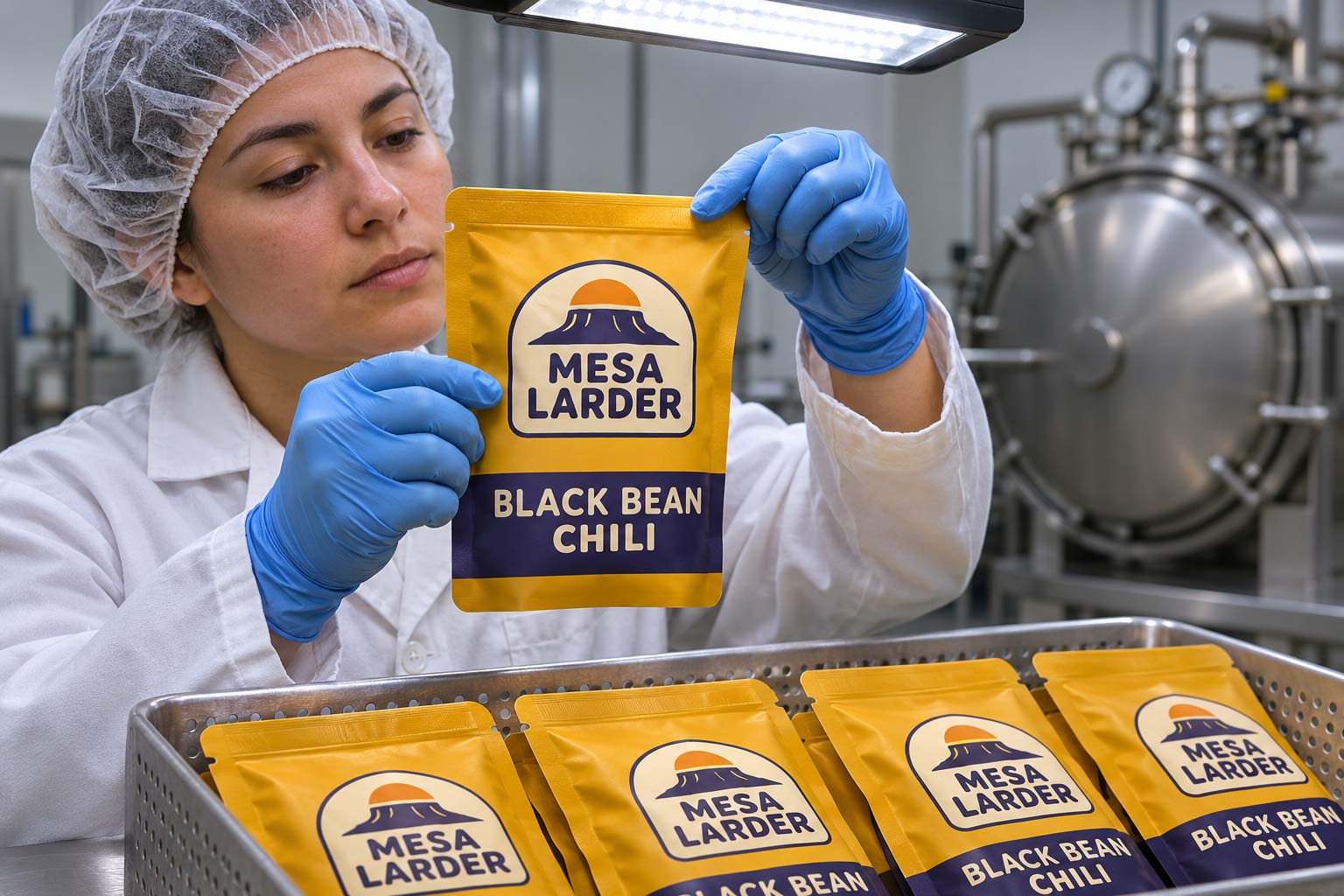
The food is sealed in the pouch first and then cooked, pouch and all, under heat and pressure until it is commercially sterile.
This is called retort processing, and it is the same idea as canning. The meal is filled into the pouch, the air is removed and the pouch is sealed. Then the sealed pouches go into a retort, which is essentially a large industrial pressure cooker. The heat kills the microorganisms that would spoil the food or make people sick, and because the pouch was sealed before the cook, nothing can get back in afterward.
The result is a meal that stays safe at room temperature until it is opened. No fridge, no freezer, no preservatives needed to do the main job.
Why Can't Any Strong Pouch Be Used?
Because the pouch goes through the same cook as the food, and most pouches are not built for it.
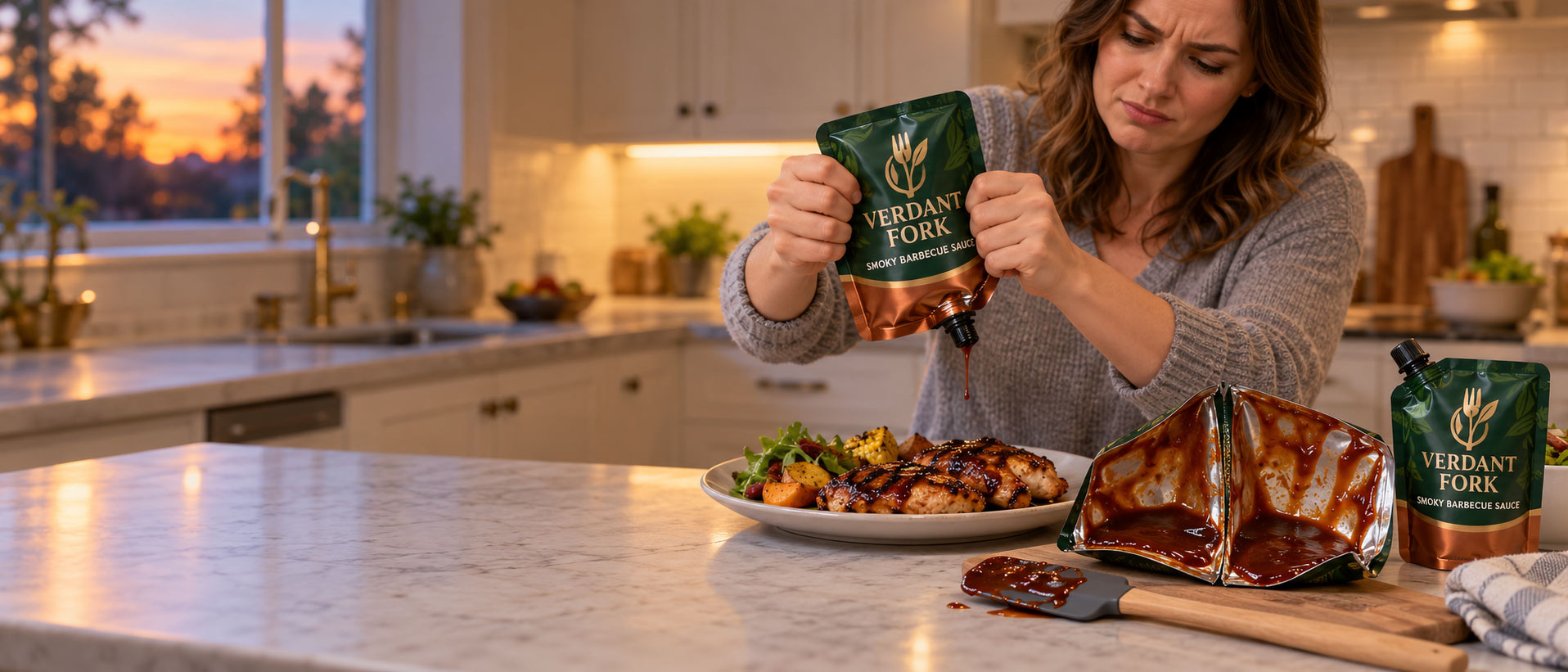
That is the misread worth knowing about. A brand has a tough, high barrier pouch that works beautifully for dry snacks, so it seems like a safe choice for a retorted meal. Then the cook starts. The heat and pressure attack the pouch from both sides: the outside sits in the hot retort, and the inside holds hot, wet, often oily or acidic food. The adhesive that holds the layers together can soften. The inside layer can distort. A seal that was fine at room temperature can creep open.
Sometimes the pouch fails in the retort. Worse, sometimes it looks fine and fails weeks later on the shelf, as blistering or separating layers. We explain that slow failure in our post on pouch delamination. A retort pouch has to be designed for the cook from the very first layer.
What Is a Retort Pouch Made Of?
Several layers, each chosen to survive the cook and do one job afterward.
- A tough outer layer that takes printing and handles the abuse of the retort, shipping and backpacks.
- A barrier layer, often aluminum foil, that keeps oxygen and light out for the whole shelf life.
- A strong middle layer in many structures for puncture resistance.
- A heat resistant inside layer that touches the food and forms the seals, and that will not soften or weaken at retort temperatures.
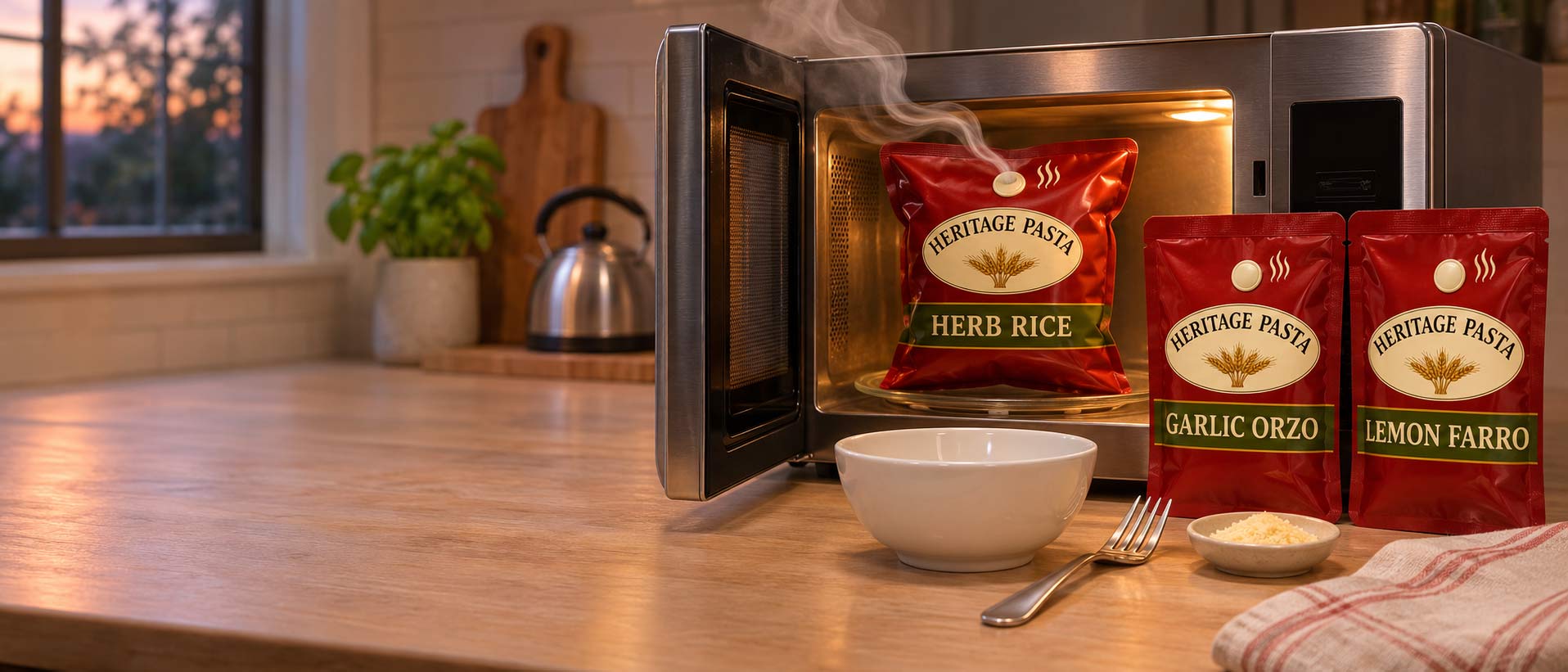
Foil gives the strongest barrier, but it blocks the view and cannot go in a microwave. Clear, non-foil retort structures also exist for brands that want a window or a microwavable meal. Our post on microwave steam vent pouches covers what changes when a pouch is heated in a microwave.
Pouch or Can?
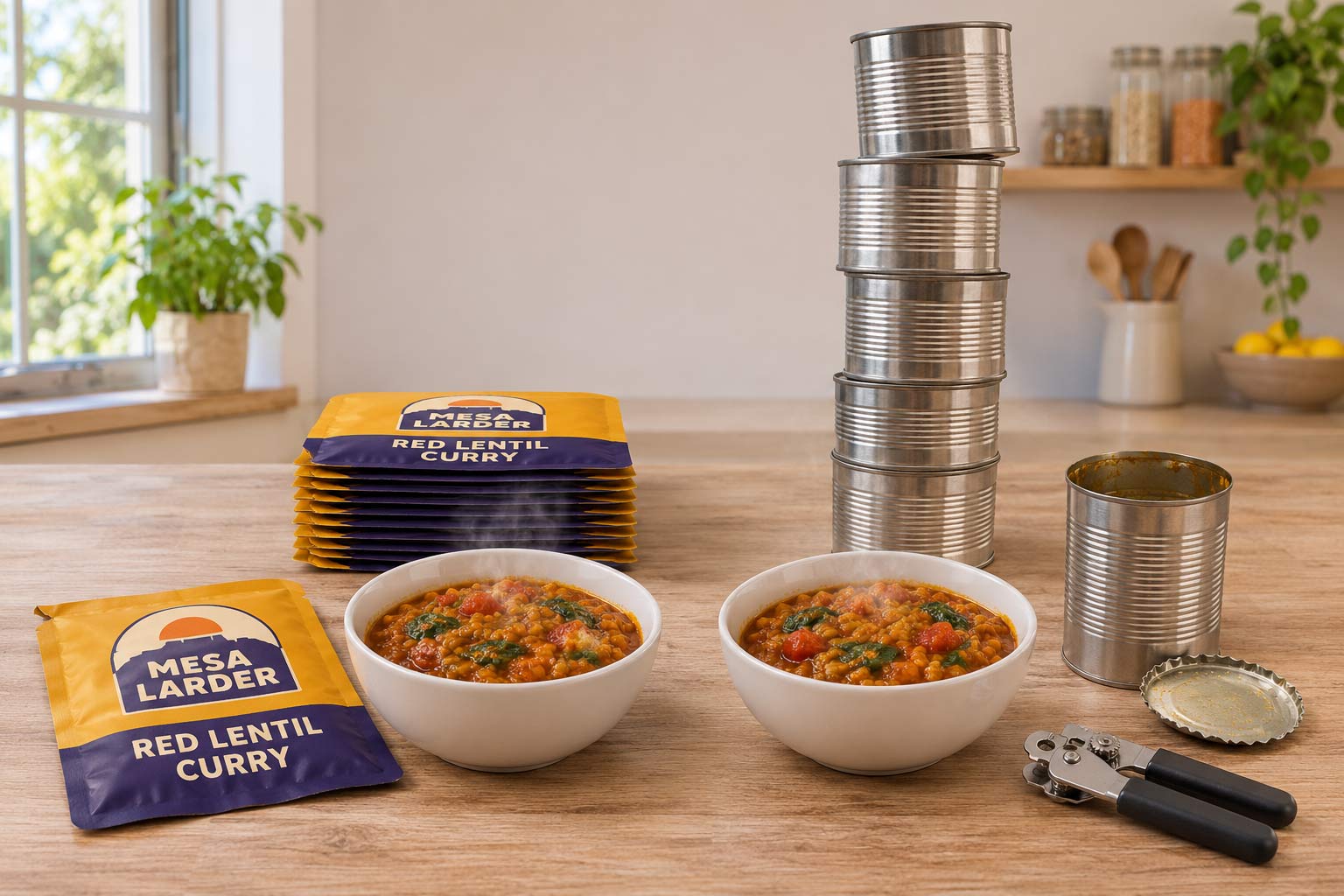
Both make a meal shelf stable. The pouch wins on weight, space and often on taste.
- Lighter and flatter. Empty pouches ship and store flat, and a full pouch weighs far less than a can.
- Faster to cook through. A pouch is thin, so heat reaches the center of the food faster than in a round can. A shorter cook can mean better texture and flavor.
- Easier to open. A tear notch replaces the can opener, which matters on a trail or at a desk.
- More room to sell. The whole face of the pouch is printable, front and back.
A can is more rigid, and some customers trust it out of habit. But for camping meals, single serves and premium ready meals, the pouch has become the natural choice.
What Should I Settle Before Ordering?
Your process, your product and the rules that apply to you.
Know your process. Tell your packaging supplier the retort temperature, time and type of retort before anything else. That decides the structure.
Know your recipe. Acidic, oily and spicy foods are harder on the inside layer. Share the full ingredient list.
Work with a process authority. In the United States, shelf stable low-acid foods in sealed containers, including pouches, are regulated like canned foods. A qualified process authority sets the cook that makes your meal safe, and the pouch has to be suited to that process.
Protect the seal. Food in the seal area is the most common reason a retort seal fails. Keep the fill clean, leave the right headspace and inspect seals on every run.
How Savor Brands Helps
Shelf stable meals start with the process, so that is where we start too.
- We match the structure to your cook. Tell us your product, your retort process and your shelf life target, and we will build the pouch around them instead of forcing a meal into a film meant for snacks.
- We print the whole pouch. Custom printed pouches show off the meal, the heating directions and the brand story. See our custom food packaging page.
- We start small. With digital printing from 500 bags per design, you can test a new meal before you commit to a big run.
- We send samples first, so your process authority and your team can test real pouches with your real food.
A Pouch Built for the Cook
A shelf stable meal pouch is not just a container. It goes into the pressure cooker with the food and comes out holding a meal that keeps for months on a shelf. That only works when every layer, the adhesive and the seals are built for the cook. Settle your process first, share your recipe, work with a process authority and protect the seal, and your meal will taste as good on the trail as it did in your kitchen.
Ready to Create Packaging That Elevates Your Brand?
Let's bring your product to life on the shelf.
Get a Free Quote