Your Customers Think the Pouch Is Empty. There Is Still Sauce in It.
A customer squeezes your sauce pouch until nothing comes out, throws it away, and a good spoonful of sauce goes with it. They decide the pouch did not hold much. The sauce was there all along, stuck in the corners, the shoulders and the bottom where the spout cannot reach. Spouted pouch design decides how much of your product actually makes it onto the plate, and a few changes to shape, spout and size can get most of it out.
Overview
Your sauce tastes great, your pouch looks great, and the reviews are mostly kind. But a few keep saying the same thing: the pouch runs out too fast.
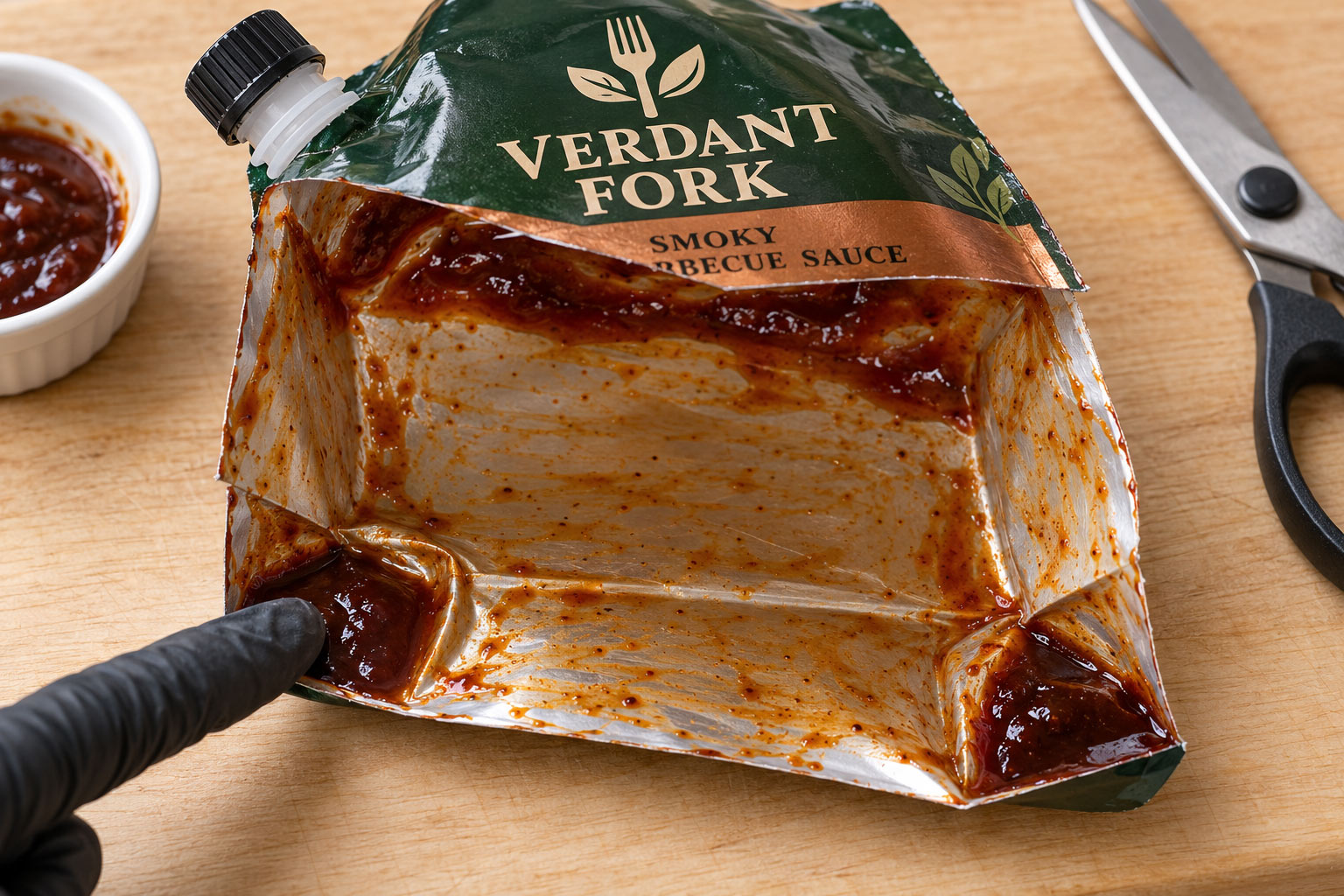
So you cut one open after squeezing it "empty." There is sauce smeared all over the inside, a little pool in each bottom corner, and a thick band along the shoulders. Enough for another meal, maybe two. The customer threw it away without knowing it was there.
Nothing is wrong with your fill. The pouch simply lets go of some of its product and holds onto the rest. How much it gives up is decided by its design, and that is something you can change.
Why Does Sauce Get Stuck in a Spouted Pouch?
Because thick products cling to the film, and some parts of the pouch never fold flat enough to push them out.
A spouted pouch empties by collapsing. As you squeeze, the two walls press together and push the sauce toward the spout. Thin liquids flow out easily. Thick sauces, dressings, nut butters and purees do not. They stick to the film and stay put unless something presses them along.
The trouble is that a pouch does not collapse evenly. The flat middle folds easily, but some areas resist:
- The bottom gusset, the folded base that lets the pouch stand up, keeps its shape and holds a pool of product in each corner.
- The shoulders, the upper corners farthest from the spout, are hard to squeeze from and easy to forget.
- The area around the spout, where the stiff fitting stops the film from folding tight.
Once the middle is flat and the customer feels nothing coming out, they assume the pouch is done. The sauce in those corners stays behind.
Why Does It Matter So Much?
Because the customer judges your product by what comes out, not by what went in.
If a real share of the pouch ends up in the trash, the customer feels like they paid for less than they got. They do not blame the shape of the pouch, they blame your price, your fill or your brand. A pouch that empties well makes the same amount of sauce feel like more, and that shows up in reorders and reviews.
It also matters for anyone packaging a product that customers measure or portion out, like baby food purees, smoothie mixes or cooking sauces, where the last few spoonfuls are part of the meal.
What Makes a Spouted Pouch Empty Better?
Shape, spout position, spout size and the film all play a part, and they work together.
Put the spout where the product flows. A spout in the top corner lets the customer tip the pouch so everything drains toward one point. A spout in the center of the top leaves two shoulders for product to hide in. For thick sauces, a corner spout is usually the better choice.
Shape the pouch toward the spout. Angled or curved shoulders that funnel toward the spout leave fewer dead corners than a plain rectangle. Even a small angle helps guide the last of the product out.
Size the spout for the thickness. A narrow spout is great for a thin hot sauce and frustrating for a thick barbecue sauce or a puree. If customers have to squeeze hard to get anything out, they give up sooner. Our guide to sauce packaging covers matching spouts and caps to different products.
Think about the bottom. A stand-up base is what makes the pouch work on a shelf, but it is also where the most product hides. A shallower gusset, or a pouch sized so the base is not oversized for the fill, leaves less behind.
Pick a film that folds. A softer, more flexible structure collapses more completely than a stiff one. The right balance depends on the barrier your product needs, so it is part of the conversation when you plan your custom food packaging.
How Do You Test It?
Do what your customers do, then measure what is left.
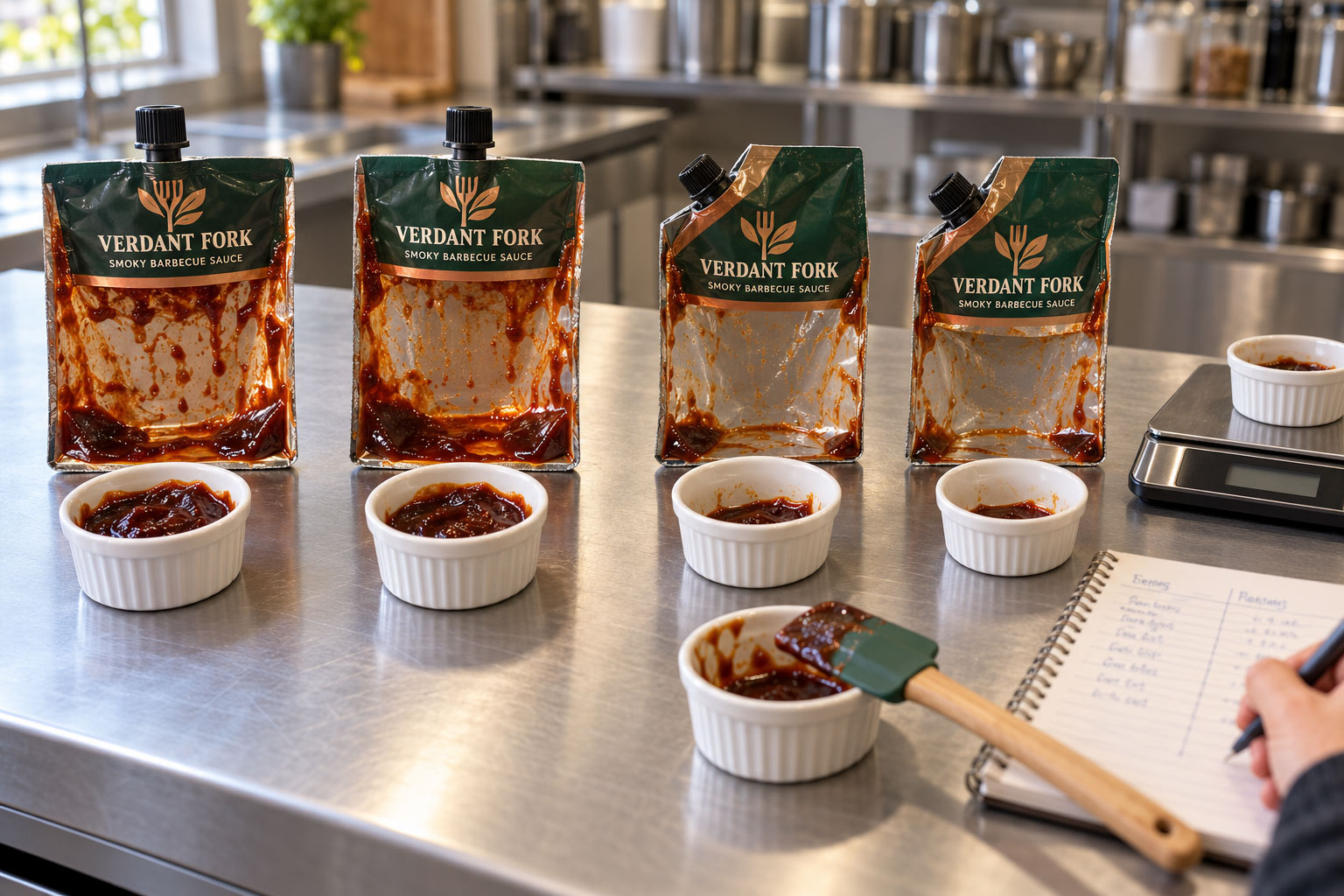
Fill a few pouches with your real product at your real fill weight. Hand them to someone who does not know the product and ask them to use it until they think it is empty. Then weigh the pouch, cut it open, scrape out what is left and weigh that too. Now you know exactly how much product your customers are throwing away.
Try it with a couple of shapes or spout positions if you can. A short run on digital printing makes it practical to test real printed pouches before you commit to thousands.
How Savor Brands Handles This
We would rather plan the pouch around how your product pours than hear about it in your reviews.
- We ask how thick your product is and how customers use it, because that shapes the spout, the spout position and the pouch outline.
- We look at pouch shape, size and gusset together, not just the print.
- We encourage an empty test with your real product before a full run.
- We keep your pouch the same on reorders, so a design that empties well stays that way.
Wrapping It Up: Design for the Last Squeeze
When customers say your pouch runs out too fast, the sauce is often still inside, stuck in the corners, the shoulders and the base. Thick products cling to the film, and the parts of a pouch that do not fold flat hold onto them. Put the spout where the product flows, shape the pouch toward it, size the spout for the thickness, keep the base in proportion and test with real people and real product.
Do that and more of what you made ends up on the plate, which is exactly where you want it. If you are designing a spouted pouch for a sauce, dressing or puree, tell us about your product and we will help you shape it to empty.
Ready to Create Packaging That Elevates Your Brand?
Let's bring your product to life on the shelf.
Get a Free Quote