
Your Matte Pouches Arrived With Shiny Streaks. The Box Polished Them.
The pouches looked perfect on the proof and perfect off the press. Then the cases arrive at the store and every bag has glossy streaks along the edges and corners, as if someone rubbed them with a thumb. Nothing is wrong with the print. A matte finish gets its look from a fine texture on the outside of the bag, and rubbing in transit polishes that texture smooth. Here is how to choose a finish that holds up and pack it so it arrives looking matte.
Overview
You chose matte for a reason. It looks calm, expensive and modern, and on the proof your pouches looked exactly the way you pictured them. Then a store sends a photo. The bags on the shelf have shiny streaks down the edges, glossy patches on the corners and a bright smear across the front where something rubbed against them.
The first worry is usually that the printing failed. It did not. The ink is fine. What changed is the finish on the outside of the bag, and it changed on the way to the store.
This post explains why matte packaging picks up shiny marks, why it shows most on dark designs, and what actually prevents it. Most of the answer is decided before the bags are printed and when the cases are packed.
Why Does a Matte Finish Turn Shiny Where It Is Rubbed?
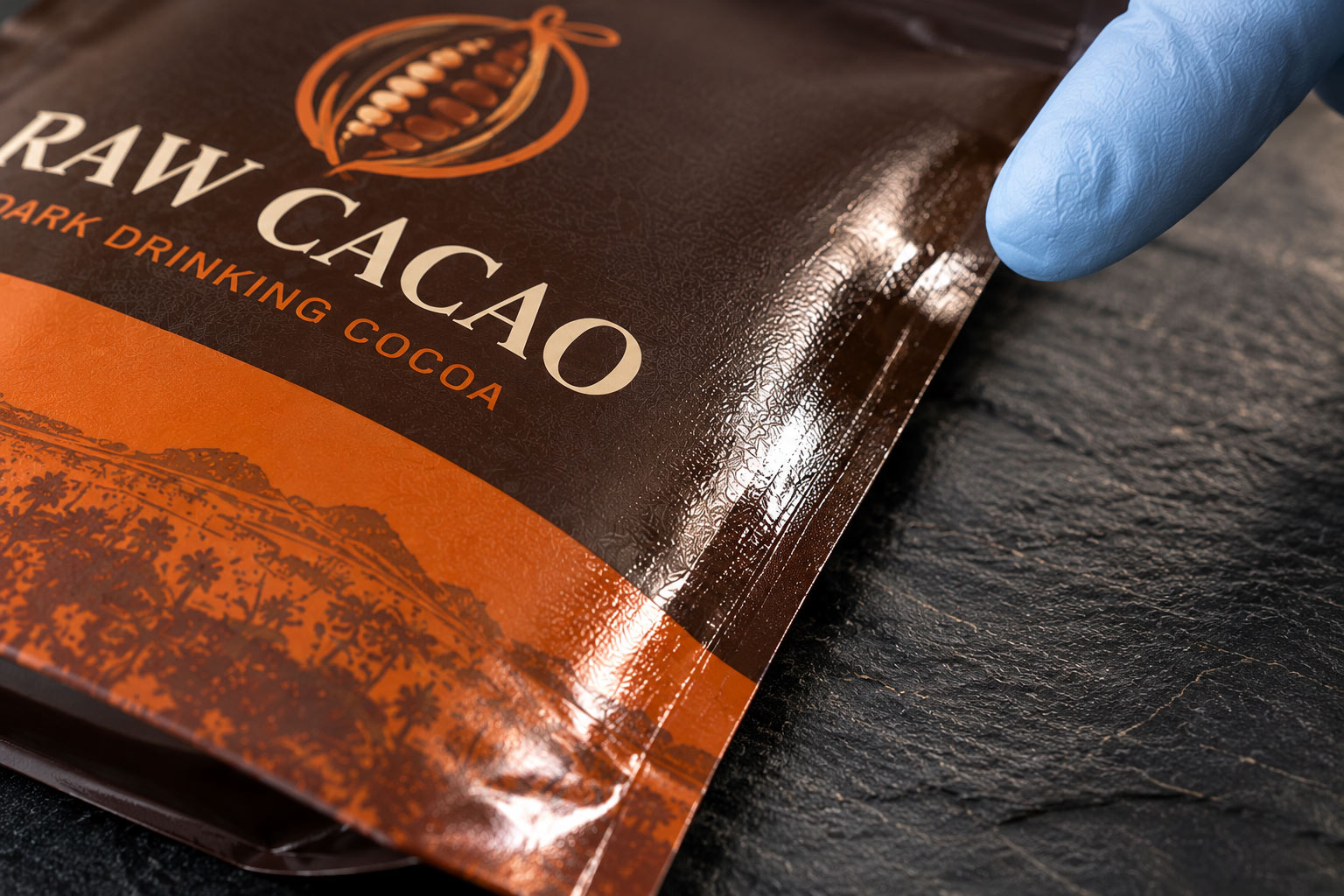
Because a matte surface is rough on a scale you cannot feel, and rubbing smooths it. Gloss and matte are not really different colors. They are different textures. A glossy surface is smooth, so light bounces off it in one direction and you see a shine. A matte surface has a fine, uneven texture, so light scatters in every direction and the surface looks flat and soft.
When something rubs a matte surface over and over, it wears down the tiny high points of that texture. The rubbed spot becomes smoother than the area around it, so it reflects light more like a gloss finish. That is why the mark looks shiny rather than scratched. The matte finish has been polished, a process called burnishing.
On a pouch, the rubbing comes from ordinary shipping. Bags shift against each other in the case with every bump in the truck. Faces slide against the cardboard walls. Corners and gusset edges stick out and take the most contact. By the time the case is opened, the high spots of the bag have been polished hundreds of times.
If the Ink Is Protected, Why Does the Bag Still Mark?
Because on most laminated pouches the ink and the finish live in different places. As we explained in our post on reverse printed packaging, most food pouches have their artwork printed on the inside of the outer film, sealed between layers. That is why the colors themselves do not rub off.
A matte look is usually created on the outside surface, either with a matte coating applied over the film or with a film that has the matte texture built into it. Either way, the part that makes the bag look matte is the part that touches the world. The artwork underneath is perfectly safe, and the shine sits on top of it.
Surface printed bags, like many kraft paper pouches, have a different problem: there the ink itself is on the outside, so rubbing can wear color, not just the finish. Our post on white ink on kraft covers how printing on that kind of surface behaves.
Why Does It Show Most on Dark Bags?
Because a shine is easiest to see against a deep, flat color. Black, navy, forest green, deep brown and dark chocolate designs are exactly where matte looks best, and they are also where a polished streak stands out most. On a white or pale bag the same mark is often hard to spot at all.
The marks also show most where the bag sticks out and takes contact first.
- Edges and corners, which touch the case walls and neighboring bags first.
- Gusset folds, where the film bends and stands proud of the face.
- The widest point of the front panel on a filled pouch, which presses against whatever is in front of it.
- Any spot pressed against a carton flap or divider edge during the trip.
If your brand lives on a dark matte design, plan for this from the start rather than discovering it on the shelf.
How Do You Keep Matte Pouches Looking Matte?
There are two levers: choose a finish built to resist rubbing, and stop the bags from rubbing in the first place. Use both.
Ask for a rub-resistant matte finish. Matte finishes are not all equal. Some coatings and matte films are softer and polish easily, while others are made to resist scuffing. The difference is invisible on a proof and obvious after a truck ride, so ask your supplier which matte options hold up best for your bag and your shipping route, and ask to see a rubbed sample.
Cover the whole surface evenly. A finish applied only to some areas, or unevenly, leaves weaker spots that show wear first. If you want a contrast effect, such as glossy accents on a matte bag, plan it as a deliberate design choice and test how both areas wear.
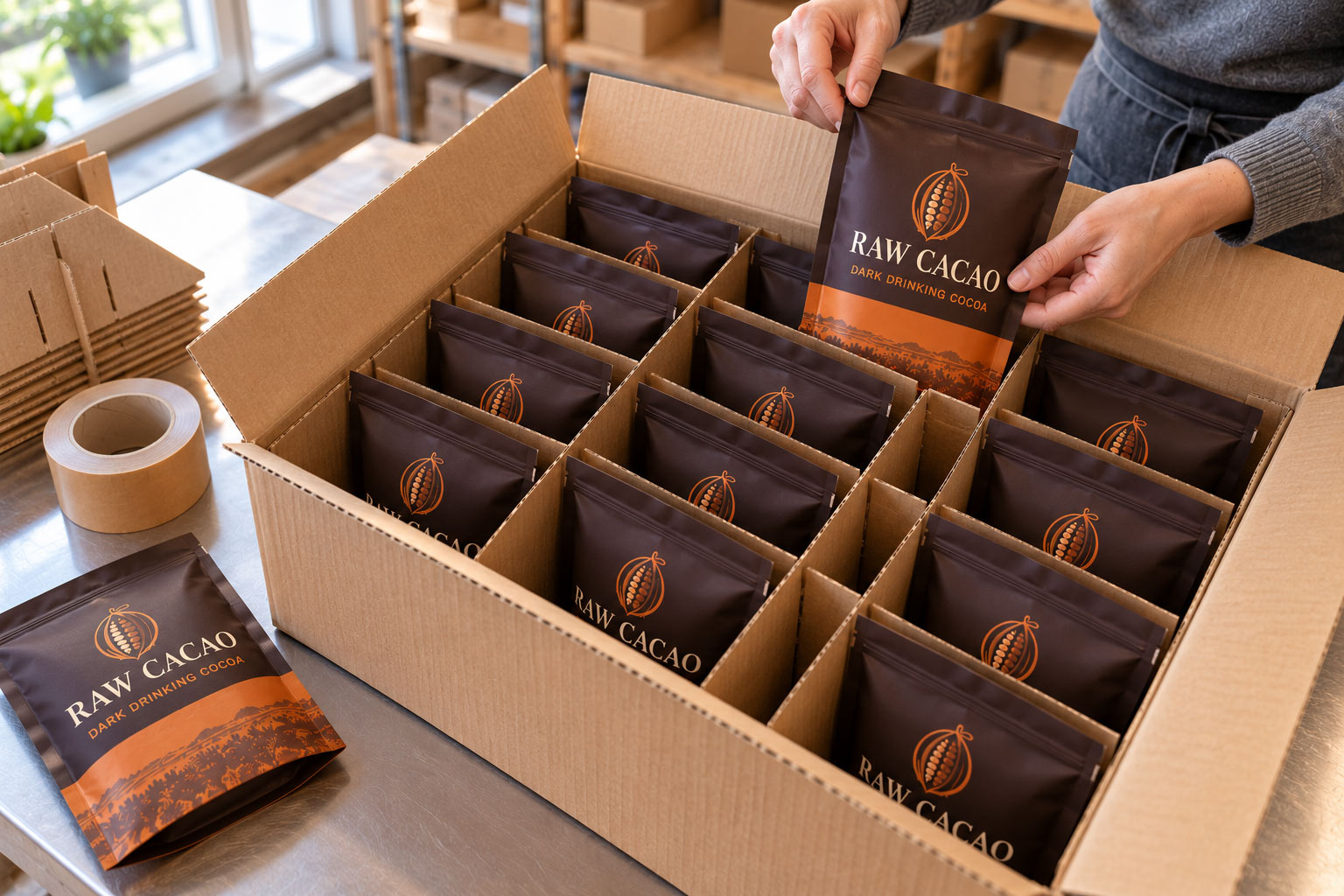
Pack cases tight so bags cannot slide. Movement is what does the polishing. A case where bags fit snugly, standing or lying in an orderly way, takes far less rubbing than one where they slosh around. Right-size the shipping case to the pouch count.
Separate faces with dividers or sleeves for premium lines. A simple divider, a paper interleaf or a light sleeve keeps bag faces from rubbing directly against each other and against corrugated walls. For small, high-value runs, a retail-ready box from our custom boxes line can protect and display the bags at the same time.
Keep the bags from getting hot and squeezed in storage. Heat and pressure soften many coatings and make them easier to mark, so warm warehouses and tall stacks of heavy cases make burnishing worse.
How Can I Test a Matte Finish Before I Order?
Rub it, ship it and look at it under a low light. It takes a few minutes and saves a full run.
- Do a thumb and cloth test. Rub a sample firmly with a clean thumb, then with a dry cloth, twenty or thirty times in one spot. If it turns shiny quickly, it will turn shiny in a case.
- Ship a sample case to yourself. Pack filled bags exactly the way production will, send them on a real route, and open the case like a store would.
- Look under raking light. Hold the bag under a lamp low to one side. Polished spots show up instantly in light that skims across the surface.
- Compare against a gloss sample. Seeing how both finishes look after the same trip makes the decision easier.
How Savor Brands Handles This
We would rather talk about scuffing at the quote than after a store sends photos.
- We ask how your bags ship. Distance, case packing and storage change which finish makes sense.
- We talk through the finish options honestly, including where matte holds up best and where gloss, a different color or a sleeve might serve you better.
- We help you test. Short runs on digital printing make it practical to try a finish on real bags before you commit to volume on rotogravure.
- We keep the finish consistent on reorders, so a pouch that passed your shipping test keeps passing it.
Wrapping It Up: The Shine Came From the Trip
Shiny streaks on matte pouches are not a printing failure. They are the matte texture getting polished smooth by bags rubbing against each other and the case on the way to the store. Choose a rub-resistant matte finish, cover the surface evenly, pack cases so bags cannot slide, separate faces for premium lines, and test with a real shipped case before you order.
Do that and your bags reach the shelf looking the way they did on the proof. If you are planning a matte design, tell us how your product ships and we will help you pick a finish that survives the trip. For another way the journey changes a good bag, see why the truck puts holes in a good barrier.


Ready to Create Packaging That Elevates Your Brand?
Let's bring your product to life on the shelf.
Get a Free Quote