Your Window Is Not Cloudy. It Is Covered in Tiny Raindrops.
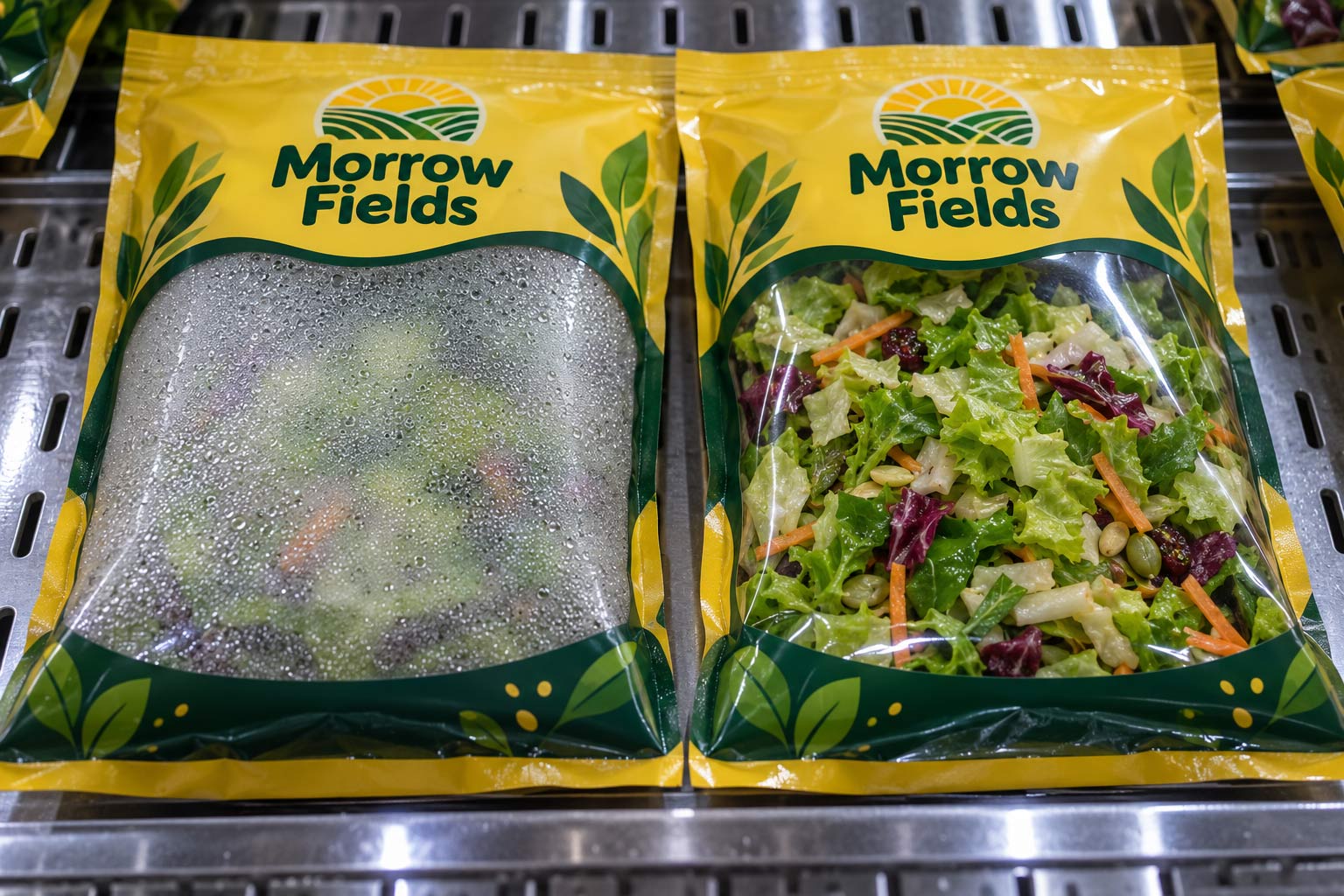
A salad kit looks perfect when it is packed. By the time it sits in the grocery cooler, the clear window has turned gray and the shopper cannot see a single leaf. The film is not cheap and the seal is not leaking. The food is breathing out moisture, the cold film is catching it, and plastic that hates water is turning that moisture into thousands of little droplets that scatter the light.
Overview
The pouch looked great on the packing line. Bright greens through a clean window, the label sharp, everything exactly the way it was designed. Then it spends a day in the grocery cooler and the window turns gray. You can tell there is food in there. You just cannot see what it is.
That gray haze is one of the most common complaints on chilled food, and the first theories are always the same. The film must be cheap. The window material must be wrong. Maybe the seal is letting in damp air. Usually none of that is true.
What is actually on the window is water, and the reason it looks like fog instead of looking like water comes down to how plastic and water get along. They do not, and that is the whole problem.
Where the Water Comes From
Start with the food, because it is the source.
Fresh produce is alive after it is picked. Lettuce, herbs, berries and cut vegetables keep breathing, and breathing releases moisture. Fresh pasta, deli items and prepared meals do not breathe, but they are full of water, and some of it moves into the air inside the pouch. Either way, the air sealed in with your product slowly fills up with moisture.
Now cool that pouch down. Cold air holds less moisture than warm air, so when the package goes into a cooler, the air inside cannot hold all the water it was carrying. The extra water has to go somewhere, and it lands on the coldest surface it can find. That is the inside of the film, right against the cold cooler air.
Every time the pouch warms up a little, on a loading dock, in a shopping cart, in a cooler door that opens all day, and then cools again, the cycle repeats and more water collects.
Plastic Turns Water Into Fog
Here is the fact everything else depends on.
Most food packaging film is a polyolefin, the family that includes polyethylene. Polyolefins repel water. When water lands on them, it does not spread out. It pulls itself into round beads, the same way rain beads on a freshly waxed car.
A window covered in thousands of tiny beads does not look wet. Each little droplet acts like a tiny lens and bends light in a different direction, so the light coming through the window gets scattered every which way. Your eye reads all that scattered light as a white or gray haze. The film is perfectly clear. It is simply wearing a coat of microscopic raindrops.
That is why fog is not a quality problem with the film. A thicker, clearer, more expensive film fogs in exactly the same way, because the issue is the surface, not the material underneath it.
How Anti-Fog Film Fixes It
If the trouble is that the surface makes water bead up, the fix is to change the surface so water lies flat instead. That is exactly what anti-fog film does.
An anti-fog film carries an additive that works its way to the inside surface and makes that surface friendly to water. When moisture condenses on it, the water spreads out into a thin, even layer instead of breaking into beads. A thin, flat layer of water is transparent, so light passes straight through and the shopper sees the product.
The water is still there. You have not stopped the food from releasing moisture, and you would not want to. You have just changed what the water looks like when it lands.
- It goes on the food side. The anti-fog surface has to be the inside face of the window, where the condensation forms.
- It needs the right film structure. The additive has to be able to reach the surface, so it is part of the material decision, not something added at the end.
- It can affect printing. Additives that move to the surface can make it harder for ink or labels to grip, which is a good reason to plan the window and the print together.
- It is not a substitute for good handling. Sealing warm product and then chilling it loads the pouch with extra moisture no matter what the film does.
Why Fog Costs More Than Looks
It is tempting to treat this as cosmetic. It is not.
On chilled food, the window is often the whole sales pitch. Shoppers want to see that the greens are green, the pasta is fresh and the meal looks like the photo. A fogged window hides exactly the freshness you paid to show off, and a shopper who cannot see the product often picks up the one next to it.
There is a practical side too. Droplets that gather on the window can run together and drip back onto the food, leaving wet spots on leaves that should stay crisp. A thin, even layer of moisture behaves better than heavy beads that collect and fall.
How Savor Brands Handles This
Fogging is predictable, which means it can be planned for before the first pouch is printed.
- We ask how cold it lives. Refrigerated, frozen, or room temperature changes everything about condensation, and a product that moves between temperatures fogs the most.
- We ask what is inside. Living produce, fresh pasta and wet prepared foods each release moisture differently, and that shapes the window decision.
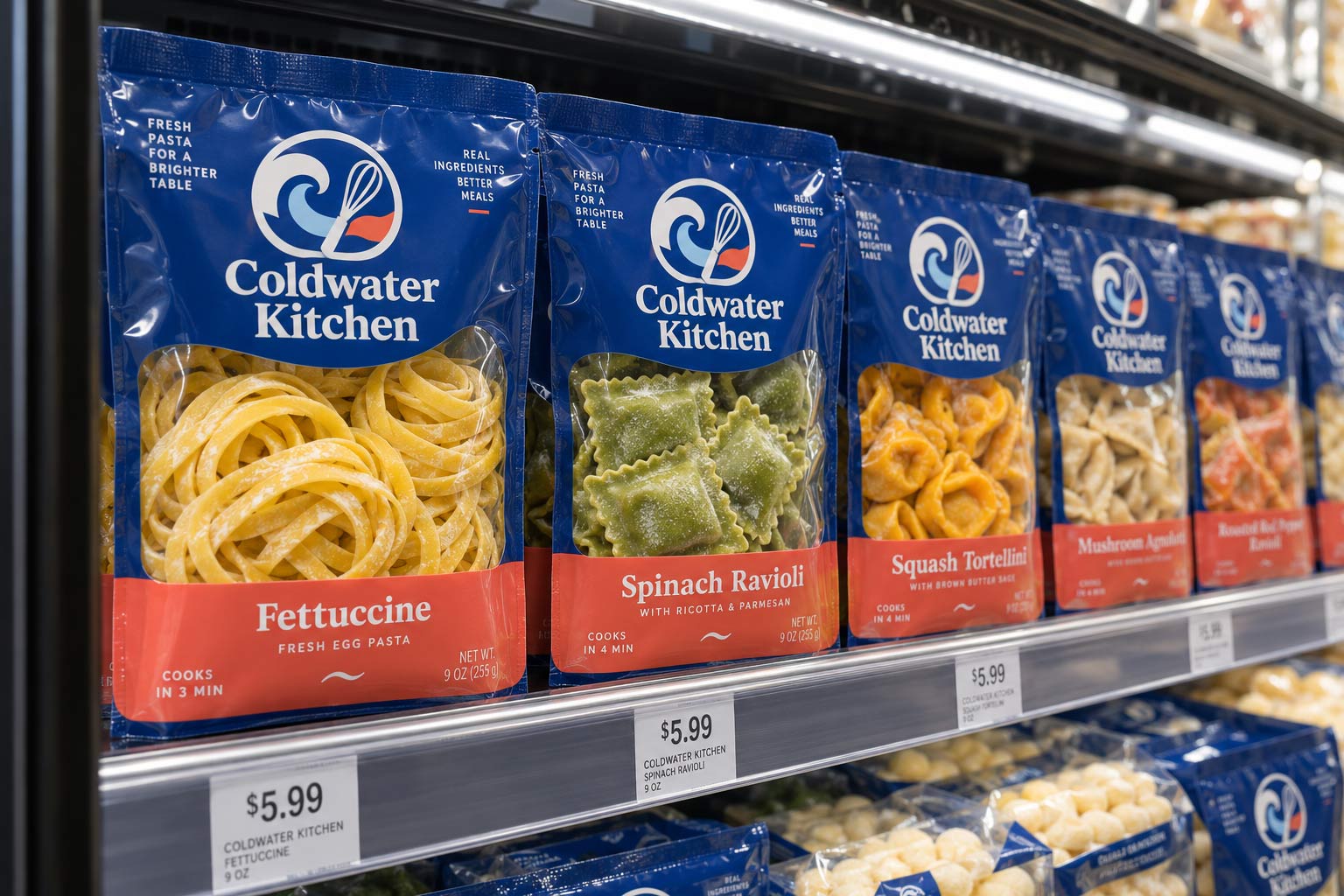
- We specify anti-fog where it matters. For chilled products with a window, an anti-fog inner surface is usually the single biggest improvement in how the package looks on the shelf.
- We plan the window and the print together. Since surface additives can affect ink and labels, the window and the artwork are designed as one decision, not two.
- We talk about packing temperature. Letting product cool before sealing often reduces fog more than any film change, and it costs nothing.
If you are deciding whether a window belongs on your package at all, our post on windows and shelf life covers the light side of that trade.
Why It Looks Like a Film Problem
The misdiagnosis makes sense. The fog is on the film, so the film gets blamed.
But look at what happens when you wipe the inside of a fogged window, or simply warm the pouch in your hands. The fog disappears and the window is perfectly clear again. Cheap film would still look cheap. A failing seal would still be failing. A window that clears up when it warms is telling you the problem was water on the surface all along.
It is the same family of problem as the condensation that softens snacks, just showing up on the window instead of in the food.
Wrapping It Up: Warm It in Your Hand
Here is the simplest test there is. Take a fogged pouch out of the cooler and hold it for a minute. If the window clears as it warms, you are looking at condensation on a water-repelling surface, and the answer is an anti-fog inner film and better handling, not a different supplier.
If your chilled products are disappearing behind gray windows, tell us what you pack and how cold it lives and we will build the window to show it off. Our post on frozen food packaging covers what happens when the moisture freezes instead of fogging.
Ready to Create Packaging That Elevates Your Brand?
Let's bring your product to life on the shelf.
Get a Free Quote