
Frozen Food Packaging: Why Freezer Burn Comes From the Food, Not the Air
Freezing a food does not make the packaging job easier. It makes it different. The cold dries food out from the inside, films that feel fine on the shelf turn brittle and crack in the freezer, and the whole package gets wet again the moment it thaws. This guide covers frozen food packaging in plain language: what freezer burn really is and how to stop it, why the film has to stay flexible in the cold, the seal that has to hold frozen and survive the thaw, and the formats that work in the freezer aisle.
Overview
Freezing a food does not make the packaging job easier. It makes it a different job. A bag that performs perfectly on a dry shelf can let its contents dry out in the freezer, crack at the seal in the cold, and come apart as condensation when it thaws. The freezer is one of the harshest places a package lives, and most frozen food problems trace back to a bag that was never built for it.
This guide covers frozen food packaging in plain language. We will look at what makes the freezer its own challenge, what freezer burn actually is and how to stop it, why the film has to stay flexible when it is cold, the seal that has to survive both the freeze and the thaw, and the formats that work best in the freezer aisle.
Why the Freezer Is Its Own Challenge
Cold does not sit still inside a freezer, and neither does the moisture in the food. A frozen package has to handle a few forces at once that a room-temperature bag never meets.
- The food slowly loses moisture to the dry, cold air inside the bag, which is what dries it out over time.
- Films that are soft and flexible at room temperature stiffen in the cold and can crack if they are flexed or dropped.
- The package goes through temperature swings, from the plant freezer to the truck to the store case to a home freezer, and back toward room temperature on the counter.
- When it thaws, the outside gets wet, so the print and any paper parts have to survive condensation.
Start from the cold itself and these pressures all point the same way: hold the moisture in, keep the film tough, and make the seal survive the whole trip.
Freezer Burn Comes From the Food, Not the Air
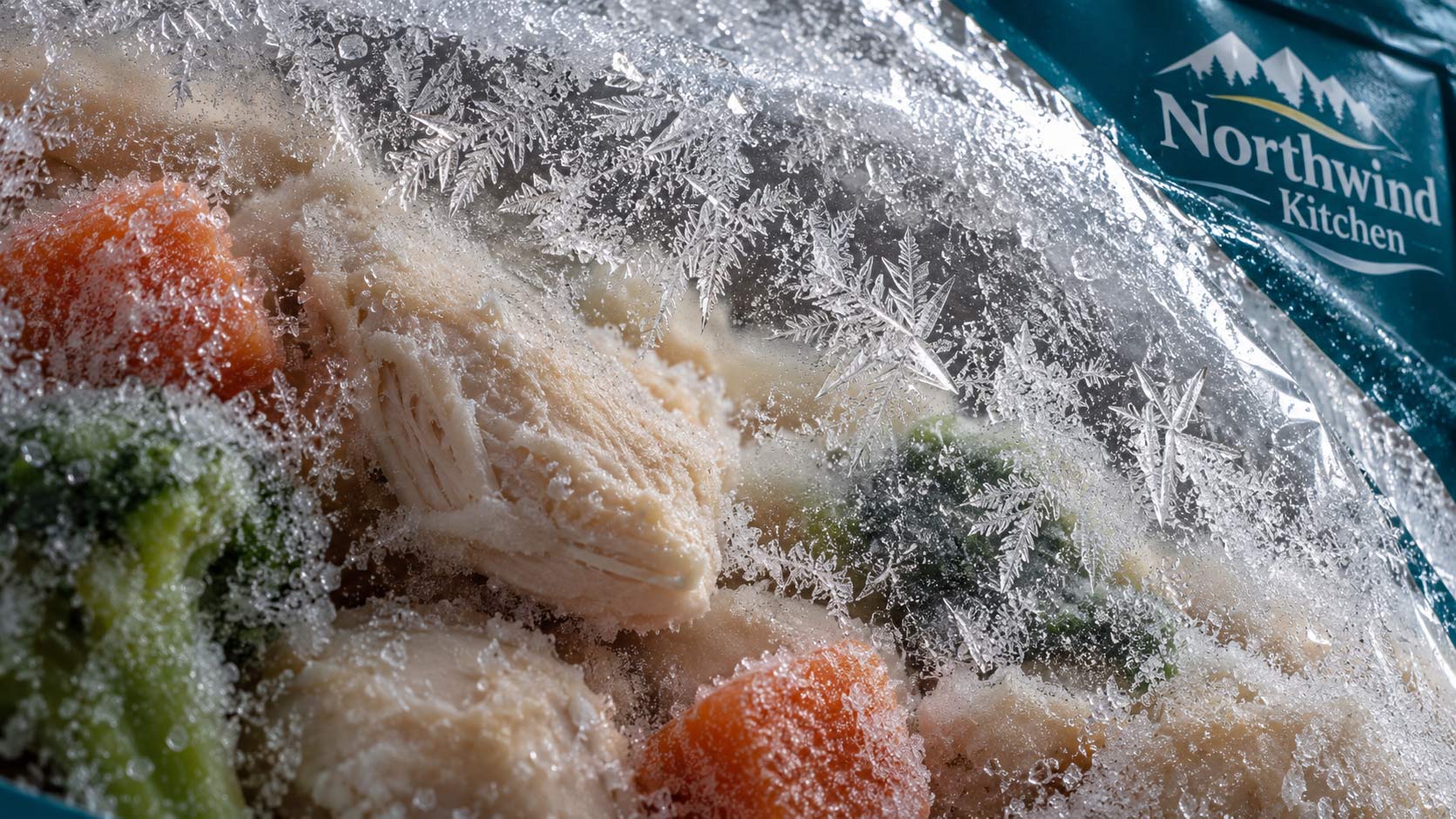
Freezer burn looks like the food got dried out by air leaking in, but that is not really what happens. In the cold, water on the surface of the food turns straight from ice into vapor, drifts off the food, and refreezes as frost on the inside of the bag. The grey, leathery patches on freezer-burned food are the spots that gave up their moisture to the bag wall. The food did not get invaded. It dried itself out inside its own package.
That changes how you fix it. The answer is not just a thicker wall, it is giving that moisture nowhere to go.
- Keep headspace low so there is less empty air for moisture to move into and frost over.
- Use a high moisture-barrier film so what water stays in the food cannot escape through the walls over months.
- Seal tight and complete, because a loose or weak seal lets the slow drying run faster.
Keep the Film Flexible in the Cold
A film has a second job in the freezer that has nothing to do with moisture. It has to stay flexible when it is cold. Many everyday packaging films stiffen as the temperature drops, and a stiff film is a brittle one. Drop a frozen bag, or let it get flexed in a packed freezer case, and a brittle film can crack or open a pinhole that you would never see at room temperature.
This is close cousin to the way repeated flexing opens pinholes in a pouch, just driven by cold instead of motion, and the fix is the same idea: choose the right film for the real conditions. Frozen food needs a film and a sealant layer rated to stay pliable at freezer temperatures, which is exactly the kind of match we build into custom food packaging rather than borrowing a bag meant for a dry, warm shelf.
A Seal That Holds Cold and Survives the Thaw
The seal is where a frozen package is most likely to fail, because it has to do its job across the widest range of conditions. It is formed on a warm filling line, frozen hard for weeks or months, handled cold, and then warmed and wetted as the food thaws.
- The seal has to form cleanly even if the food is wet or has fine particles, since a contaminated seal is a weak seal.
- It has to stay intact at freezer temperatures without getting brittle and splitting.
- The print and any labels have to survive condensation on thaw, so the design does not smear or lift when the package gets wet.
If your product is filled and sealed on a form-fill-seal line and shipped through a cold chain, say so when you order, because it changes the films and the seal design you need. The wrong structure fails in the freezer case, not on your bench.
Reseal for Bags You Open More Than Once
Not all frozen food is used in one go. Frozen vegetables, fruit, and berries are poured out a portion at a time, and the bag goes back in the freezer again and again, so the closure matters as much as the barrier.
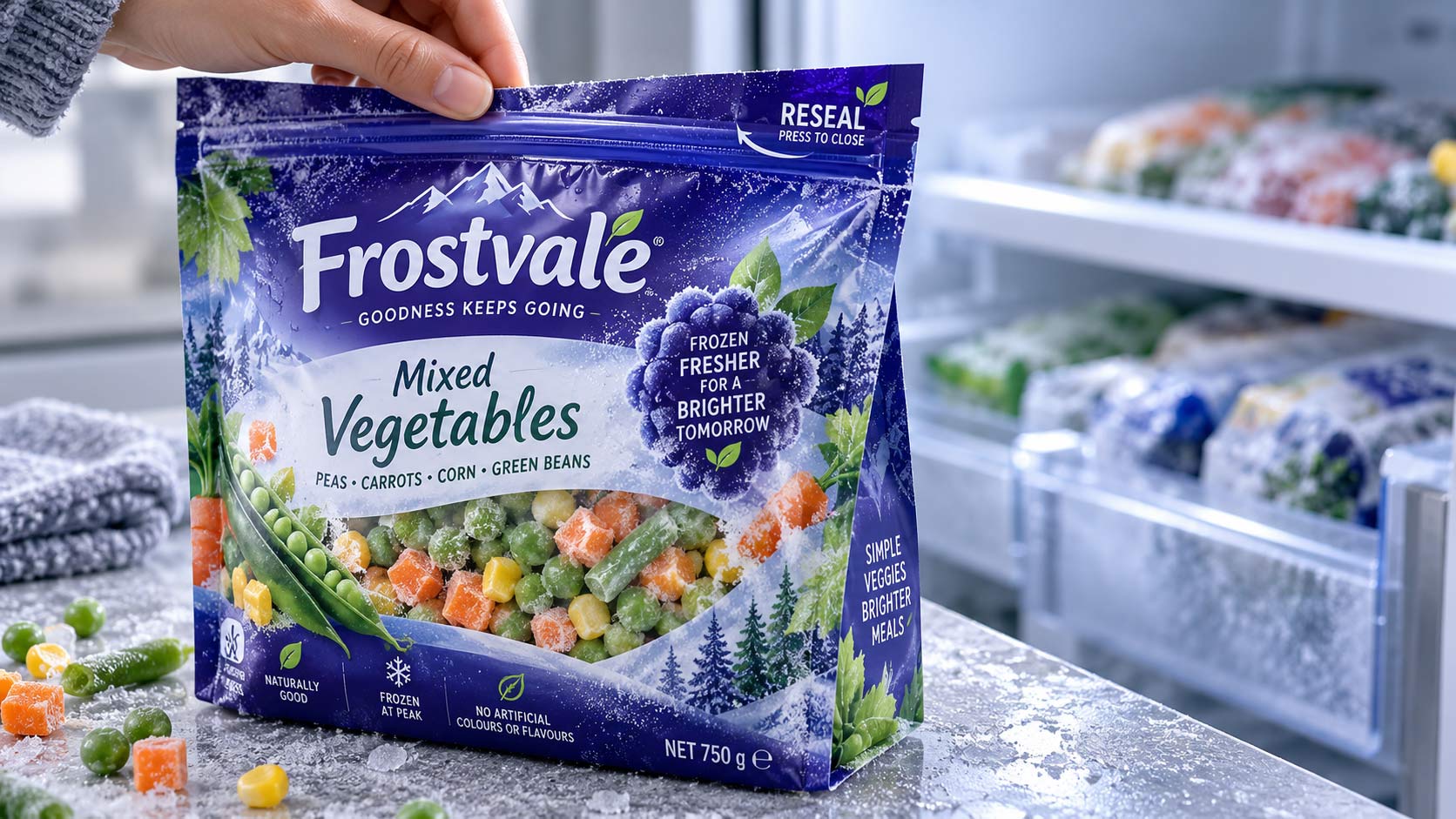
- A press-to-close zipper lets the customer pour what they need and seal the rest, which keeps the remaining food from frosting over faster.
- The closure has to work cold, since a zipper that is stiff or awkward with frozen fingers will not get used.
- A stand-up bag that holds its shape makes it easy to scoop or pour without the contents spilling across the freezer drawer.
Formats and Printing for the Freezer Aisle
The freezer aisle sells on the same shelf logic as the rest of the store, with the added job of surviving the cold, and the format should follow the food.
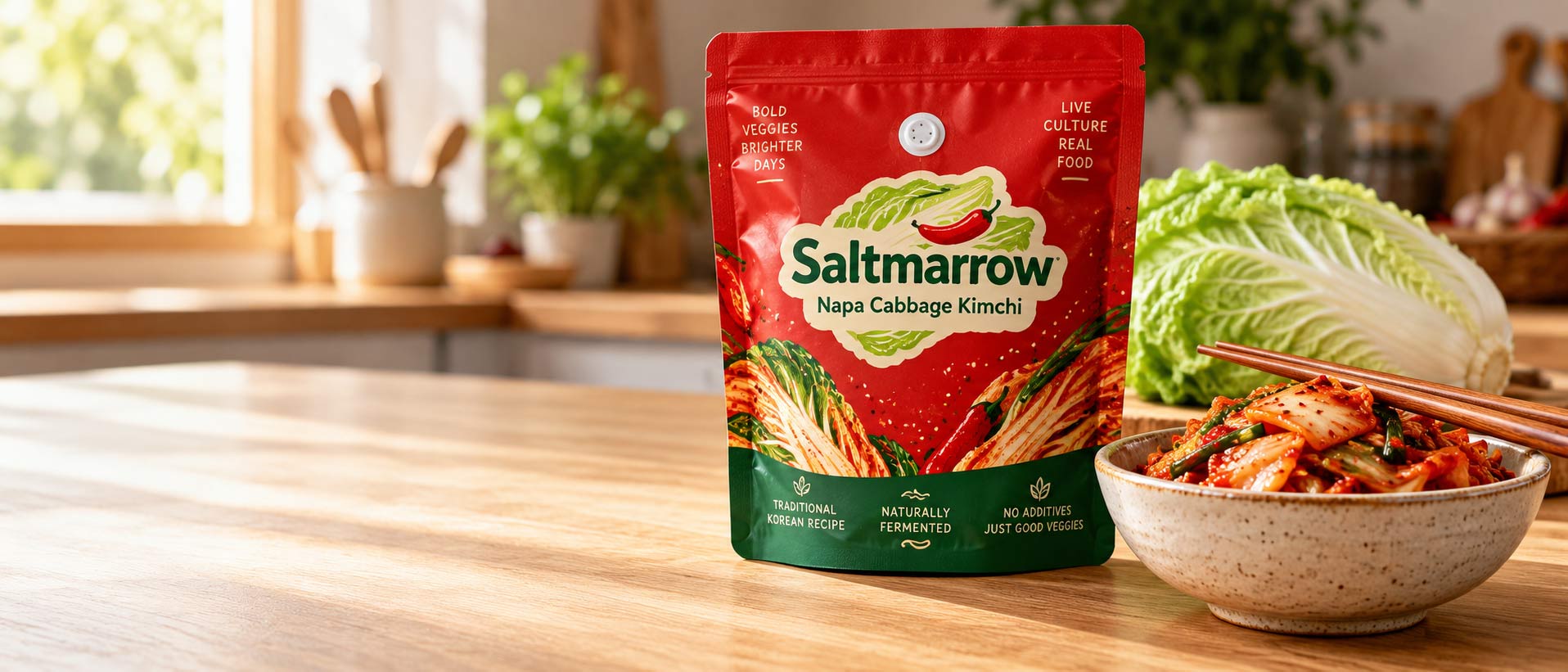
- A stand-up pouch suits frozen meals, fruit, and premium items that need shelf presence and a reseal.
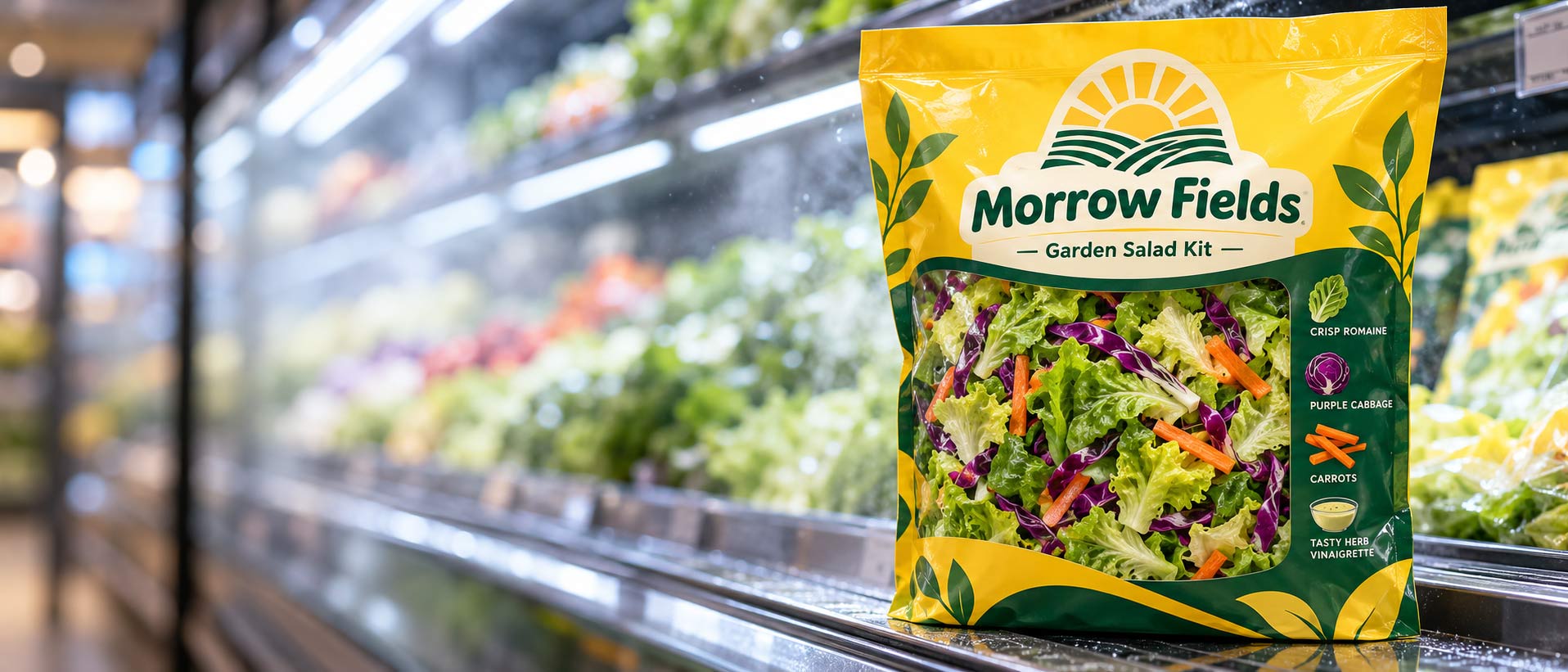
- A pillow or flat bag fits high-volume frozen vegetables and loose items filled on fast lines.
- A printed carton or a bag-in-box works for portioned meals and anything that needs a flat panel for cooking instructions.
Full color on a small run is easy with digital printing, so a new frozen line can test the aisle without a huge first order, and lighter flexible packaging keeps a frozen product more sustainable than heavy rigid trays where the food allows it. Whatever the format, the cold rules do not change. Hold the moisture, keep the film tough, and protect the seal.
Wrapping It Up: Built for the Cold
Frozen food hands the package a harder job than it looks. It has to hold the food's own moisture in so it does not dry out, stay flexible and crack-free in the cold, keep a clean seal from the filling line through the thaw, and still sell the meal in a bright, crowded case. Start from the cold and the way the food travels, choose a film and a seal rated for the freezer, and keep headspace low so freezer burn has nowhere to start. Do that, and the food reaches the plate tasting the way it did the day you froze it.
Ready to Create Packaging That Elevates Your Brand?
Let's bring your product to life on the shelf.
Get a Free Quote