
Your Barrier Was Fine. The Truck Put Holes In It.
A high barrier pouch leaves your plant testing perfectly and arrives looking perfect. Weeks later the product inside is stale, and everyone starts questioning the film spec. Often the spec was right and the bag was fine when it shipped. Repeated flexing on the road fatigues the barrier layer and opens pinholes too small to see, usually along the folds. The bag still holds your product. It just stopped keeping air out.
Overview
A product goes out the door with a barrier film chosen specifically to protect it. Everything checks out at the plant. Months later the complaints start, and they are all the same complaint: it tasted flat, it was stale, it did not last the way the date on the pack said it would.
The investigation that follows almost always goes to the same two places. Either the shelf life claim was optimistic, or the film was not what it was supposed to be. Both are reasonable theories, and both are often wrong. There is a third possibility that very few brands check, which is that the barrier was exactly right when the bag was sealed and stopped working somewhere between your plant and the shelf. Not because anything broke, but because the bag spent two days being gently shaken.
A Barrier Can Fail Without the Bag Failing
The first thing to separate is a leak from a barrier loss, because they are not the same failure and they do not look alike.
A leak is obvious. The seal is open, the product spills, somebody notices. A barrier loss is invisible. The bag is intact, the seal is sound, the product is still in there and looks fine. What has changed is that the structure is no longer stopping oxygen and moisture from getting through at the rate it was designed to.
That distinction matters because every routine check you run catches the first and none of them catch the second. A bag can pass inspection, pass a squeeze test, pass a visual, and still have lost most of the protection you paid for. The symptom that eventually shows up is the same one we traced to a different cause in why snacks go soft in the bag, which is worth ruling out first because it happens before the bag ever leaves your building.
What Flexing Actually Does to a Barrier Layer
High barrier structures usually get their performance from a very thin layer inside the laminate, either aluminum foil or a metallized coating. That layer is what stops oxygen. It is also extremely thin, and in the case of foil it is a metal.
Metals fatigue. Bend a piece of wire back and forth and it does not break the first time, it breaks after enough cycles. The same thing happens at microscopic scale inside a laminate. Every time the bag flexes, that brittle barrier layer flexes with it, and after enough repetitions it cracks. The cracks are tiny, far too small to see, and the surrounding plastic layers hold the structure together so the bag shows nothing at all. But the barrier now has holes in it.
A truck is a flexing machine. Hours of road vibration, bags shifting against each other, pallets settling, the whole load moving as one. None of it is dramatic. All of it is repetition, and repetition is the thing that causes fatigue.
Where the Pinholes Form
Flex cracking is not random. It concentrates exactly where the film already bends.
- Gusset creases. The film is permanently folded there, so every vibration works the same line.
- Fold lines and corners. Anywhere the structure changes direction takes the most movement.
- Bag to bag contact points. Where pouches rub against each other for hundreds of miles.
- Under the product's weight. Where the contents press and release against the same spot.
- Anywhere the bag is loose. Slack film has room to flap, and flapping is flexing.
Notice that the flat printed panels, the part everyone inspects, are the least likely place to fail. The damage is on the creases, which is also where nobody looks.
Why You Only Find Out Much Later
This is the reason it so rarely gets diagnosed correctly.
Nothing happens at the moment the damage occurs. The bag arrives looking perfect, goes onto a shelf, and the product inside begins aging faster than it should. The gap between cause and symptom is measured in weeks, and by then the bag is in somebody's kitchen and the pallet it travelled on is long gone.
Worse, the evidence points at everything except the road. The same product in your own warehouse, which never travelled, is perfectly fine, which seems to prove your process and your film are both sound. The complaints cluster around whichever customers are furthest away, which looks like a distribution or stock rotation problem. And the only way to catch it properly is to go looking for holes you cannot see on bags that look flawless.
What Makes It Worse
Some of this you control and some of it you only need to be aware of.
Distance and road quality are the obvious ones, and they are mostly out of your hands. The rest are not. An underfilled bag has slack film that moves freely for the whole trip, and that slack is the single biggest contributor you can actually fix. Loose case packing lets bags rub and shift instead of supporting each other. Heavy products working against the same fold compound it. And stiff, cold film cracks more readily than warm, pliable film, which is why winter freight is harder on barriers than summer freight.
How to Reduce It
The fixes split between what the bag is made of and how it is packed, and the packing side is usually cheaper and faster.
- Reconsider foil where you can. Metallized structures generally tolerate flexing better than foil does, though they are not identical in barrier performance. It is a trade worth discussing rather than defaulting.
- Specify a tougher outer web. The layers around the barrier do a lot of the work absorbing movement before it reaches the fragile layer.
- Right-size the bag to the fill. Less headspace means less slack, less movement, less fatigue.
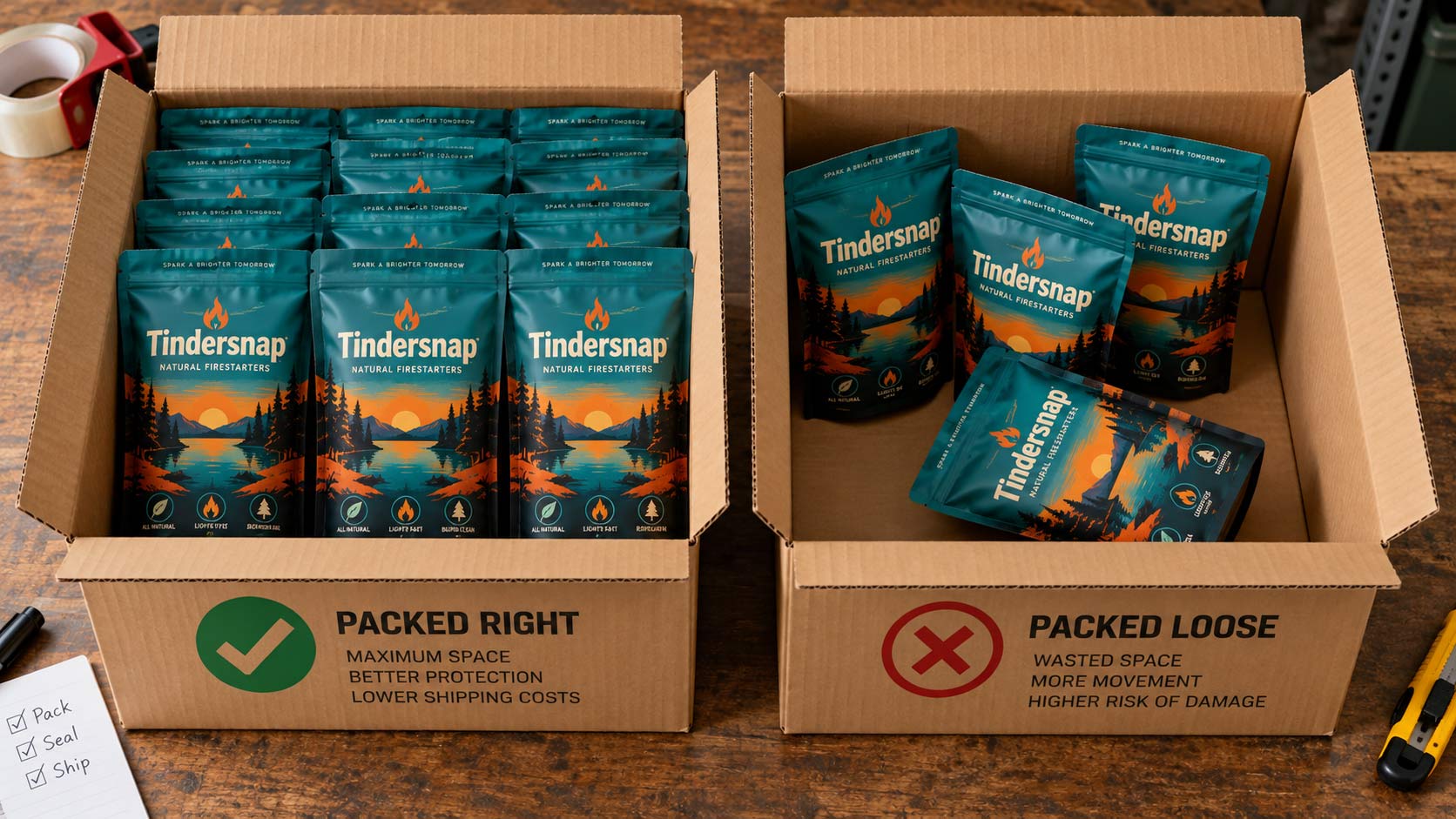
- Pack cases snugly. Bags that support each other move less than bags with room to travel.
- Stabilize the pallet properly. A load that settles in transit is a load that flexed to get there.
If you are specifying a new structure, raise distribution distance at the same time as shelf life, because the two interact. Our guide to choosing food packaging walks through the barrier decision, and a full custom food packaging spec is where the structure and the format get decided together.
How to Tell If This Is What Happened
There is a straightforward test, and it costs almost nothing.
Keep retained samples from every production run and store them at your own facility. When a complaint comes in from the field, compare a travelled bag against a retained one from the same lot. If the retained bag is fine and the travelled bag is not, the difference happened on the road, and you have ruled out the recipe, the film spec and your own process in a single comparison.
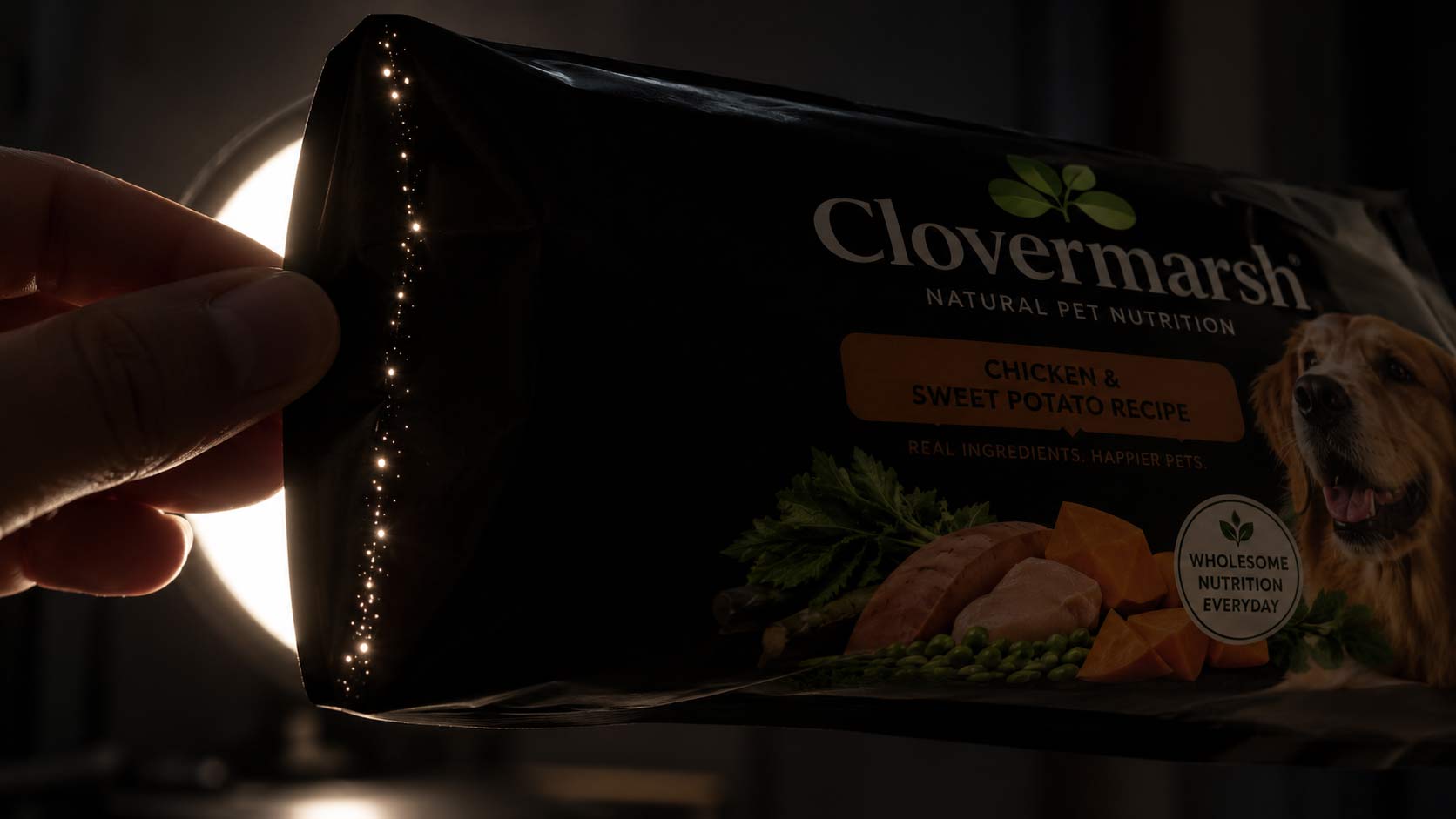
Then look at the travelled bag properly. Hold it up to a strong light in a dark room and examine the creases rather than the panels. Pinholes at the folds are the signature. Flat panels that are clean while the gussets are not tells you the whole story. If the pack has a window, check its edges too, since that seam is already the weakest point in the barrier for the reasons covered in your clear window is shortening its life.
Wrapping It Up: The Spec Is Not the Whole Promise
A barrier number on a spec sheet describes a film lying flat in a laboratory. Your bag does not spend its life lying flat in a laboratory. It gets folded into a shape, filled, packed, and driven several hundred miles while vibrating continuously, and the barrier has to survive all of that to mean anything on a shelf.
That is not a reason to distrust specifications. It is a reason to treat shelf life as something the whole journey has to deliver, not just the film. Size the bag so the product cannot move, pack the case so the bags cannot rub, think about foil versus metallized if your distribution is long and rough, and keep retained samples so you can prove where a problem started. Do that and the barrier you specified is the barrier your customer actually gets.

Ready to Create Packaging That Elevates Your Brand?
Let's bring your product to life on the shelf.
Get a Free Quote