How to Choose the Right Packaging for Your Food Brand
Choosing food packaging can feel overwhelming, with dozens of bag styles, materials, and printing choices to weigh. This guide breaks down how to pick packaging that protects your product, fits the way customers shop, and helps your brand stand out on the shelf.
Overview
Choosing food packaging is one of the biggest decisions a new or growing food brand makes. The package on the shelf does a lot of jobs at once. It keeps the product fresh, protects it on the trip from your kitchen to the customer, tells your story, and helps a shopper decide to reach for you instead of the brand right next to you. With so many bag styles, materials, and printing choices out there, it is easy to feel stuck before you even start.
This guide walks through the main things to think about, in plain language, so you can pick food packaging that fits your product, your budget, and your brand. We will look at where to begin, how to match a package to the way people shop, which materials keep food safe and fresh, and how printing and finishing turn a plain pouch into something customers remember.
Start With Your Product
Before you look at a single package, look at what is going inside it. Different foods have very different needs, and the product almost always points you toward the right packaging. Dry snacks, roasted coffee, granola, pasta, spices, sauces, and baked goods each behave differently on the shelf and in the home.
A few quick questions help narrow things down fast. Answer these honestly and you will already be ahead of most brands that shop by looks alone.
- Is the product dry, oily, moist, or sensitive to light and air?
- How long does it need to stay fresh once it is made?
- Will the package sit on a store shelf, ship in a box, or both?
- How often will a customer open and reclose it?
Dry snacks and coffee usually do best in a strong, resealable pouch that blocks air and light. Oily or aromatic products like nuts, coffee, and spices need a higher barrier so flavors stay locked in and oils do not go rancid. If you are still deciding on a format, our custom food and product packaging comes in several shapes built around these exact needs.
Match the Package to How People Shop
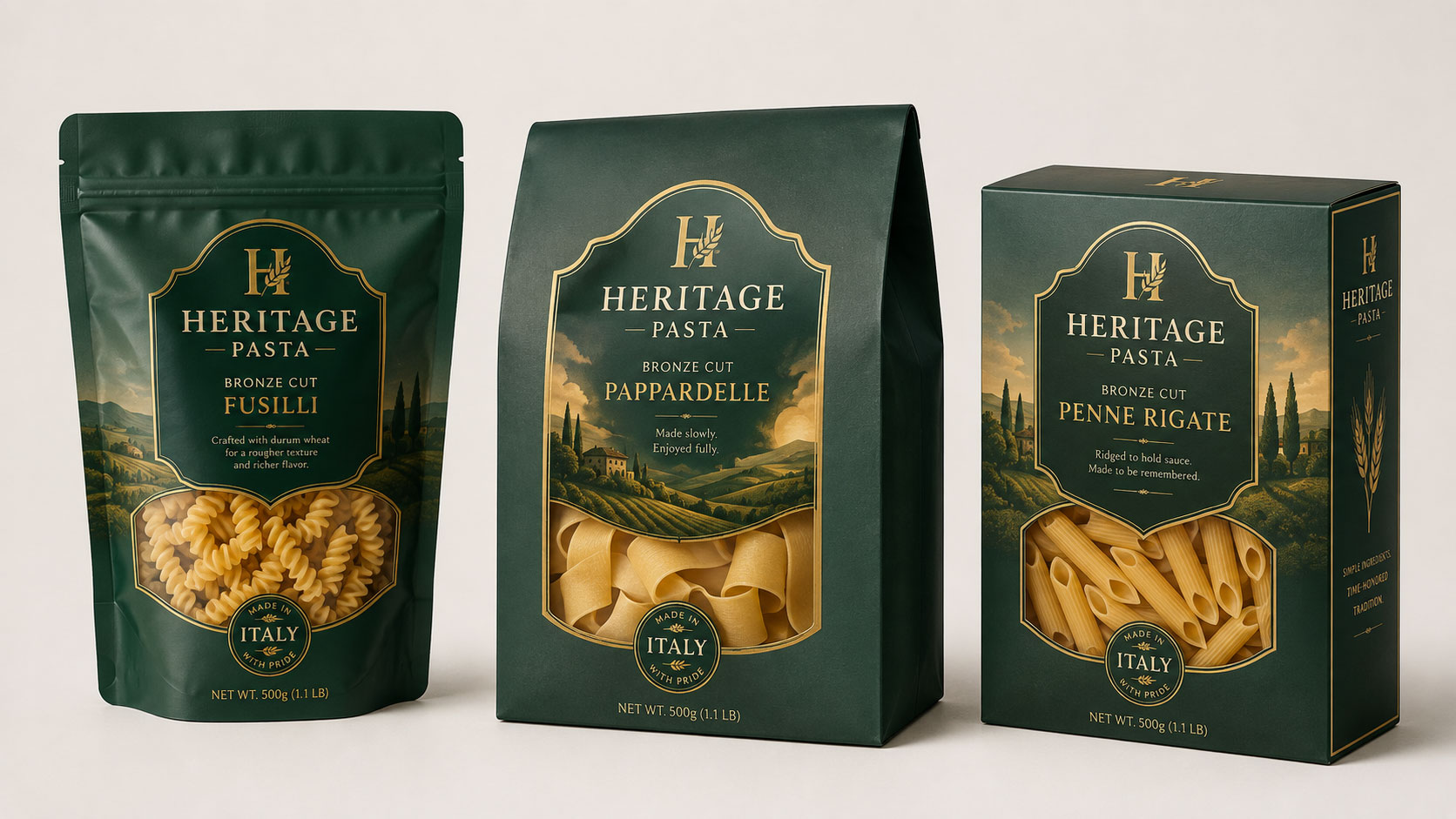
Once you know your product, the next step is picking a structure. The style of the package changes how it looks on the shelf, how it stands, and how easy it is to use at home. There is no single best option, only the best fit for your product and price point.
Here are the styles food brands reach for most, and what each one does well.
- Stand-up pouches sit upright on the shelf, use less material, and work great for snacks, coffee, and granola.
- Flat bottom bags, sometimes called box pouches, have a wide base and five clean panels for a premium look that suits coffee and larger dry goods.
- Side gusset bags give you a tall, classic shape with plenty of room, a familiar choice for coffee and bulk items.
- Custom boxes and cartons add structure and a strong unboxing moment, which is perfect for gift sets, bars, and multipacks.
If your product is sold mostly online, sturdiness and shipping protection matter more than a fancy shelf presence. If you are fighting for attention in a store, a package that stands tall and shows off your art earns its keep. Many brands pair a pouch for the product with custom boxes for shipping and retail display.
Materials and Barrier: Keeping Food Fresh and Safe
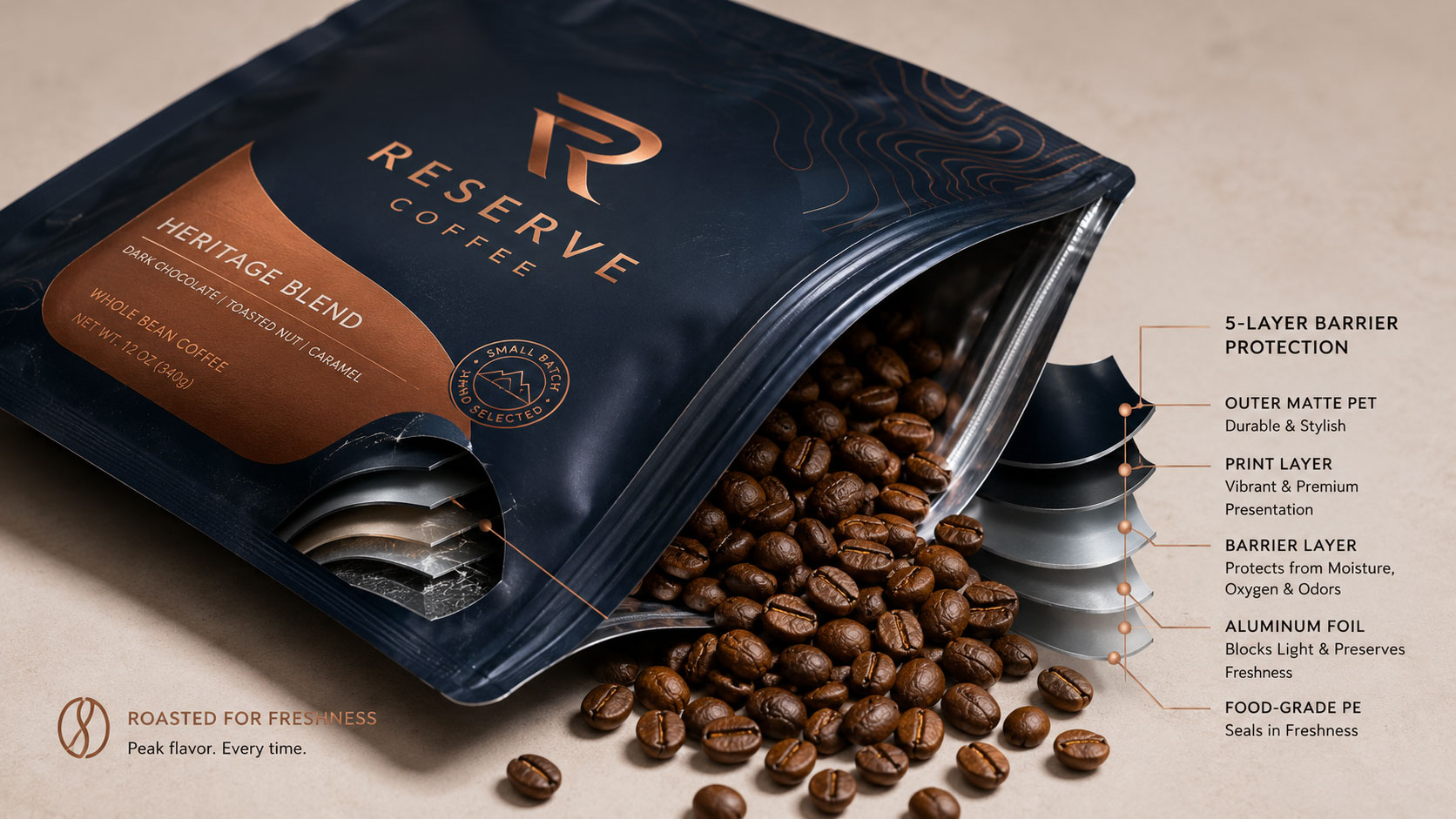
This is the part shoppers never see, but it is where good food packaging really earns its money. The material layers, known as the barrier, decide how well the package blocks oxygen, moisture, light, and smells. A weak barrier lets food go stale and lets aromas leak out, which shortens shelf life and hurts repeat sales.
The right barrier depends on the food and the shelf life you need. Higher barrier films cost a little more, but they protect the product you worked hard to make. It helps to think about barrier in a few simple tiers.
- Standard barrier films handle many dry snacks and short shelf life products.
- High barrier films with foil or metallized layers protect coffee, nuts, oily snacks, and spices.
- Extra high barrier is best for long shelf life products and anything that cannot risk any air or light.
Safety matters just as much as freshness. Look for food safe films that meet the standards for direct food contact, so nothing from the packaging ends up in the product. A good packaging partner will help you match the barrier to your product instead of selling you more than you need.
Printing That Makes Your Brand Pop
Now for the fun part. Your packaging is the biggest billboard your brand will ever have, and printing is how you use it. Bold color, a clear logo, and easy to read product info can turn a browsing shopper into a buyer. The trick is choosing a print method that fits your order size and your look.
Two main options cover most food brands, and the right one depends on how many units you need and how detailed your art is.
- Digital printing is perfect for shorter runs, quick turnarounds, and brands testing new flavors, since there are no plates to pay for. Our digital printing is a favorite for smaller batches.
- Rotogravure printing shines on very large runs where the per unit cost drops and the color stays rich and consistent across thousands of packages. See our rotogravure printing for high volume work.
Finishing touches take a printed package even further. Matte and gloss areas, soft touch coatings, and clear windows that show the real food all help your product feel premium and build trust with shoppers.
Think About Size, Fill, and Features
A great looking package still fails if it is the wrong size or hard to use. Before you order, picture the package in a customer's hand and on your own filling line. The goal is a package that fits the food snugly, closes tight, and feels good to use every day.
Small details make a big difference here, so weigh these before you commit.
- Choose a size that matches your actual fill weight, since a package that looks half empty reads as poor value.
- Resealable zippers keep food fresh after opening and are almost expected on snacks and coffee now.
- One way valves let coffee bags release gas without letting air in, which keeps fresh roast fresh.
- Hang holes, tear notches, and clear windows add convenience and shelf appeal that shoppers quietly appreciate.
Plan for Order Size and Budget
Packaging choices always come back to numbers. How many units you need, and how fast you need them, shapes what is realistic. Custom printed packaging usually has a minimum order, so a brand just starting out has a different path than one restocking a proven seller.
If you are testing the waters, there are lower commitment ways to launch. This keeps your upfront cost down while you learn what sells.
- Stock bags let you buy blank, ready made pouches in set sizes and add a label, which is great for very small runs. Explore our stock bags if you want to start lean.
- Custom digital printing opens up at lower quantities than large plate based runs, so you can print your own art without a huge order.
- Large rotogravure runs make the most sense once you are moving steady volume and want the lowest cost per unit.
Talk through your yearly volume with your packaging partner. Ordering the right amount at the right time protects both your cash flow and your shelf presence.
Do Not Forget Sustainability
Shoppers care about the planet, and packaging is often the first place they look. More brands are choosing recyclable, compostable, or partly plant based materials, and customers reward that effort. The good news is that sustainable options have come a long way and no longer mean giving up freshness or a premium look.
You do not have to change everything at once. Even small steps signal that your brand is paying attention, and they add up over time. Our sustainable packaging options make it easier to lower your footprint without cutting corners on protection. When you can, share your choices right on the package so customers know what you stand for.
Wrapping It Up: Packaging That Works as Hard as You Do
The right food packaging protects your product, fits the way your customers shop, and tells your story at a glance. Start with your product, pick a package style that matches how it sells, choose a barrier that keeps it fresh, and use printing and smart features to make it stand out. Keep your order size and your sustainability goals in view, and you will land on packaging that grows with your brand instead of holding it back.
Every great food brand started with a first package. Take these steps one at a time, lean on a packaging partner who knows the food space, and you will end up with a package your customers trust and reach for again and again.
Ready to Create Packaging That Elevates Your Brand?
Let's bring your product to life on the shelf.
Get a Free Quote