
Your Kimchi Is Not Spoiled. It Is Still Alive in There.
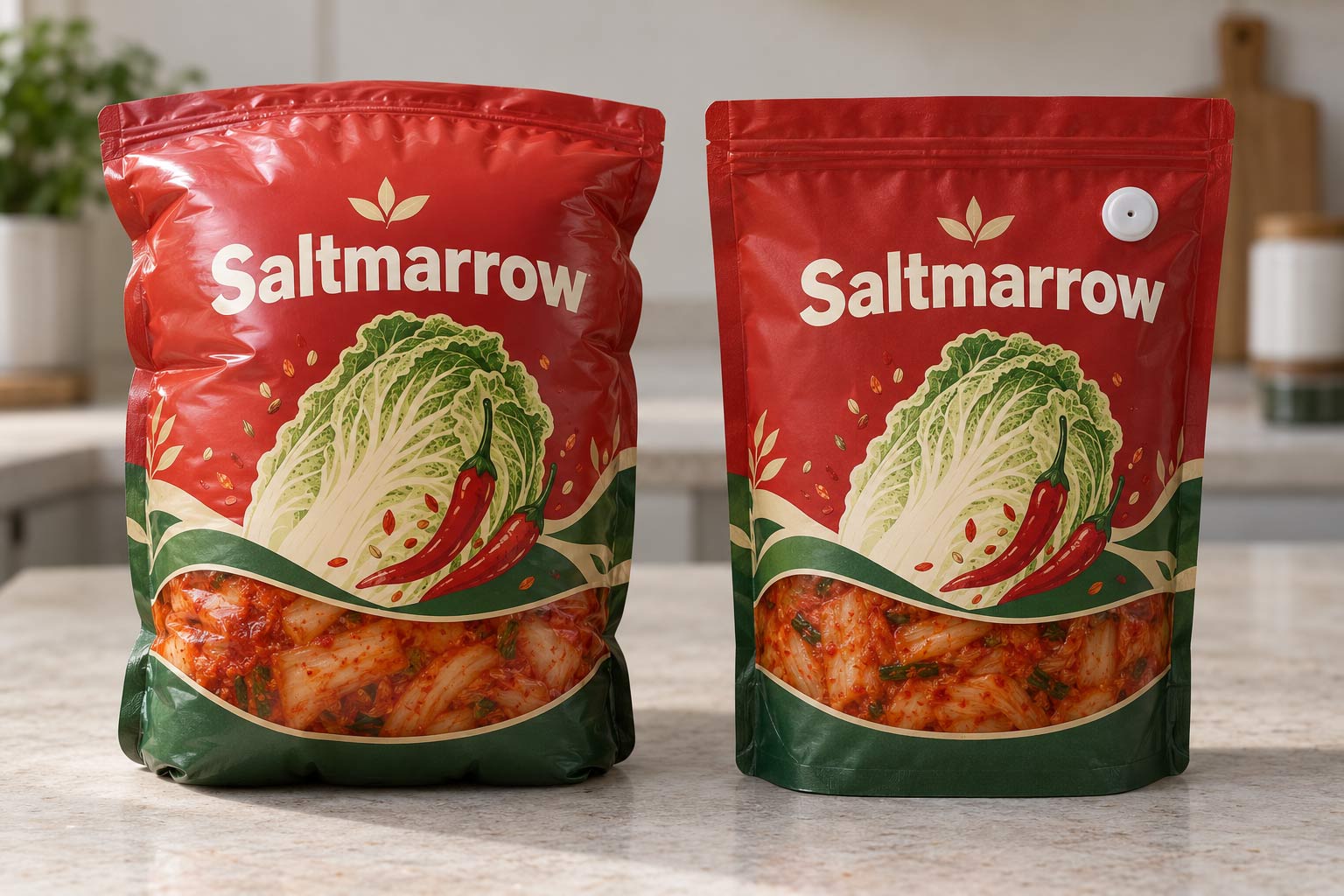
A pouch of kimchi leaves the kitchen flat. A week later it is puffed up like a pillow, and the store pulls it because swollen packages look like bad food. Nothing went wrong. Live cultures keep working after the bag is sealed, and every bit of that work makes gas. A sealed bag with nowhere for that gas to go is a balloon waiting to happen.
Overview
The pouch left your kitchen flat and tidy. A week later, in the store cooler, it looks like a pillow. The film is stretched tight, the shape is gone, and a shopper picks it up, feels how hard it is, and puts it back. Sometimes the store pulls the whole lot because swollen packages look like spoiled food.
For a lot of foods, that instinct is right. For kimchi, sauerkraut, miso and other live fermented foods, it usually is not. The product is doing exactly what it is supposed to do. It is still fermenting, and fermentation makes gas.
The problem is not the food. It is a sealed bag that gives that gas nowhere to go.
Live Cultures Keep Working After You Seal the Bag
Here is the fact everything else follows from.
Fermented foods are full of living microbes. The bacteria that turn cabbage into sauerkraut or napa and chili into kimchi do not stop when you put the food in a pouch. They keep eating the sugars in the vegetables, and one of the things they give off is carbon dioxide.
Cold storage slows them down a lot. It does not stop them. So from the moment the bag is sealed, through the truck, the warehouse and the store cooler, the culture is quietly producing gas. In an open crock, that gas just drifts away. In a sealed pouch, it builds up, and the bag inflates to make room for it.
Packaging researchers who study kimchi call this extra gas the single biggest packaging problem the product has. It is not a defect in your recipe. It is the recipe working.
What a Swollen Pouch Actually Costs You
It is easy to think of a puffy bag as a cosmetic issue. It is more expensive than that.
- It looks like spoilage. Shoppers and store staff are trained to avoid swollen packages, and they are right to be careful, so a healthy product gets treated as a bad one.
- It strains the seals. The pressure pushes on every seam. Weak spots give way, and a pouch that leaks brine into the cooler becomes a mess and a complaint.
- It makes stacking hard. Round, overinflated bags do not sit flat, do not stack and take up more room on the shelf.
- It can surprise the customer. A tight bag can spray when it is opened, which is not the first impression you want.
How a One-Way Valve Fixes It
If the gas cannot be stopped, the answer is to let it out without letting the outside in. That is the job of a one-way valve.
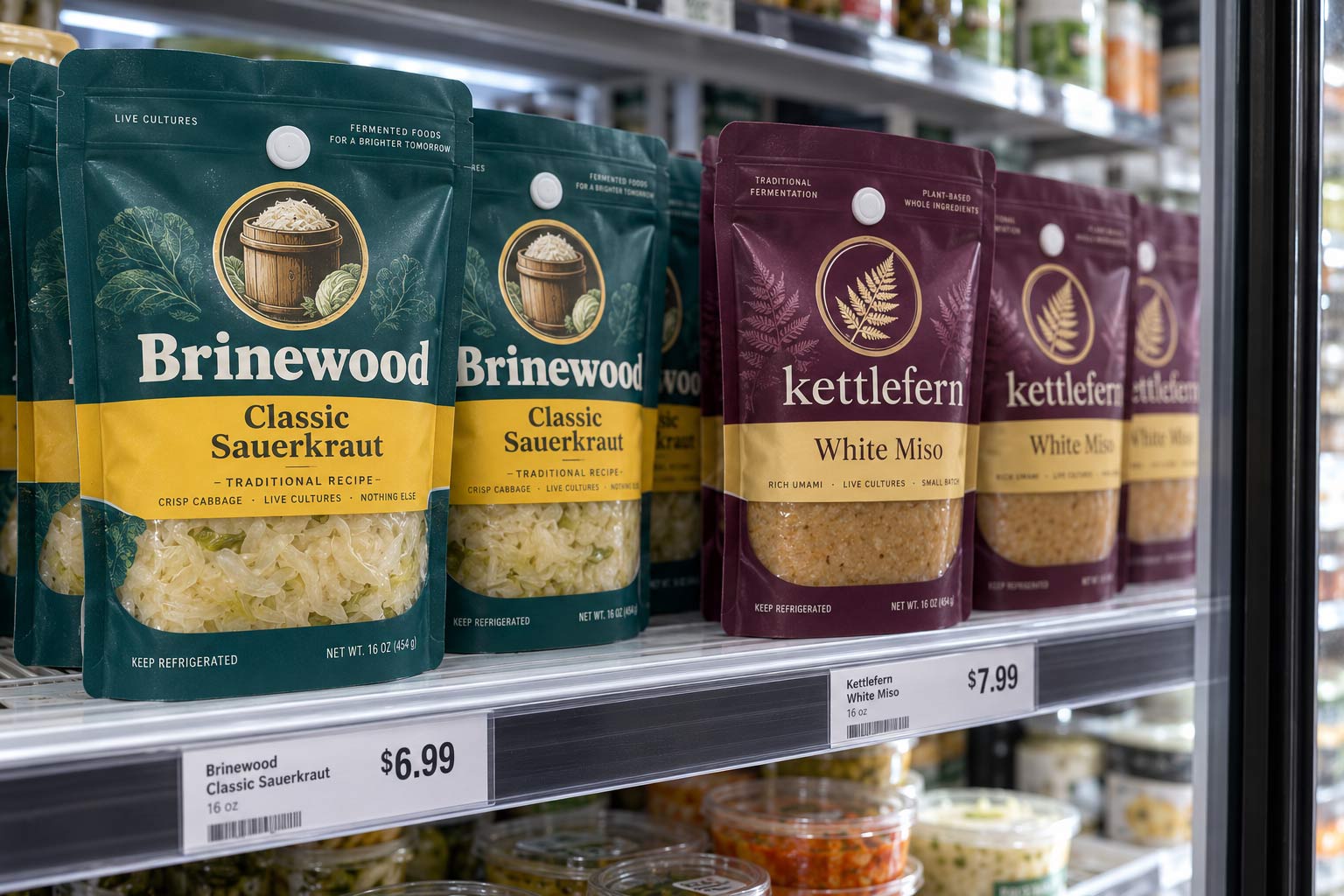
A one-way valve is a small fitting built into the pouch wall. When the pressure inside rises, it opens just enough to let gas escape. When the pressure drops, it closes again, so outside air cannot come back in. Gas goes out, air stays out.
If that sounds familiar, it is the same idea that keeps freshly roasted coffee from puffing up its bag, because roasted coffee releases carbon dioxide too. The same kind of valve works on fermented food.
- It has to sit above the product. The valve vents the headspace, the empty space at the top of the bag, so it needs to be placed where brine will not cover it.
- It is chosen for the job. Valves differ in how easily they open, so the valve has to match how much gas your product makes.
- It changes the artwork. A valve takes up space on the panel, so it belongs in the design from the start, not punched in later.
- It works best with cold. Keeping the product refrigerated slows the gas so the valve only has to handle a gentle, steady release.
There are other approaches. Some films are made to let carbon dioxide pass through more easily, and some packages include a packet that absorbs the gas. Researchers have tested all of these. For most small and growing brands, a valve is the most practical place to start.
When Swelling Is a Real Warning Sign
This part matters, so we will say it plainly. A swollen package is not always harmless.
In live fermented foods, gas is expected, and a valve handles it. But in a product that is not supposed to ferment, a puffed bag can mean unwanted microbes are growing, and that food should not be eaten. A valve is a fix for expected gas, not a way to hide a problem. If your product is not a live ferment and the bags are swelling, treat it as a safety issue first and talk to your food safety advisor, not your packaging supplier.
How Savor Brands Handles This
Swelling is predictable for fermented foods, which means it can be designed for before the first pouch is printed.
- We ask whether it is alive. Raw, unpasteurized ferments keep making gas. Pasteurized products mostly do not. That one question decides whether you need a valve.
- We size the bag with headspace in mind. A little room at the top gives gas somewhere to collect before the valve releases it.
- We place the valve with the artwork. Its position, above the product and out of the brine, is planned into the dieline.
- We pair it with a barrier and a resealable closure. Fermented foods are wet, salty and often acidic, so the inside layer and the seal have to stand up to them, the same concerns our sauce and condiment packaging post covers.
- We remind you about the cold chain. Steady refrigeration from your kitchen to the store makes everything easier on the valve and the seals.
Why It Looks Like Spoilage
The misdiagnosis is completely understandable. A puffed package is one of the oldest warning signs in food, and everyone has learned to be wary of it.
But look at what is happening with a live ferment. The food smells and tastes the way it should. The swelling grows slowly and steadily over days. It happens in every batch, not just one. That pattern points to the culture doing its job inside a bag that cannot breathe, not to something going wrong.
Wrapping It Up: Give the Gas a Way Out
If your fermented products keep showing up puffed, start with one question: is this product still alive? If it is, the gas is coming, no matter what bag you use. The fix is to give it a controlled way out with a one-way valve, keep the product cold, and build the valve into your design from the start.
For a closer look at choosing the right closure and headspace, see our post on why resealable zippers stop working, and for planning a realistic date, see how shelf life is actually decided. When you are ready to package a product that is still alive, tell us what you ferment and we will build a pouch that lets it breathe the right way.
Ready to Create Packaging That Elevates Your Brand?
Let's bring your product to life on the shelf.
Get a Free Quote