
Your Zipper Stopped Working, and the Product Is Why
A customer opens your bag, uses half of it, and the zipper never closes properly again. They decide you bought a cheap zipper. You probably did not. You put a press-to-close zipper on a product that defeats it, and there is a specific closure that fixes it.
Overview
A zipper is the feature customers notice most and brands think about least. It goes on the spec sheet as a checkbox, it adds a few cents, and everyone assumes it works. Then the reviews start: the bag will not close, the zipper is useless, the product went stale in a week.
Almost always the zipper is fine. The problem is that the product got into it. This guide explains how that happens, why it often happens before your customer ever touches the bag, and the three fixes that actually work, in the order you should consider them.
What Actually Jams a Zipper
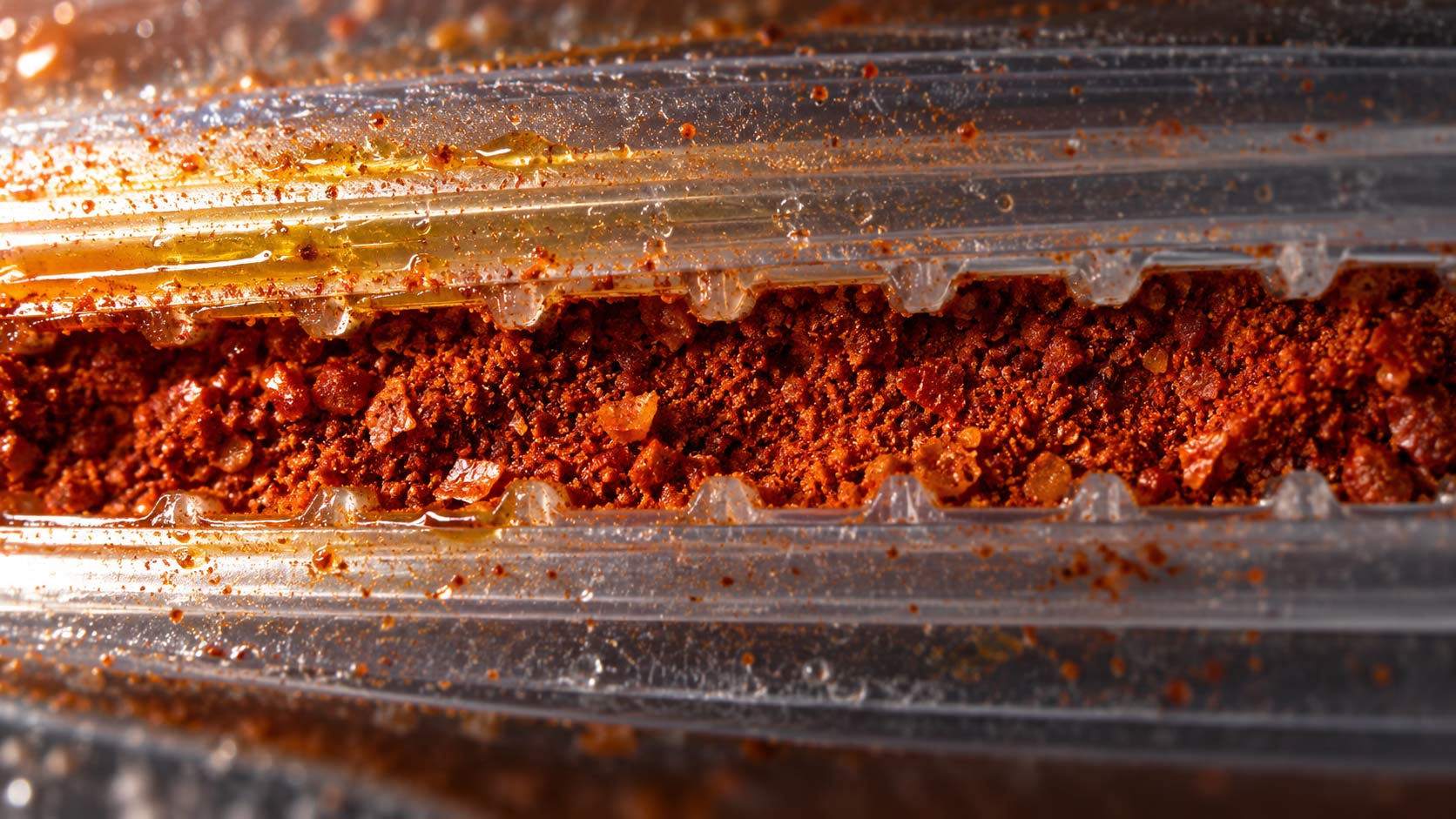
A press-to-close zipper is two moulded plastic profiles that have to seat into each other along their whole length. That is a precise fit, and it only works if the channel is clean.
Two kinds of product ruin it.
- Fine powders. Spice blends, drink mixes, protein powder, confectioner's sugar and flour all drift into the channel and fill it. Once the groove is packed, the ridge cannot seat and the two halves sit a fraction apart.
- Oils and fats. Nuts, chips, granola with oil, anything fried or coated leaves a film in the track. That film is slippery, it collects dust, and it stops the profiles gripping.
A single grain of coarse product is usually harmless. It is the fine stuff and the greasy stuff that does the damage, which is unlucky, because those are two of the biggest categories in snack and seasoning.
It Usually Happens Before the Customer Opens It
This is the part worth knowing, because it changes which fix you reach for.
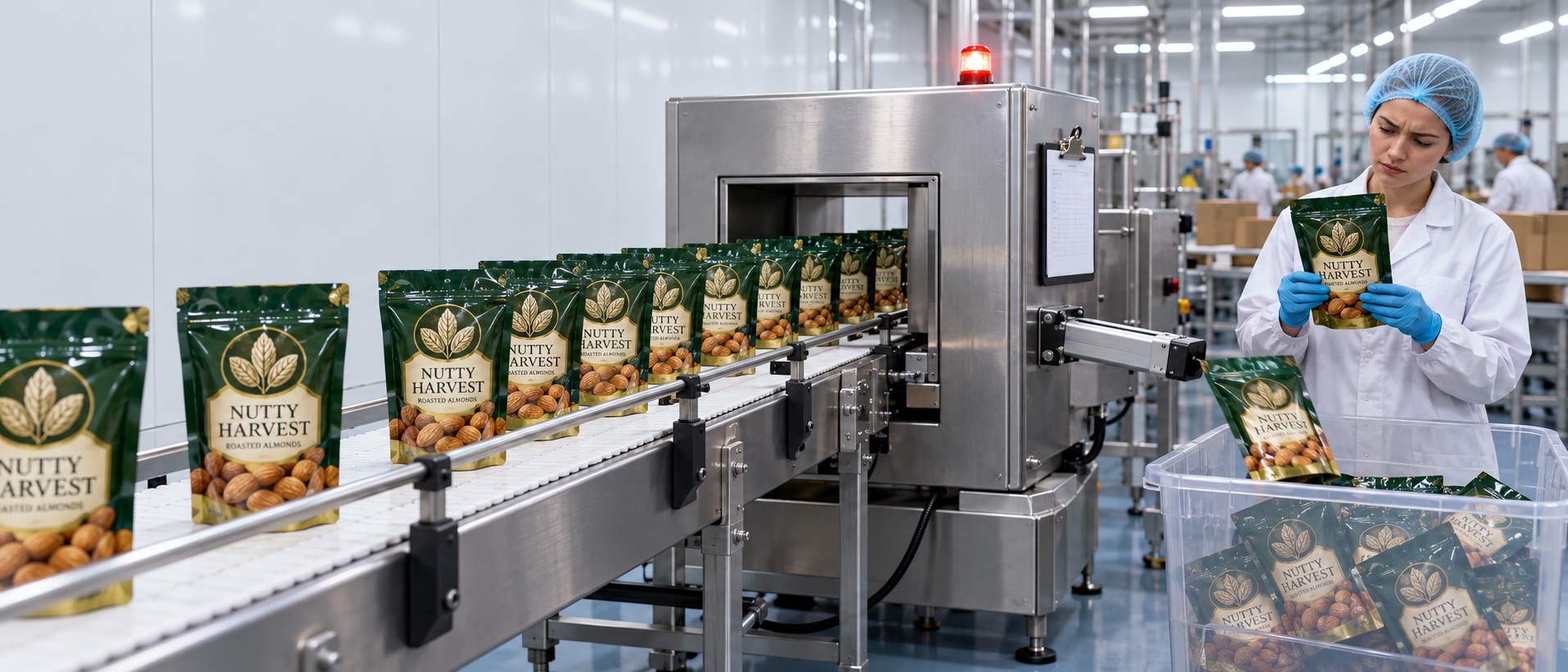
Most people assume the track gets dirty through use, and some of it does. But a lot of contamination happens on the filling line, when product is dropping into an open bag with the zipper sitting right there at the top, and during shipping, when a full bag gets tipped, stacked and shaken for days.
By the time a customer opens the bag for the first time, the channel can already be packed. They press it closed, it does not hold, and they conclude it never worked. They are right, and nothing they did caused it.
The Pocket Zipper Is the Real Fix
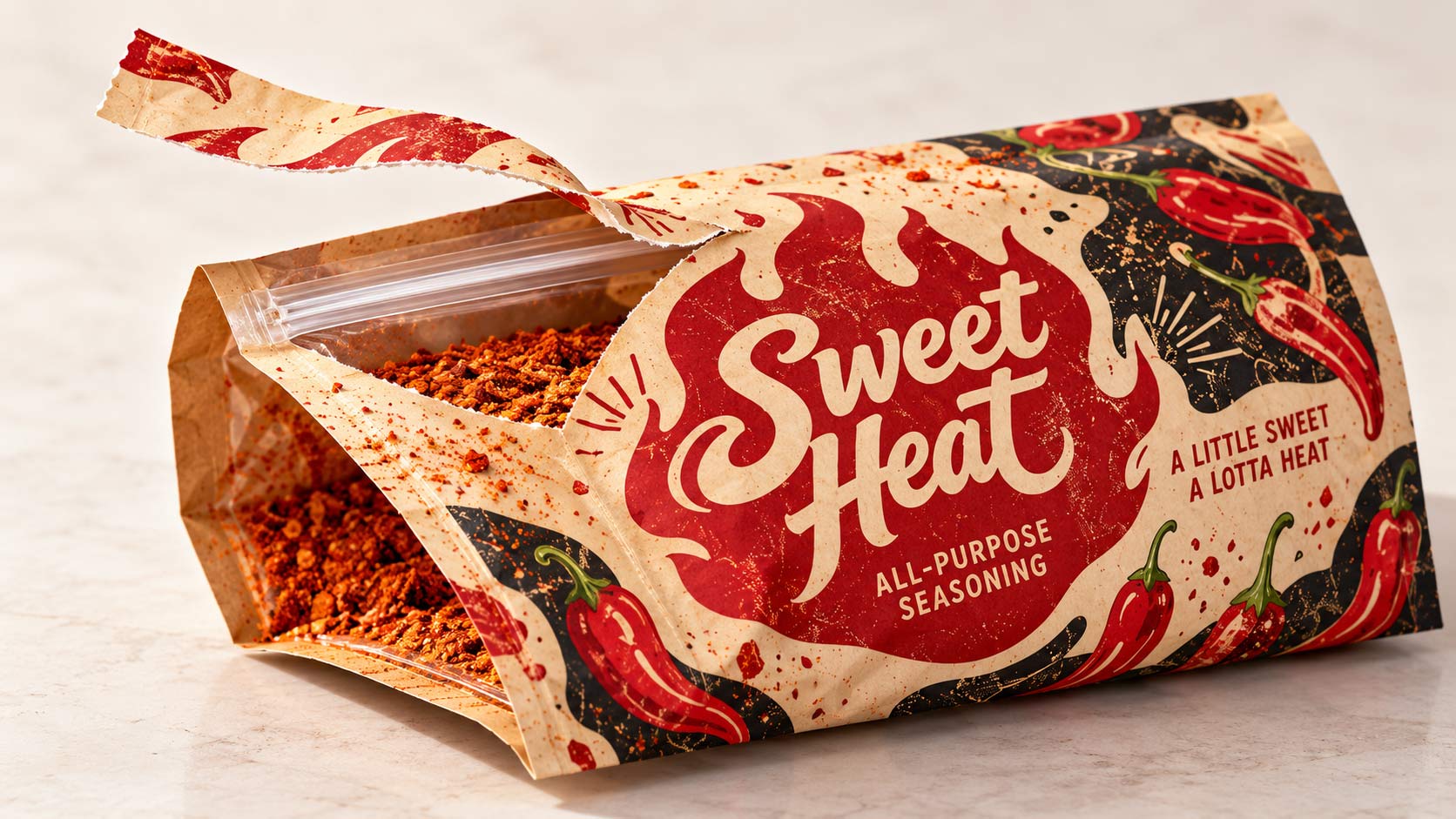
If contamination mostly happens before first open, then the fix is to keep the track sealed away until first open. That is exactly what a pocket zipper does.
A pocket zipper sits just below the top seal rather than at the very top. The bag ships fully sealed above it. The customer tears off a strip across the top, and underneath is a zipper that has never been exposed to product, to the filling line, or to the trip. It opens clean because it has been protected the whole time.
It costs a little more than a plain press-to-close and it uses a bit more film, since you are giving up a strip of bag height to the tear-off. For a powder or an oily snack, it is usually the single highest-value change you can make. It also reads as tamper evident, which is a free bonus on the shelf.
Headspace Is the Free Fix
The second fix costs nothing but has to be decided early.
Product reaches the track because it is close to the track. A bag filled nearly to the top puts powder right at the zipper on the line and keeps it there every time the bag is tipped. The same product in a slightly taller bag, filled to the same weight, has room between the fill line and the closure.
That is a dieline decision, not a production one. Once the bag size is locked and the first run is printed, you cannot add height. If you are still choosing a format, our custom food and product packaging team can size the bag with the closure in mind rather than just the fill weight. If you are testing a product before committing, stock bags let you try a taller bag with a label and see whether the problem goes away.
When a Slider Earns Its Cost
Once a bag is in daily use, some product will find the track no matter how you built it. That is where a slider helps.
A slider zipper has a small plastic carriage you pull across the top, and it seats the two profiles mechanically instead of relying on the customer pinching along the whole length. On a channel with a little powder or oil in it, that mechanical action closes a bag that a press-to-close would not.
It is the most expensive of the three options and it adds bulk at the top of the bag. It is worth it on larger bags that get opened daily, on products aimed at older customers, and anywhere the reseal is part of what you are selling.
When the Honest Answer Is No Zipper
It is worth saying plainly: for very fine powders in daily use, no zipper fully solves it.
If you make a flour, a fine drink mix or a heavily powdered seasoning, you can improve the odds with a pocket zipper and good headspace, and you still will not get a perfect reseal every time for the life of the bag. At that point the better answer is sometimes a fold-over top with a clip, or a bag designed to be decanted into something else, or simply treating the zipper as a convenience rather than as a seal and not building your marketing around it.
Our guides to spice and seasoning packaging and snack and chip packaging go further into what each of those categories needs.
Wrapping It Up: Spec the Closure for the Product, Not the Checkbox
A zipper is not a feature you add, it is a mechanism you have to protect. Fine powders and oils are the two things that defeat it, and most of the damage is done before your customer gets the bag.
Reach for a pocket zipper first, give the closure room to breathe on the dieline, add a slider where daily use justifies it, and be honest with yourself about the products where a zipper was never going to be a seal. Do that and the feature customers notice most becomes the one they stop thinking about, which is exactly what a good closure should do.
Ready to Create Packaging That Elevates Your Brand?
Let's bring your product to life on the shelf.
Get a Free Quote