Snack and Chip Packaging: How the Right Bag Keeps the Crunch In
A chip is mostly air, oil, and crunch, and all three are easy to lose. Oxygen turns the oil stale, humidity softens the bite, light fades the flavor, and a rough trip to the store turns whole chips into crumbs. This guide covers snack packaging in plain language: what actually ruins a snack, why chip bags are puffed full of nitrogen, the barrier films that hold that protection in, which bag formats fit which snacks, and the details that keep a snack fresh from the first handful to the last.
Overview
A chip is mostly air, oil, and crunch, and all three are easy to lose. Oxygen slowly turns the oil stale, a little humidity softens the bite, light fades the color and flavor, and a rough ride in a delivery truck turns whole chips into a bag of crumbs. A snack can be made perfectly and still disappoint the customer, because the package let one of those things in.
This guide covers snack packaging in plain language. We will look at what actually ruins a snack, why chip bags are puffed full of gas, the barrier films that hold that protection in, which bag formats fit which snacks, and the small details that keep a snack fresh and whole from the first handful to the last.
What Actually Ruins a Snack
Most snacks fail in one of four ways, and each one points to a different job the package has to do.
- Oxygen reacts with the oil in fried and roasted snacks and turns it rancid, which is where that stale, cardboard taste comes from.
- Moisture from the air soaks into a dry snack and steals the crunch, often long before the snack is unsafe to eat.
- Light, especially on a bright store shelf, fades colors and speeds up the breakdown of fats and flavors.
- Crushing breaks chips, crackers, and pretzels into pieces, and nobody wants to pay for a bag of crumbs.
A tortilla chip, a kettle chip, a trail mix, and a puffed snack all face these threats in different amounts. Start by asking which one hurts your snack the most, and the rest of the packaging decisions get much easier.
Why Chip Bags Are Full of Air (It Is Not Air)
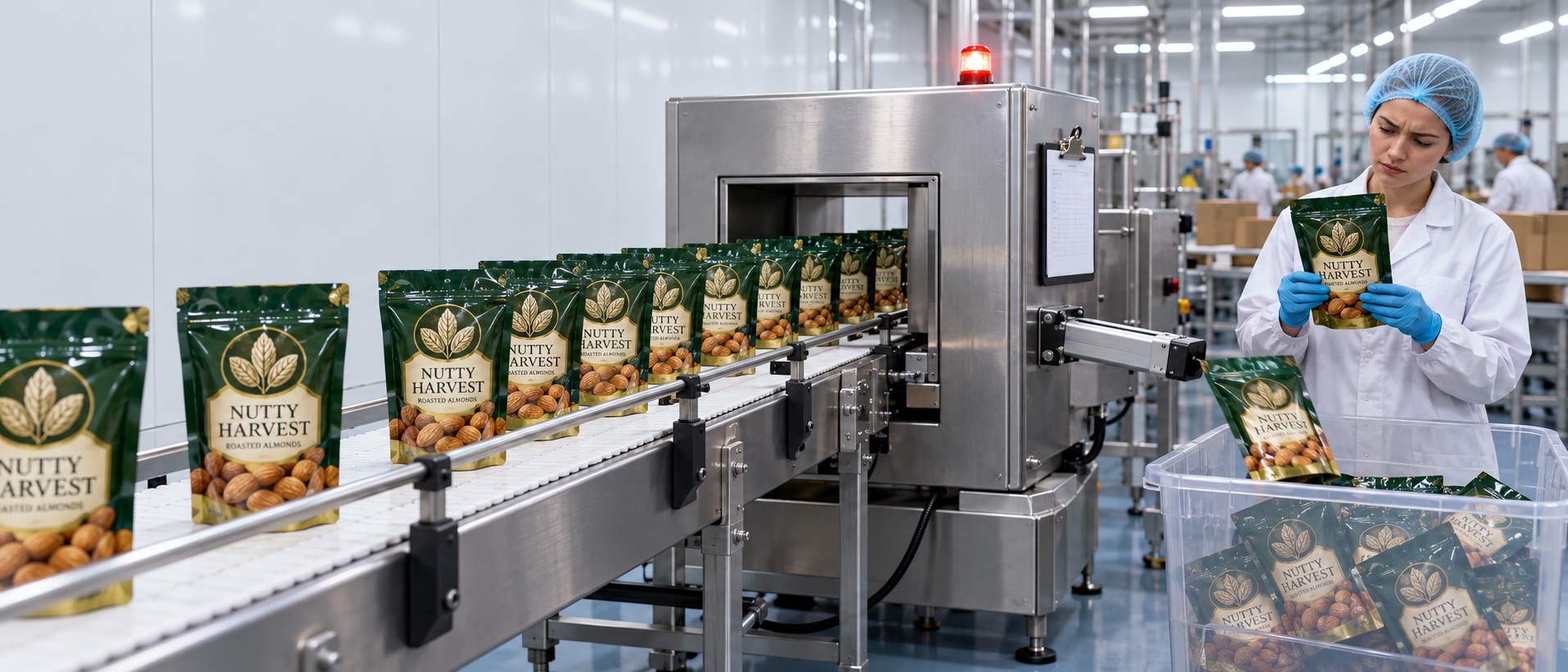
Every shopper has opened a big bag of chips and found it half empty. That puff is not a trick, and it is not regular air. Most chip bags are flushed with nitrogen on the filling line just before they are sealed.
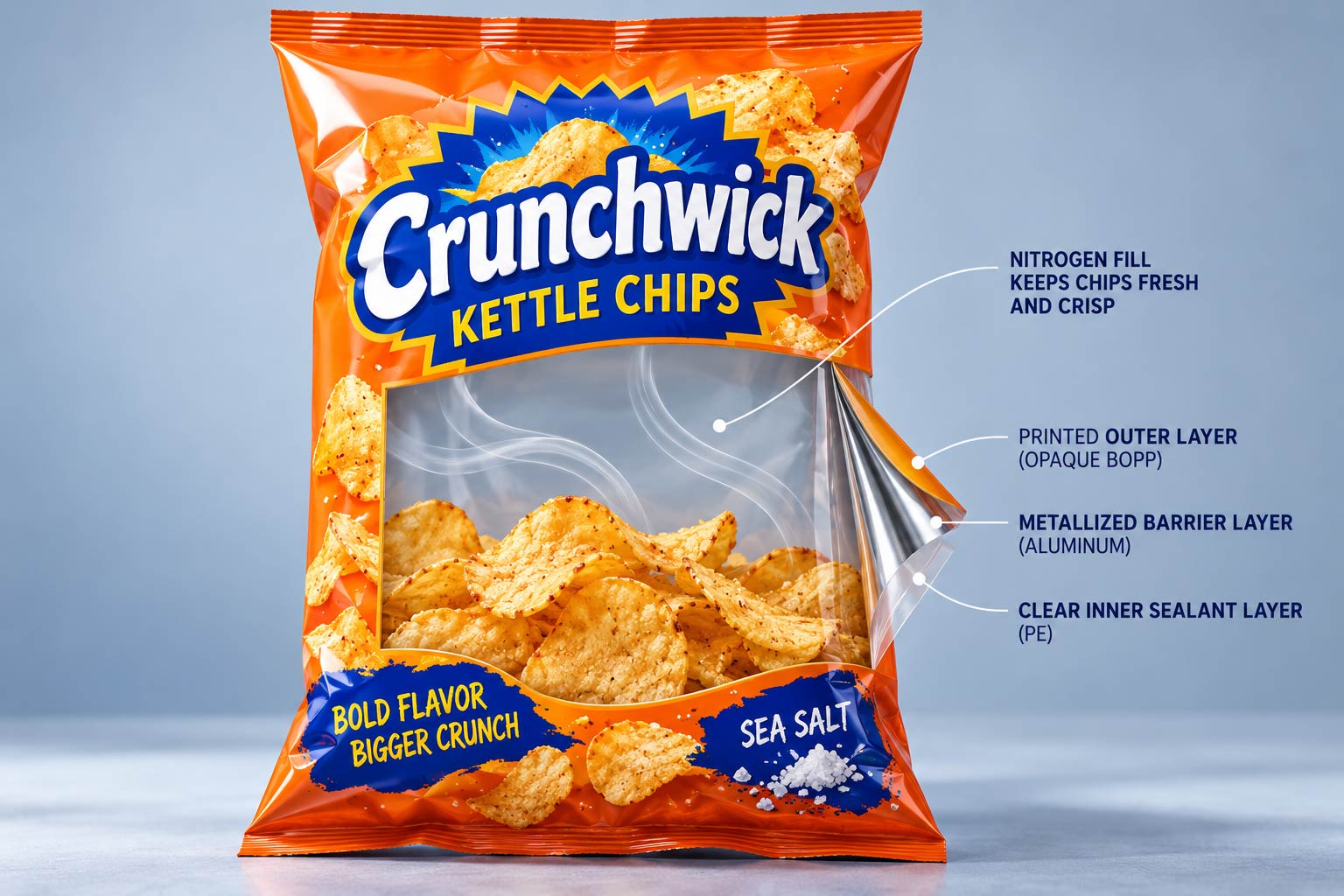
Nitrogen is a harmless gas that does not react with food. Pushing it into the bag sweeps out most of the oxygen, so the oil in the chips has far less to react with and stays fresh longer. The gas also does a second job that is easy to miss: it inflates the bag into a soft cushion, so the chips are not crushed when bags are stacked, shipped, and squeezed on a shelf.
- Less oxygen inside the bag means the oil stays fresh and the flavor holds longer.
- The cushion of gas protects fragile chips from breaking in transit.
- The fill looks lower than the bag size, which is why a clear note on net weight matters on the label.
The flushing itself happens on your filling line or at your co-packer. The bag's job is to keep that gas in and keep oxygen out for months afterward, and that comes down to the film.
The Film Has to Hold the Flush
A nitrogen flush is only as good as the bag around it. A thin, single-layer film lets oxygen creep back in through the walls over time, and the protection you paid for on the filling line slowly disappears.
That is why most chip bags use a multi-layer barrier film. Each layer has a job: an outer layer that carries the print, a barrier layer that blocks oxygen, moisture, and light, and an inner sealant layer that forms a tight, food-safe seal. A metallized barrier is common for chips because it blocks light as well as gas, which matters for oily snacks that sit under bright store lighting.
- A high-barrier film keeps the nitrogen in and the oxygen out for the life of the product.
- A light-blocking layer protects color and fat content on a bright shelf.
- A strong sealant layer matters because a leaky seal lets the flush escape no matter how good the film is.
Matching the film to the snack is the core of custom food packaging. A lightly salted pretzel and a rich, oily kettle chip do not need the same structure, and paying for the wrong one either wastes money or costs you freshness.
Pick the Format That Fits the Snack
Once you know how much protection the snack needs, the next question is how people buy and eat it. The format should follow that.
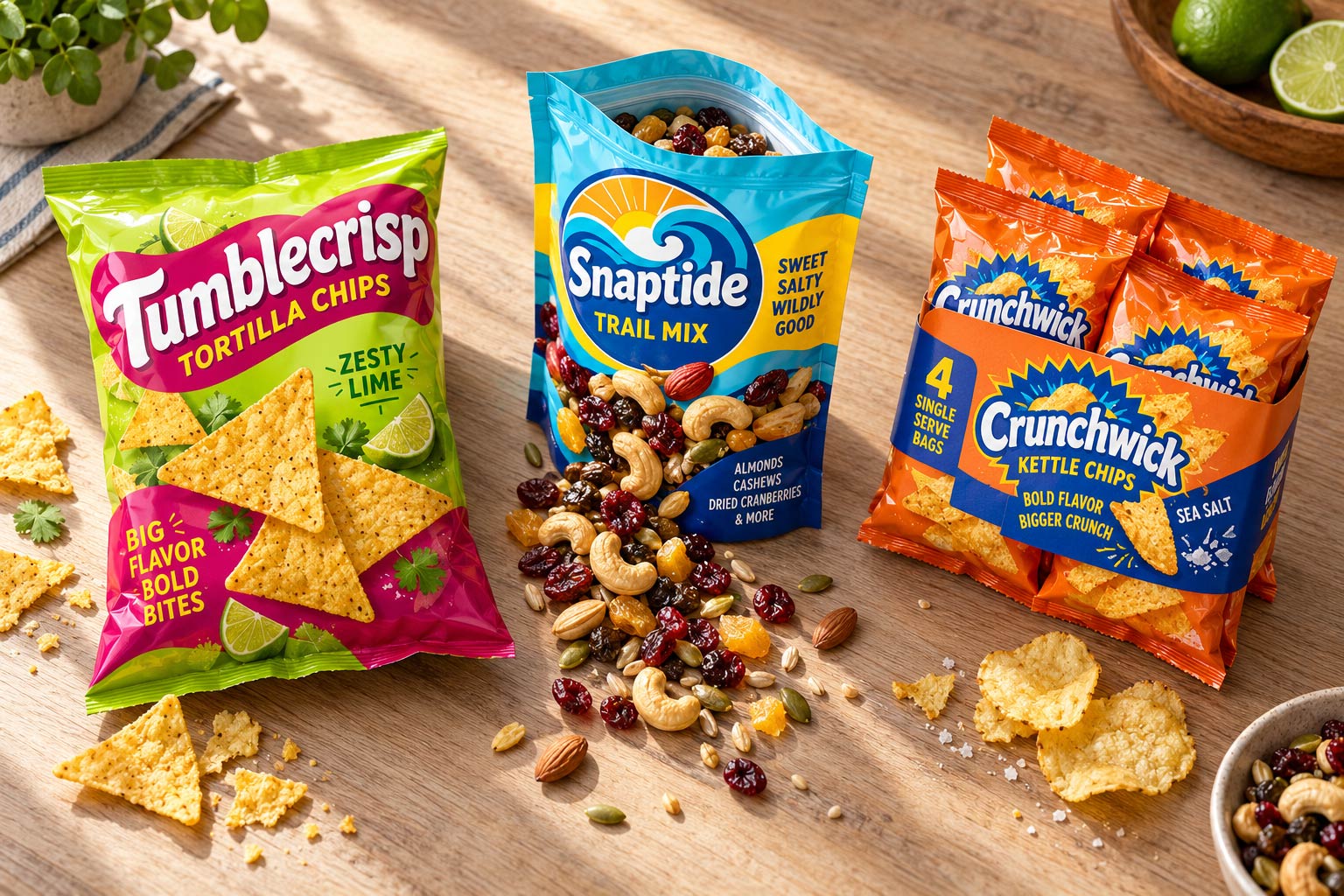
- The pillow pouch is the classic chip bag. It is light, inexpensive, and holds a nitrogen flush well, which makes it the standard for single-serve and family-size chips.
- A stand-up pouch with a resealable zipper suits snacks that get eaten over several days, like trail mix, jerky bites, and premium chips, and it stands up on the shelf like a billboard.
- A flat-bottom pouch gives a premium snack a boxy, upright look and a lot of printable space.
- Single-serve and multipack formats fit lunch boxes, vending, and grab-and-go, where portion size is the selling point.
If you are weighing these shapes against each other, our guide to food packaging formats walks through each one in more detail.
Windows, Reseal, and the Details That Matter
A few small choices decide whether a snack stays fresh after the bag is on the shelf and after it is opened at home.
- A clear window lets shoppers see the product, but it also lets light in, so keep it small for oily snacks and think hard before adding one at all.
- A resealable zipper matters most for snacks that are not finished in one sitting, because once the bag is open, the nitrogen is gone and the air gets in.
- A tear notch makes the bag easy to open cleanly instead of ripping it down the side.
- Moisture can sneak in from the inside, too, if warm snacks are bagged before they cool, so the filling process matters as much as the film.
We cover the window trade-off in depth in your clear window is selling the product and shortening its life, and the inside-moisture problem in why snacks go soft in the bag.
Printing and Order Size for Snack Brands
Snack aisles are crowded, so the bag has to sell the flavor from across the store. Bright, full-color printing does most of that work, and how you print depends on how many bags you need.
Digital printing suits new snack brands and small runs, since it needs no printing plates and makes it practical to launch several flavors at once, each with its own design. As volume grows into the tens of thousands, rotogravure printing lowers the cost per bag and delivers rich, consistent color across long runs. Many brands start digital, prove which flavors sell, then move their best sellers to rotogravure.
If you are not ready for custom printing yet, a stock bag with a well-designed label is an affordable way to test a new snack before committing to a full print run.
Wrapping It Up: Protect the Crunch
Snack packaging has one job that matters more than any other, and that is protecting the crunch. Keep oxygen out so the oil stays fresh, keep moisture out so the bite stays crisp, block light so the flavor holds, and cushion the snack so it arrives whole. Pair a nitrogen flush with a barrier film strong enough to hold it, choose a format that matches how people eat your snack, and print a bag that sells the flavor from across the aisle. Do that, and every bag opens as fresh as the day it was filled.
Ready to Create Packaging That Elevates Your Brand?
Let's bring your product to life on the shelf.
Get a Free Quote