Food Packaging Formats Explained: Stand-Up, Flat-Bottom, Side-Gusset, and Pillow
The shape of your bag is the first decision that shows on the shelf. This guide walks through the main food packaging formats, from stand-up and flat-bottom to side-gusset and pillow pouches, so you can match the right shape to your product, your budget, and the way people shop.
Overview
Before a customer reads a word on your package, they see its shape. The format of a food bag, the actual structure and silhouette, decides how it stands on the shelf, how much of your art faces the aisle, how it fills on your line, and how much it costs. It is the first decision that shows, and it is easy to get stuck with whatever a supplier happens to put in front of you first.
This guide walks through the main food packaging formats in plain language. We will cover the four shapes most brands choose from, the stand-up pouch, the flat-bottom pouch, the side-gusset bag, and the pillow pouch, along with what each one does well, where it falls short, and how to match the right shape to your product and your budget.
The Format Is a Choice, Not a Default
Most new brands pick a shape by accident. They take the first sample a factory sends, or they copy the bag a competitor uses, and they move on. That works out sometimes, but the format deserves a real decision, because it shapes how your product sells long after the art is finished.
The right shape depends on three things: what is going inside, where it sells, and what you can spend. A premium coffee sold in a boutique wants a different bag than a value snack sold by the case online. Let us walk through the main options so you can see which one fits.
The Stand-Up Pouch
The stand-up pouch is the workhorse of retail food packaging, and for good reason. It has a folded base that pops open so the bag stands upright on its own, facing the shopper with a big, flat front panel for your brand. It uses less material than a rigid package, ships flat before filling, and takes a resealable zipper with ease.
Stand-up pouches fit a huge range of foods, from granola and dried fruit to jerky, candy, and coffee. They land at a comfortable middle on cost, and they look clean and modern on a shelf. The main limit is weight, since very heavy products can overwhelm the base, and the shape is common enough that you have to win on art rather than novelty.
The Flat-Bottom Pouch
The flat-bottom pouch, also called a box-bottom or quad-seal bag, is the premium choice. It has a wide, flat base and five distinct panels, which give it a crisp, boxy shape that stands tall and rigid like a little carton. That extra structure means more room for heavier fills and large, clean front and side panels for your design.
Coffee roasters made this shape popular, and it has spread to premium snacks, granola, and specialty foods that want to look upscale. It holds weight well and stacks neatly, which helps in both stores and shipping boxes. The trade-off is cost, since the flat-bottom bag uses more material and more complex sealing than a simple pouch.
The Side-Gusset Bag
The side-gusset bag is the tall, classic shape with folded pleats down each side that open up as the bag fills. Those gussets give you a lot of volume in a narrow footprint, which is why the shape has been a bulk and coffee favorite for decades. It often finishes with a tin tie or a fold-over top rather than a zipper.
This format is efficient and familiar, and it holds a generous amount of product without taking up much shelf width. The downside is shelf presence, since a side-gusset bag shows a narrower front face and tends to lean rather than stand proud, so it wins on tradition and capacity more than on eye-catching display.
The Pillow Pouch
The pillow pouch, or flat pouch, is the simplest and cheapest shape of all. It is a flat bag sealed along the edges, with no gussets and no base, so it lays flat rather than standing up. What it gives up in shelf presence it makes up for in low cost and speed.
Pillow pouches are perfect for single-serve snacks, samples, spice sachets, and light dry goods that sell from a hook, a box, or a bin rather than a shelf face. They are also a smart, low-cost way to test a new flavor, much like starting with stock bags and a label before you commit to a custom run.
A Quick Way to Choose
You do not have to memorize every trade-off. A few simple matches cover most decisions and get you to a short list fast.
- For standout retail shelf presence, reach for a flat-bottom or a stand-up pouch.
- For a premium look with the strength to hold weight, choose the flat-bottom pouch.
- For bulk, coffee, and high volume in a narrow space, the side-gusset bag earns its keep.
- For single-serve, samples, and the lowest cost, the pillow pouch is hard to beat.
Beyond the Big Four
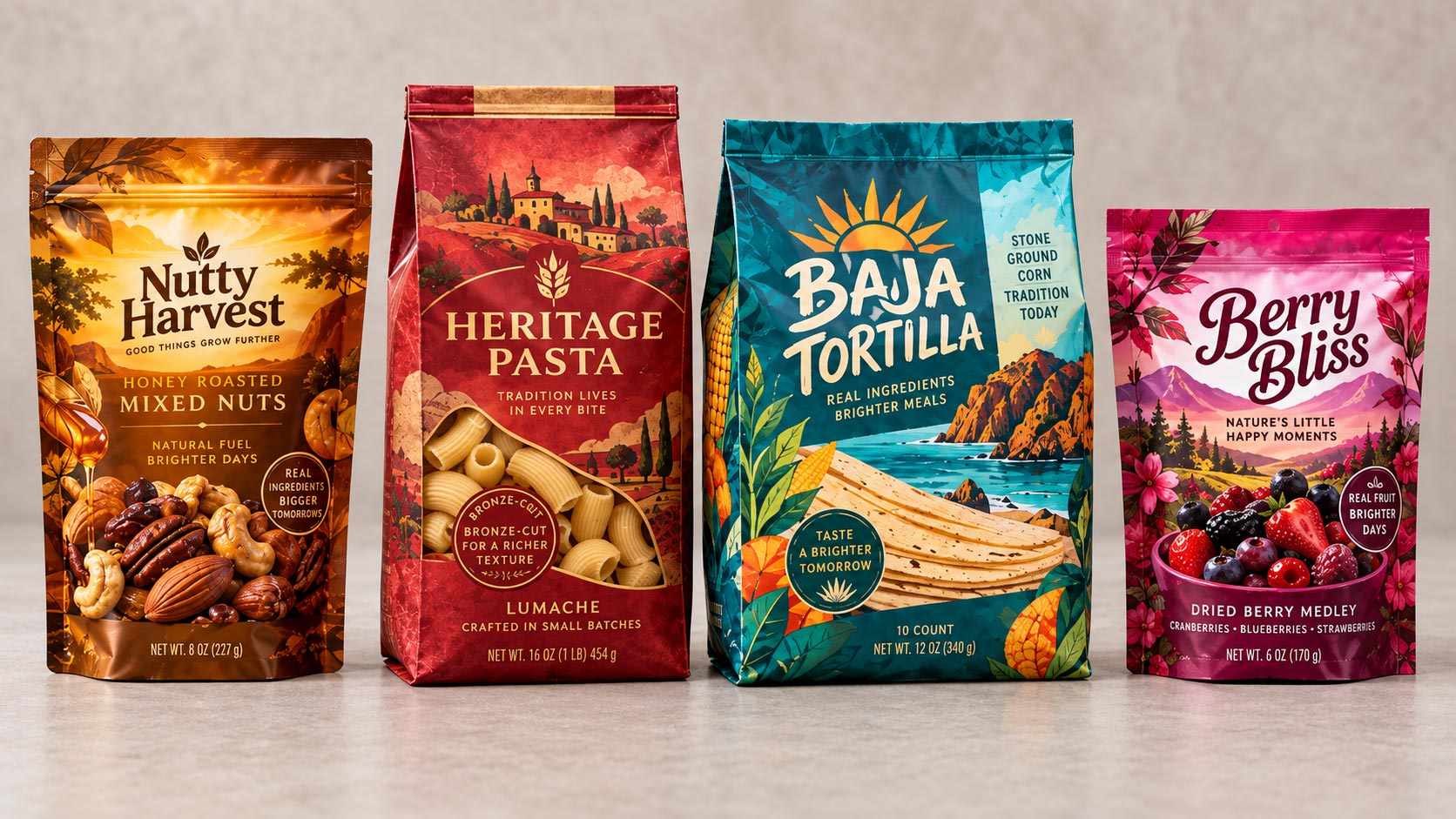
The four shapes above cover most food brands, but a few specialty formats fill in the gaps. Spouted pouches add a cap and spout for liquids and purees like sauces, drinks, and baby food. Clear windows can be built into any of these shapes so shoppers see the real product. And for very large runs, roll stock lets a co-packer form the bag and fill it in one continuous line.
If you are not sure which direction fits, our custom food and product packaging covers these formats and more, and pairing any of them with custom boxes and mailers protects the product in transit for online orders.
Format, Barrier, and Print Work Together
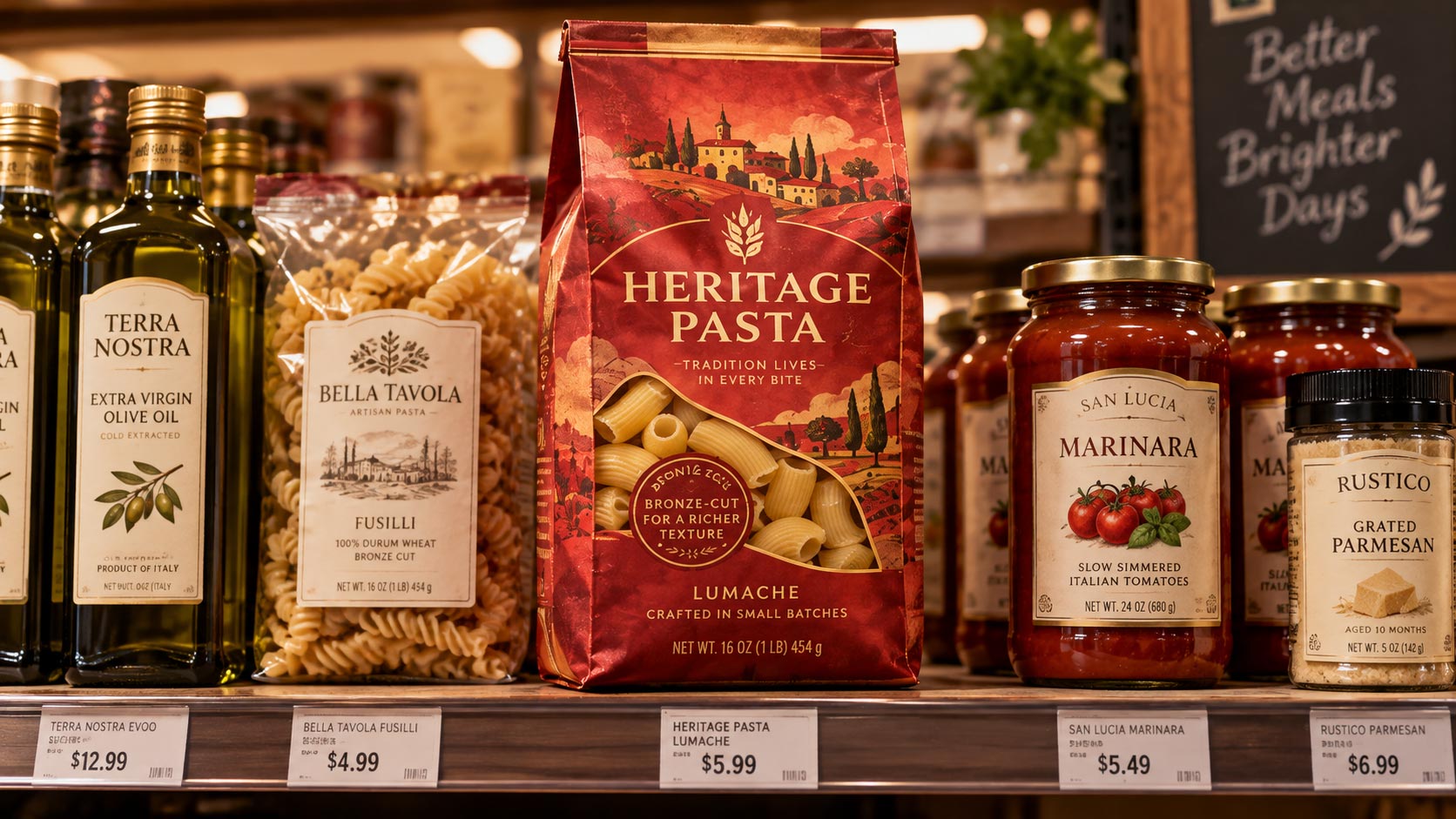
The format is one of three decisions that make a great package, and it is easy to treat it as the only one. The shape is the frame. The barrier film inside is what keeps the food fresh, and the printing is what makes a shopper stop. A gorgeous flat-bottom bag with a weak barrier still goes stale, and a perfect barrier in a dull pillow pouch still gets passed over.
Pick the format first, since it sets the canvas, then match a barrier to your shelf life and a print method to your order size. Shorter runs and new flavors do well with digital printing, while big, steady volume drops the cost with rotogravure. Line all three up and the package works as one.
Wrapping It Up: Pick the Shape That Sells
The shape of your bag is the first impression your brand makes, long before anyone reads the label. A stand-up pouch keeps things flexible, a flat-bottom pouch reads premium, a side-gusset bag carries volume, and a pillow pouch keeps costs low. Match the format to your product, where it sells, and what you can spend, and the bag starts working for you the moment it hits the shelf.
Choose the shape that fits how your food is made and sold, and the rest of the package has a strong frame to build on, which is how a food brand turns a bag into a first impression worth remembering.
Ready to Create Packaging That Elevates Your Brand?
Let's bring your product to life on the shelf.
Get a Free Quote