
Spice and Seasoning Packaging: Bags, Stick Packs, and Jars That Keep Flavor In
Spices are small, valuable, and more fragile than they look. Light, air, and moisture quietly pull the color and punch out of a blend, and the package is the only thing standing in the way. This guide covers spice and seasoning packaging in plain language: the formats that fit everything from a single-use stick pack to a refill pouch, the barrier that keeps flavor and color locked in, how to handle oily and clumping blends, and how to make a small spice bag look premium on a crowded shelf.
Overview
Spices are small, valuable, and more fragile than they look. A jar of paprika or a pouch of taco seasoning does not spoil the way fresh food does, but it fades. Light, air, and moisture quietly pull the color, aroma, and punch out of a blend until what the customer shakes out is a shadow of what you made. The package is the only thing standing between your spice and that slow fade, so it is worth getting right.
This guide covers spice and seasoning packaging in plain language. We will look at why spices are tricky to package, the formats that fit everything from a single-use stick pack to a big refill pouch, the barrier that keeps flavor and color locked in, how to handle oily and clumping blends, and how to make a small spice bag look premium on a crowded shelf. Whatever you blend, our custom food packaging can be built around the way spices actually behave.
Why Spices Are Harder to Package Than They Look
A spice bag has a different job than a bag of chips or granola. The product is potent, expensive by weight, and sensitive to things that do not bother sturdier foods.
- Light fades color and breaks down the aromatic oils that give a spice its smell and flavor.
- Oxygen is the big one, since air slowly strips the punch out of ground spices and blends.
- Moisture makes powders clump and cake into a brick, and it can invite mold in humid kitchens.
- Strong aromas escape a weak bag, so your cinnamon ends up smelling like the shelf next to it.
- Spices are used a little at a time, so the bag is opened and closed for months, and the closure matters.
Start from those pressures, not from a stock bag, and the right package gets clearer.
Match the Format to the Spice
There is no single spice bag. The best format depends on how much goes in, how it is sold, and how the customer uses it.
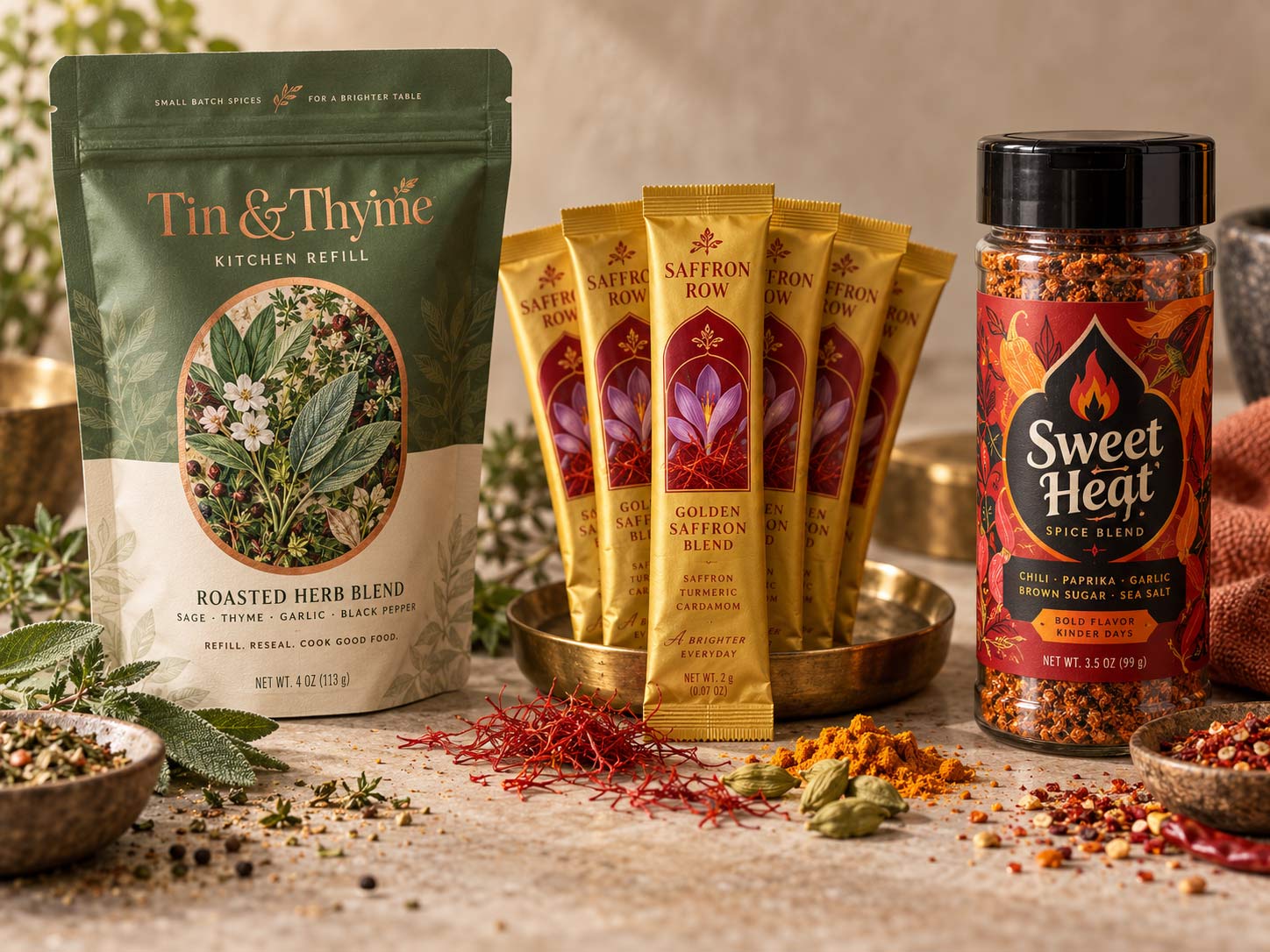
- Stand-up pouches are the workhorse for retail spice blends, since they stand on a shelf, hold a resealable zipper, and give you a full panel for your brand.
- Stick packs and single-serve sachets are perfect for one-use portions, like a single taco or chili seasoning, a spice sample, or a subscription add-in.
- Flat-bottom and box-style pouches give a premium, boxy look for larger or higher-end blends and stand very stably on a shelf.
- Kraft bags with a window let a colorful blend sell itself, which works well for whole spices and rustic, small-batch brands.
- Shaker jars and lidded containers suit table spices and rubs, often paired with a printed sleeve or label.
Barrier: What Actually Keeps Flavor and Color In
The look of a spice bag sells the first purchase, but the barrier is what earns the second. Barrier is the bag's ability to block light, oxygen, and moisture, and it is built into the film, not added on.
- A high-barrier film, often with a foil or metallized layer, blocks light and oxygen and holds aroma in, which is what most ground spices and blends need.
- A clear window is lovely for showing the product, but it lets light in, so keep windows small on color-sensitive spices or skip them.
- A resealable zipper keeps the barrier working after the first open, since a bag that will not reclose leaks freshness every time it is used.
Barrier and closure do two different jobs, and a spice bag usually needs both. The film protects the spice before and between uses, and the zipper protects it after each open. When you spec the bag, ask about the barrier and the closure as two separate decisions.
Handling Oily and Clumping Blends
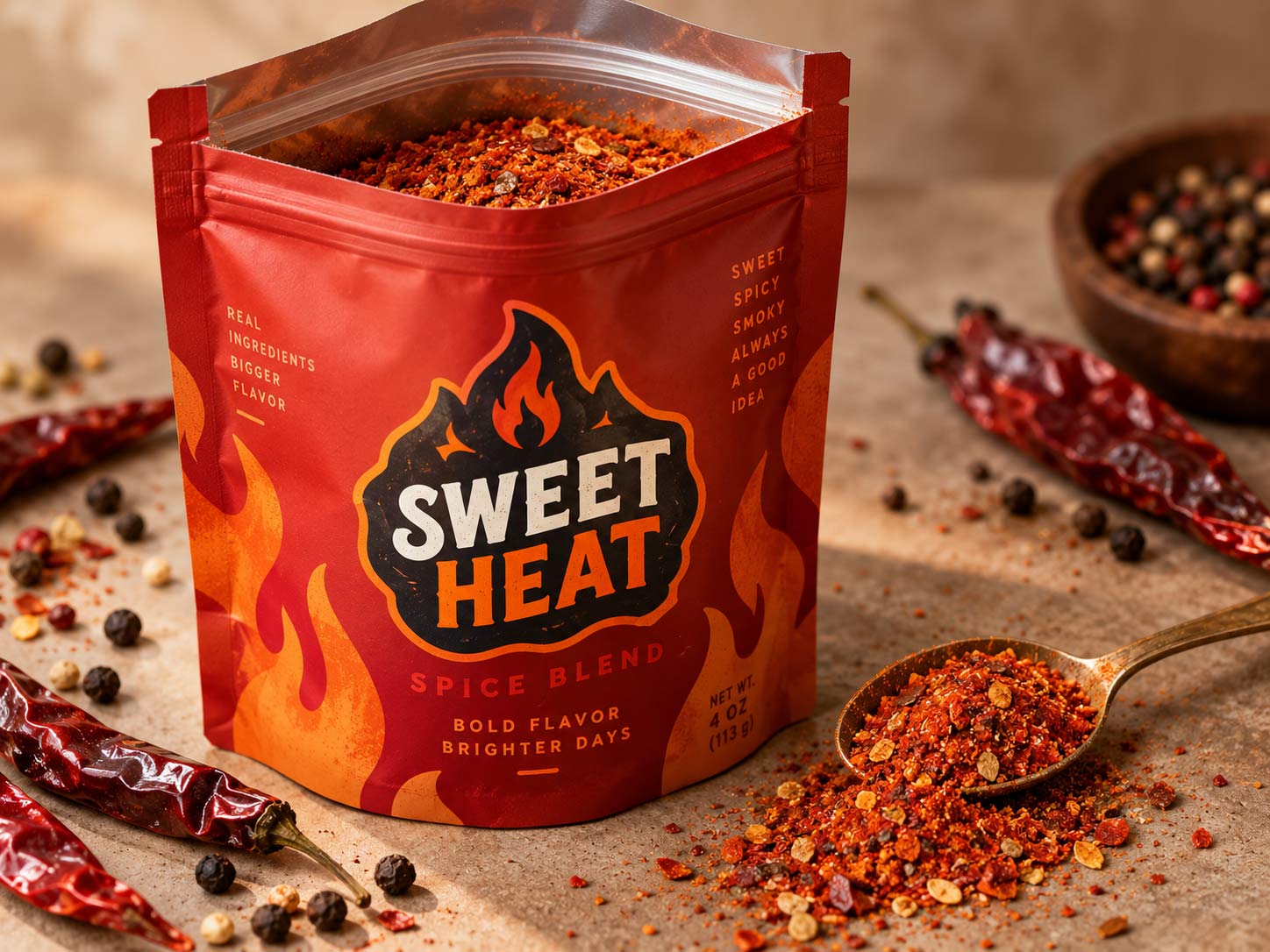
Some blends fight the bag. A seasoning with dried garlic, onion, or chili oil carries its own moisture and oils, and a blend heavy in salt or sugar loves to clump. These are packaging problems as much as recipe ones.
- Oily and high-fat blends need a barrier that resists grease staining, or the oil migrates into the film and shows on the outside.
- Clump-prone powders do best in a bag with a strong moisture barrier and a clean reseal, since every open lets a little humidity in.
- Whole spices and coarse blends are gentler on the bag but need enough room and a strong bottom so sharp pieces do not wear a seam.
If your blend is oily or damp, say so up front when you order, because it changes the film you want. Our team can match the structure to a tricky blend rather than forcing it into a stock bag.
Make a Small Spice Bag Look Premium
Spices sit in a busy, colorful aisle, and the bags are small, so a spice package has to work hard to get noticed.
- A matte or soft-touch finish makes a small pouch feel more premium than a shiny one.
- A bold, full-bleed label or a die-cut shape pulls the eye from down the aisle.
- A small, well-placed window builds trust by showing the real color of the blend.
- Bright, accurate print matters more for spices than most foods, since the color on the bag sets the expectation for the flavor inside.
Full-color printing is easy to reach now even in small runs, so a new spice brand can look polished without a huge first order. Our digital printing is built for that kind of small, high-impact spice run, and larger blends can move to rotogravure printing as the volume grows.
A Word on Sustainable Spice Packaging
Spice buyers often care about where their food comes from, and packaging is part of that story. Because spice bags are small and the volumes are approachable, they are a friendly place to try a greener option. Compostable films and recyclable mono-material pouches both work for many dry spices, and our sustainable packaging can match the eco claim to what the blend actually needs. Keep the claim honest and specific, and it becomes a reason to buy.
Wrapping It Up: Small Bag, Big Flavor
A spice package looks simple, but it is protecting some of the most fragile flavor in the store. Start from what threatens the blend, which is light, air, and moisture, then match the format and the barrier to how the spice is sold and used, handle oily or clumping blends on purpose, and give the bag a finish that earns a second look.
Do that, and the package keeps your spice as bright and potent as the day you blended it, which is exactly what turns a first jar into a regular one.
Ready to Create Packaging That Elevates Your Brand?
Let's bring your product to life on the shelf.
Get a Free Quote