
Sauce and Condiment Packaging: Spouted Pouches, Barrier, and Clean Pours
Sauces and condiments break most of the rules that dry-food packaging plays by. They are wet, often acidic or oily, sometimes filled hot, and they have to pour or squeeze out cleanly without making a mess. This guide covers sauce and condiment packaging in plain language: the spouted pouches and caps that make dispensing easy, the barrier and liner choices that stand up to acidic and oily contents, the difference between hot-fill and cold-fill, and how to keep a wet product fresh and leak-free from the line to the last squeeze.
Overview
Sauces and condiments break most of the rules that dry-food packaging plays by. A bag of granola just has to stay closed and dry. A hot sauce, a dressing, or a barbecue sauce is wet, often acidic or oily, sometimes filled while it is still hot, and it has to pour or squeeze out cleanly without dripping down the side. The packaging has to handle all of that and still look good on a crowded shelf.
This guide covers sauce and condiment packaging in plain language. We will look at why wet products are their own challenge, why the spouted pouch has become the workhorse, the barrier and liner choices that stand up to acidic and oily contents, the difference between hot-fill and cold-fill, and how to keep a sauce fresh and leak-free from the line to the last squeeze.
Why Sauces Break the Rules
A wet product asks more of its package than a dry one, in ways that are easy to underestimate until a batch leaks or separates.
- Liquid finds every weak spot, so seals and spouts have to be tight or the product leaks in transit.
- Acidic sauces like hot sauce and vinegar dressings can attack the wrong film over time, so the inside layer has to resist them.
- Oily and fatty sauces can migrate into a cheap film and show as a stain or weaken a seal.
- The product has to dispense cleanly, since a sauce that will not pour or squeeze out neatly frustrates the customer.
Start from the sauce itself, how thick it is, how acidic, how oily, and whether it is filled hot, and the right package gets much clearer.
The Spouted Pouch Is the Workhorse
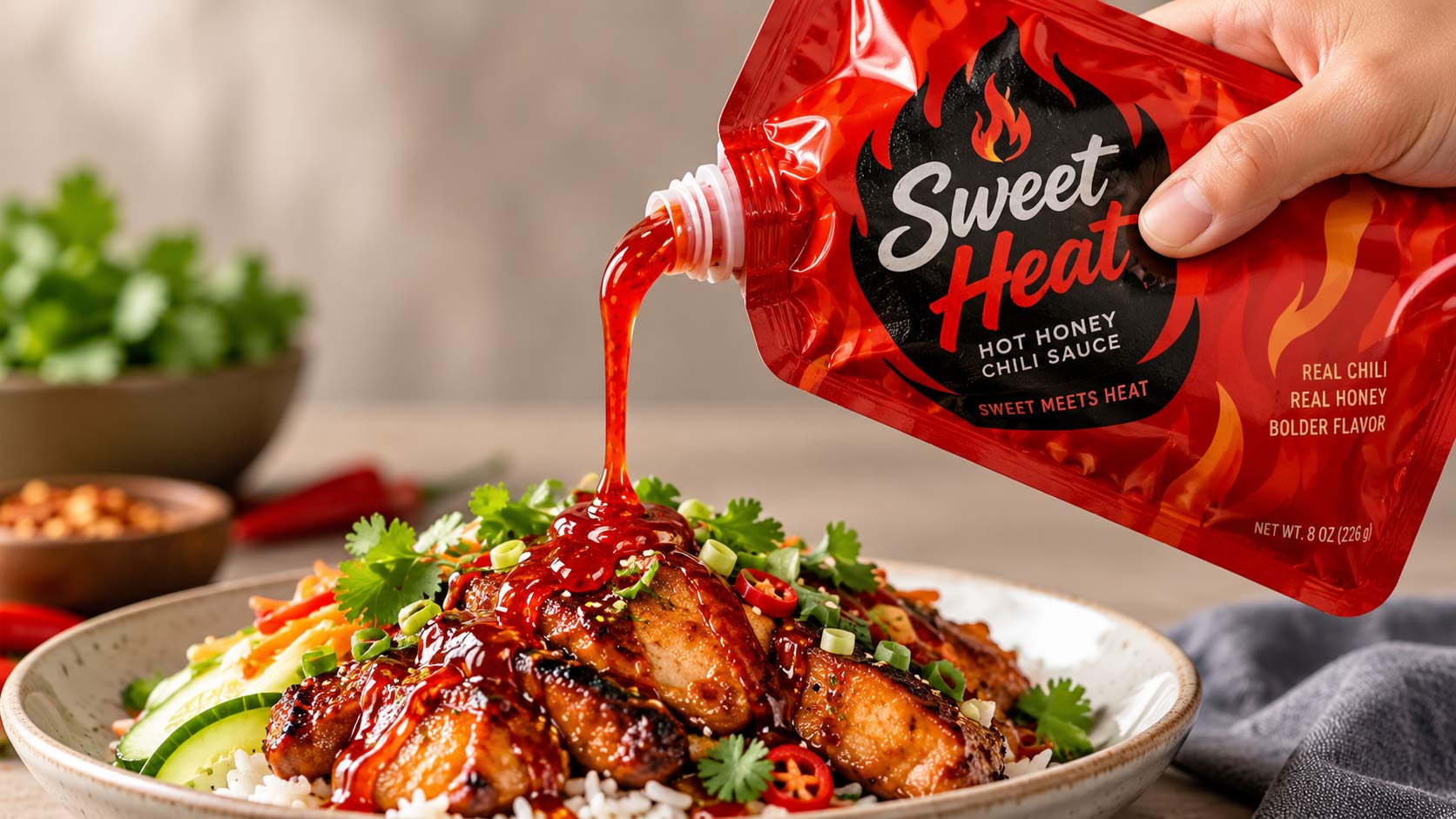
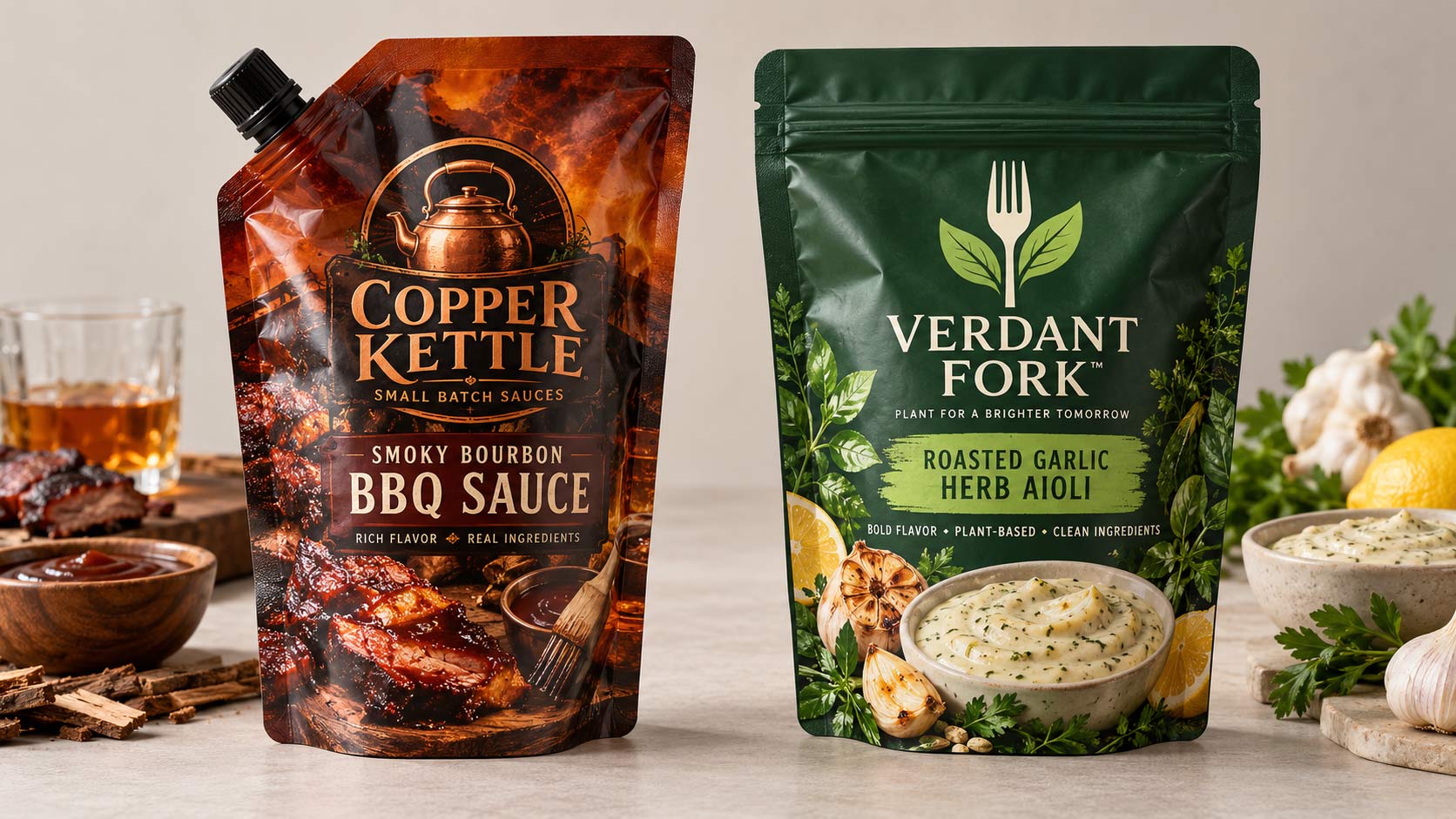
For most sauces and condiments, the spouted stand-up pouch has become the default for good reason. It is a flexible pouch with a molded spout and cap in one corner, so it pours or squeezes like a bottle but weighs less, ships flatter, and gives you a full panel for your brand.
- The cap reseals cleanly between uses, which keeps a wet product fresh and mess free.
- The pouch stands on a shelf and collapses as it empties, so there is no air gap fighting freshness.
- It uses far less material than a rigid bottle, which cuts shipping weight and shelf footprint and makes it a more sustainable choice.
Printed with digital printing, a spouted pouch can carry full-color branding even on a small first run, so a new sauce brand can look established without a huge order.
Barrier and Liner for Wet, Acidic, and Oily Contents
With a sauce, the inside of the package matters as much as the outside. The barrier keeps oxygen and light away so the sauce holds its color and flavor, and the sealant layer, the innermost film that touches the food, has to be chosen for what the sauce is made of.
- A high-barrier film protects flavor and color and extends shelf life, which matters for a product that sits on a shelf for months.
- The sealant layer must resist the acid in vinegary and citrus-based sauces so it does not break down over time.
- For oily and fatty sauces, the film has to resist grease so the oil does not migrate and stain or weaken the seal.
This is exactly the kind of match we make when we build custom food packaging, pairing the structure to the recipe rather than forcing a sauce into a stock bag meant for something dry.
Hot-Fill or Cold-Fill
How the sauce goes into the package changes what the package has to survive, and it is worth deciding early.
- Hot-fill means the sauce is filled while still hot, which helps preserve it, but the pouch and seals have to withstand that heat without warping or failing.
- Cold-fill is gentler on the package but often leans on refrigeration or preservatives to keep the sauce safe.
If your sauce is hot-filled or retort-processed, say so up front when you order, because it changes the films and the construction you need. The wrong bag for a hot-fill process fails on the line, not on the shelf.
Formats Beyond the Spout
The spouted pouch fits most sauces, but it is not the only option, and the best format follows how the product is used.
- A wide-mouth stand-up pouch with a resealable zipper suits thick condiments and chunky sauces that need to be spooned rather than poured.
- A single-serve packet or sachet is perfect for samples, food service, and on-the-go portions.
- A stand-up pouch without a spout works for sauces sold as refills or for products decanted into another container.
Keep It Clean and Leak-Free
A wet product lives or dies on the details that keep it from making a mess, and a few choices go a long way.
- Match the spout and cap size to how thick the sauce is, since a thin hot sauce and a thick barbecue sauce pour very differently.
- Ask about seal strength and leak testing, because a wet product punishes a weak seal harder than a dry one ever will.
- Leave a little headspace so the pouch is not stressed and the cap threads stay clean.
Get these right and the customer never thinks about the package, which is exactly the point.
Wrapping It Up: Built for the Wet Stuff
A sauce or condiment package has a harder job than it looks. It has to hold a wet, sometimes acidic or oily product, survive a hot fill if that is how it is made, pour or squeeze clean every time, and still sell the flavor on the shelf. Start from the sauce, choose a spout and a film that match it, and back it with a barrier that keeps the flavor locked in. Do that, and your sauce reaches the table tasting exactly the way you made it.
Ready to Create Packaging That Elevates Your Brand?
Let's bring your product to life on the shelf.
Get a Free Quote