
Nobody Measured Your Shelf Life. Somebody Chose It.
Ask a food brand where the date on their pack came from and the answer is usually vague. That is because a shelf life is not something anyone observes and reports. It is a number somebody commits to, and then the packaging either supports it or quietly does not. Understanding which of those you have changes what you do when a customer says it tasted stale before the date.
Overview
There is a date printed on every pack you sell. Ask where the number came from and most food brands cannot give a straight answer. Somebody decided it early on, it went onto the artwork, and it has been reprinted ever since.
That is not negligence, it is how the industry mostly works. But it creates a specific blind spot. People talk about shelf life as though it were a property of the food, something that could be looked up or measured off a sample. It is not. Nobody can observe the future. A shelf life is a commitment a brand makes, and the packaging either supports that commitment or it does not, quietly, for months, until a customer notices before the date does.
A Shelf Life Is Chosen, Then Supported
The order of operations matters more than anything else in this post.
You do not test a product and discover its shelf life. You decide what shelf life you need, usually for commercial reasons, then build a package and a supply chain that can deliver it. Distributors want a minimum remaining life on arrival. Retailers want a date that survives their stock rotation. Your own production run size dictates how long a batch has to last. All of that sets the number before anyone looks at the food.
Then the real work begins: proving the package can carry it. That is what shelf life testing is for, and it is a separate activity from choosing the number. The two get conflated constantly, and the gap between them is where stale product comes from.
How Brands Actually Arrive at a Date
In practice there are three routes, and they are not equally sound.
- A real-time study. You store the product under defined conditions and assess it at intervals across the full intended life. The most reliable method and the slowest, because a twelve month claim takes twelve months.
- An accelerated study. You store product under harsher conditions, usually warmer, to make it age faster, then reason back to normal conditions. Faster and widely used, and it has limits, because not every failure mode speeds up at the same rate.
- Copying the shelf. Somebody looks at what comparable products claim and uses that. This is by far the most common route for small brands, and it is a guess wearing a number's clothing.
There is nothing shameful about the third one as a starting point. The problem is when it is never revisited, and the date keeps getting printed long after the recipe, the film or the supplier changed.
What Actually Decides Whether the Date Holds
Once a number is committed, these are the things that determine whether it survives contact with reality.
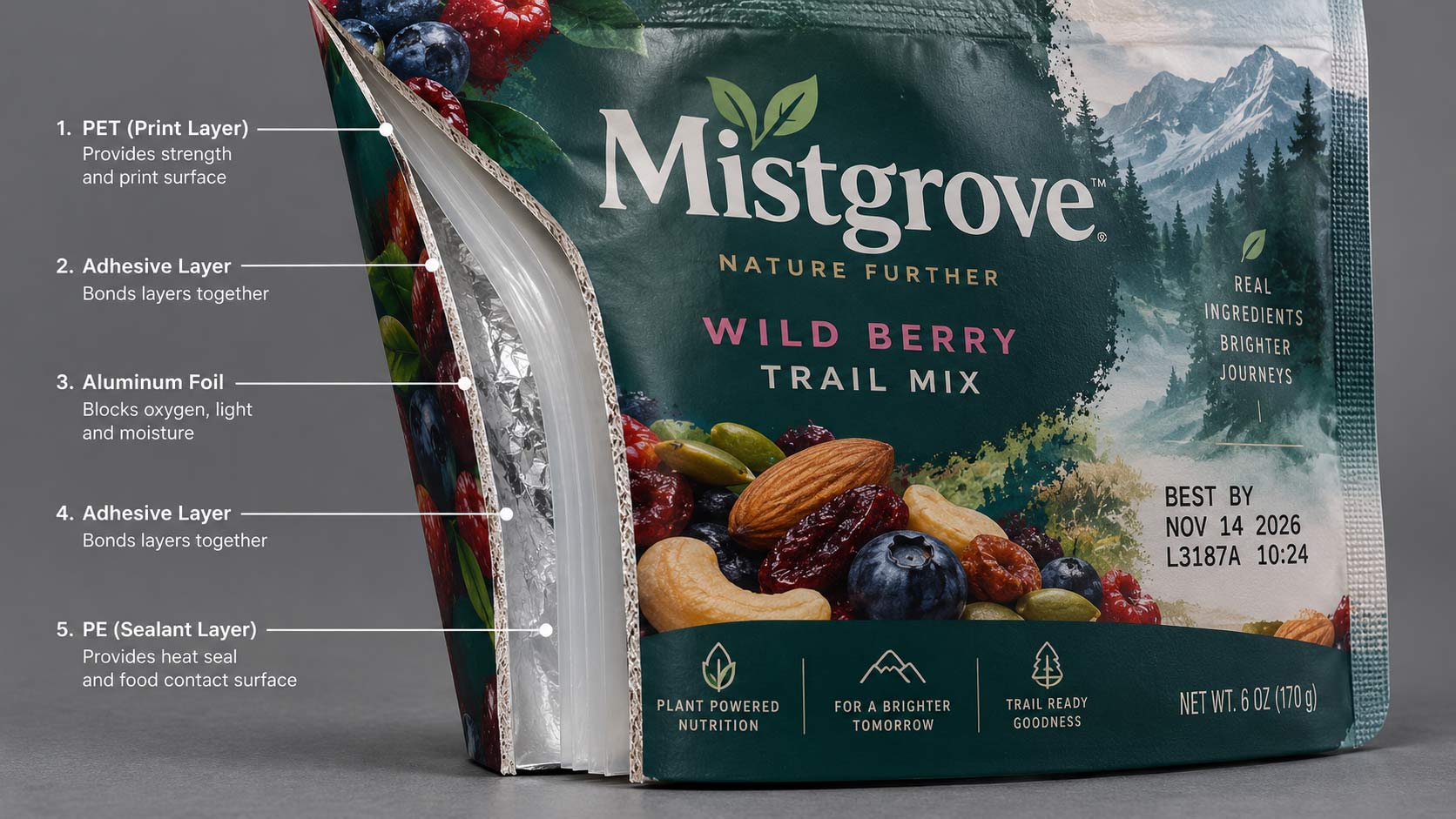
- Barrier performance. How much oxygen and moisture the structure lets through over time. This is the single biggest lever and the one most often under-specified.
- Headspace and oxygen. What is sealed inside the pack with the product on day one.
- Fat content. Fats oxidize and go rancid, and that clock runs regardless of how good the seal is.
- Water activity. How much moisture is available to move, within the product and across the film.
- Light. Exposure degrades fats and pigments, which is the trade covered in your clear window is shortening its life.
- Storage temperature. Every stage from your warehouse to a customer's cupboard, including the ones you do not control.
Notice that your packaging decision touches almost all of them. That is the connection that gets missed: a shelf life claim is a packaging specification wearing a marketing number.
The Silent Part: When It Stops Being True
This is what makes the whole subject slippery. A shelf life claim does not fail loudly.
Change the film to save cost and the barrier changes. Switch suppliers and the structure may not be identical even when the spec sheet looks the same. Increase the fill weight and the headspace changes. Move distribution from regional to national and the product spends longer in trucks. Any of those can shorten the real life of the product while the printed date stays exactly where it was.
There is a subtler version too. The barrier you specified can be intact on paper and compromised in practice, because the package was damaged in a way nobody can see. That is the subject of what road vibration does to a barrier, and it produces exactly this symptom: product that goes stale early while the pack looks perfect and the spec sheet still says the right thing.
What To Do Before You Print a Date
None of this requires a laboratory on day one. It requires honesty about which of the three routes you used.
- Write down the number you actually need, and why. Distributor requirement, retailer requirement, batch size, or all three.
- Specify the package to that number, rather than picking a package and hoping. Our guide to choosing food packaging walks through the barrier decision.
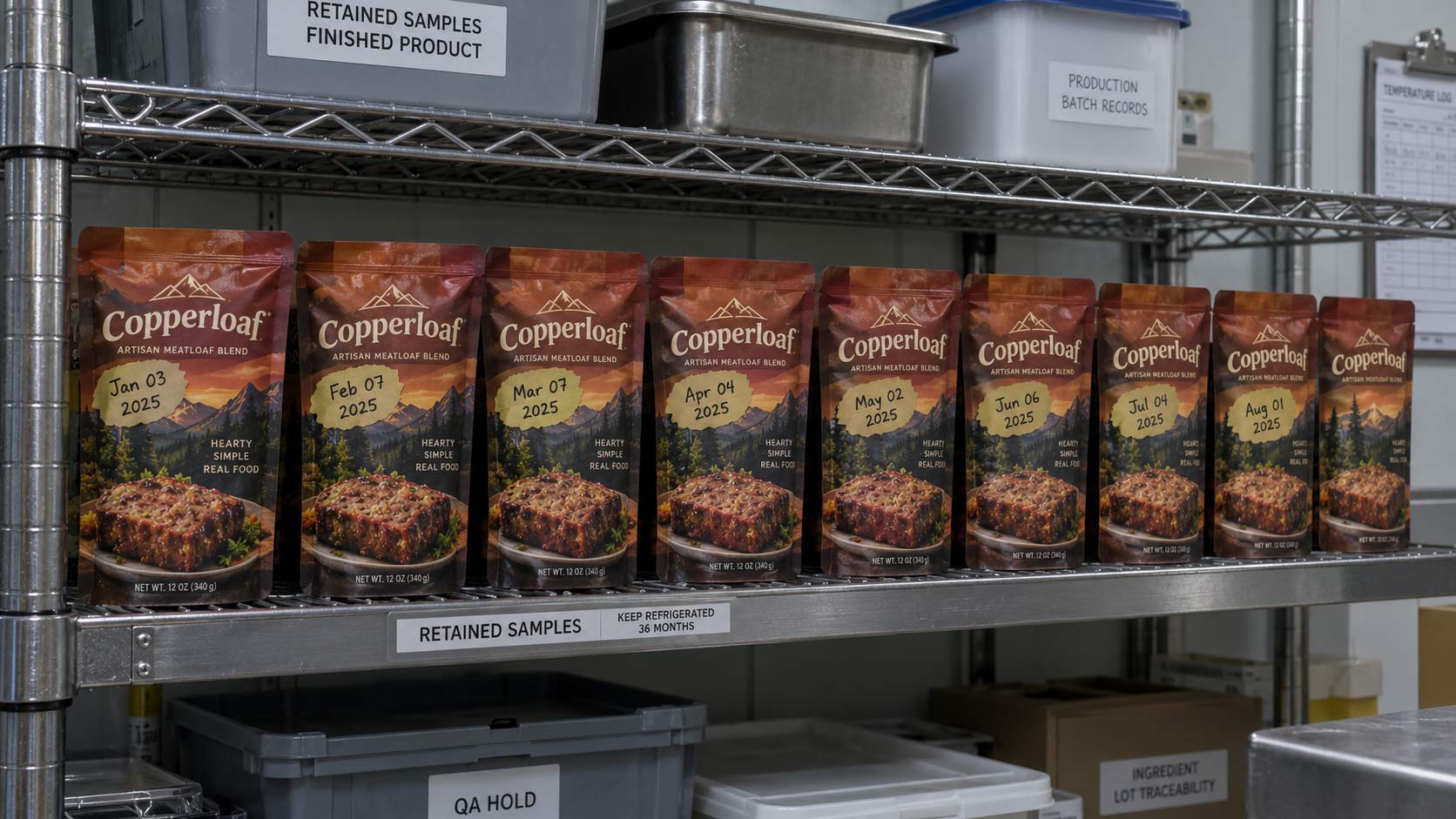
- Keep retained samples from every run, stored properly and dated, and actually open them at intervals. This is the cheapest shelf life evidence available and most brands skip it.
- Re-validate whenever anything changes. New film, new supplier, new size, new distribution lane. Any one of those invalidates the old assumption.
- Treat the date as a claim you can defend, not a field in the artwork template.
If you are specifying a new structure and the shelf life matters commercially, raise the two together rather than in sequence. A custom food packaging specification built around a stated shelf life is a very different conversation from one where the date gets added at artwork stage.
Wrapping It Up: The Date Is a Promise, So Know What Backs It
The useful shift here is small and it changes how you argue about complaints. A shelf life is not a fact about your food that somebody discovered. It is a promise your brand made, and the packaging is the thing keeping it.
So when product comes back tasting flat before its date, the question is not whether the date was wrong. It is which part of the chain between that promise and that pack gave way: the barrier, the headspace, the distribution, the storage, or the fact that nobody ever checked the number in the first place. Knowing which of the three routes produced your date tells you immediately how much confidence it deserves, and that is worth finding out before a customer finds out for you.
Ready to Create Packaging That Elevates Your Brand?
Let's bring your product to life on the shelf.
Get a Free Quote