Your Product Did Not Go Stale. The Bag Drank the Flavor.
A citrus granola that tasted bright at launch tastes flat three months later. The best by date is nowhere close, the barrier film is the good one, and the seal held. So the batch gets blamed. But the flavor did not escape and it did not break down. It moved a few thousandths of an inch, out of the food and into the plastic layer touching it, and it is still sitting there.
Overview
The product launched tasting exactly the way you wanted. Bright citrus, a clean hit of mint, a spice blend that filled the kitchen when the bag opened. Three months later a customer writes in, or you open a bag off the shelf yourself, and it tastes muted. Not spoiled. Not stale in the papery way that oxygen causes. Just quieter, as if somebody turned the flavor down.
The date is nowhere close. You paid for a high barrier film. The seals are fine. So the conversation turns to the batch, the supplier of the orange oil, or the recipe, and none of those turn out to be wrong.
What happened has a name in the packaging world, and it is not one most food brands ever hear: flavor scalping. The bag absorbed the flavor. It did not let it out. It took it in.
Like Dissolves Like
Here is the fact everything else follows from.
The layer of a pouch that touches your food is almost always a sealant, usually a type of polyethylene, because it melts cleanly and welds the bag shut. Polyethylene is an oily, nonpolar material. Many of the compounds that make food smell and taste good are oily and nonpolar too: limonene in citrus, menthol in mint, the essential oils in cinnamon, clove and pepper, the aromatics in tea and coffee.
Oily things dissolve into oily things. So those flavor compounds do not just sit next to the plastic. They move into it, slowly, the way a drop of food coloring spreads into a glass of water. The sealant layer behaves less like a wall and more like a sponge for exactly the molecules you care about most.
It does not take all of them, and it does not take them evenly. That second part matters, because a flavor is a balance. If the sealant pulls citrus top notes harder than the base, what is left in the food is not a weaker version of your recipe. It is a different recipe.
Why a Better Barrier Does Not Fix It
This is where the misdiagnosis usually locks in, and it is worth slowing down for.
When a product loses flavor, the instinct is to upgrade the barrier. More barrier keeps more in, so it should help. And a barrier does help with one problem: aroma escaping through the bag wall into the air outside. That is real, and it is part of why a good structure matters.
But look at where the barrier sits. In a typical laminated pouch, the barrier layer is in the middle of the wall and the sealant is on the inside, between the barrier and the food. Scalping happens in the sealant. The flavor never reaches the barrier because it gets absorbed on the way. You can put the best barrier on the market in that bag and the sponge is still on your side of it.
Which Products Get Hit Hardest
Not every food has this problem, and knowing whether yours does saves a lot of guessing. The pattern follows the chemistry above.
- Citrus anything. Citrus oil is the textbook example. Granola, trail mix, candy, baking mixes and teas with orange, lemon or grapefruit notes are all exposed.
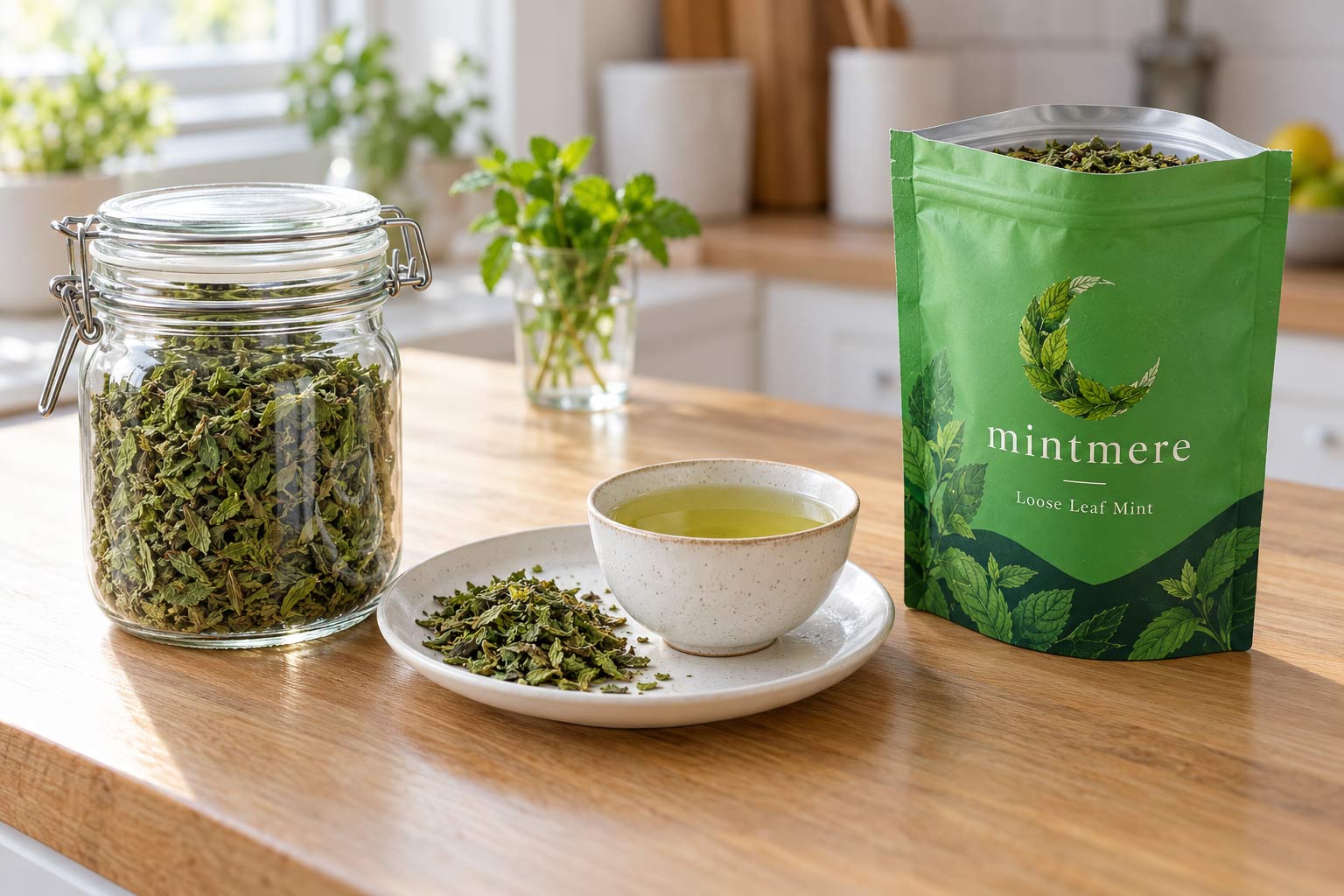
- Mint. Mints, mint teas and mint chocolate lose their brightest edge first.
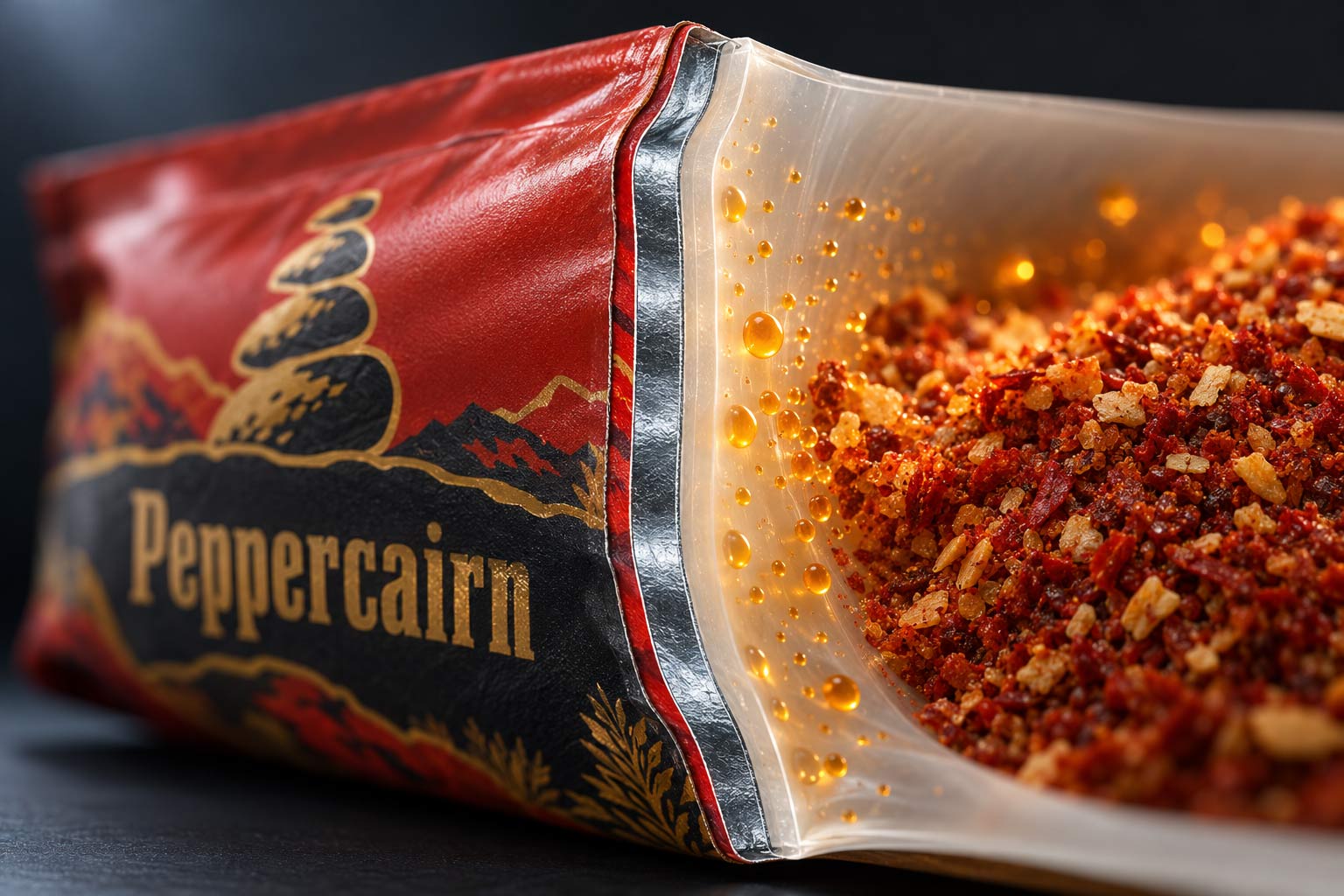
- Whole and ground spices. Blends rich in essential oils, such as cinnamon, clove, cardamom and pepper, give up aroma to the inner layer.
- Tea and dried herbs. Delicate aromatics with no strong base flavor to hide behind.
- Coffee. The aromatic top notes are exactly the oily, volatile compounds a sealant likes.
Products that rely on salt, sugar, fat or a strong roasted base tend to notice it much less. A plain cracker does not have much for the sealant to take. A lemon shortbread does.
The Test That Settles It
You do not need a lab to tell whether this is your problem. You need two samples and your nose.
When a batch is made, keep some of it in a glass jar with a tight lid, and keep some in the production pouch. Store both in the same place. A month or two later, taste them side by side. Glass does not absorb aroma. If the jar still tastes like launch day and the pouch does not, the batch was fine and the package took the difference.
There is an even simpler clue. Empty a pouch that has been on the shelf a while, close it, wait, and smell the inside. If the empty bag smells strongly of your product, that aroma did not come from crumbs. It came out of the plastic, which means it went into the plastic first.
How Savor Brands Handles This
Scalping is a structure decision, which means it can be designed around before anything is printed. It is very hard to fix after.
- We ask what carries your flavor. Citrus, mint, spice and tea change what the inner layer should be, and that question belongs at the start of a quote, not after a complaint.
- We look at the sealant, not only the barrier. Sealant resins are not all equally absorbent, and some take up far less aroma than standard polyethylene while still sealing well.
- We consider what faces the food. Some structures put a layer that resists aroma uptake on the product side, which changes the problem more than adding barrier in the middle does.
- We size the sealant to the job. A thicker sealant seals forgivingly, but it is also a bigger sponge. The right thickness is the one your seal actually needs.
- We tell you to run the jar test. It is free, it settles arguments, and it gives you data the next time you change a recipe or a structure.
If sustainability is also on your list, raise both at once. An all polyethylene structure built for recycling narrows the choices for that inner layer, and that trade is worth talking through on our sustainable packaging options before you commit.
Why It Looks Like a Bad Batch
Every clue points away from the bag, which is why this goes undiagnosed for so long.
The package looks perfect. It is sealed, it is not puffy, nothing leaked, and the barrier is the expensive one. The food is not spoiled, so nobody suspects oxygen or moisture. And because flavor fades gradually and unevenly, the obvious explanation is something that varies from batch to batch, like an ingredient.
But a scalping problem is consistent. It shows up in every batch, gets worse with time on the shelf, and hits the same flavor notes every time. A real ingredient problem is random. That difference is the tell.
Wrapping It Up: Keep a Jar
The cheapest habit in food packaging might be a glass jar on a shelf. Put a little of every batch in one, store it next to the pouches, and taste them together before you change your recipe, your oil supplier or your film.
If the jar wins, the conversation is about the inner layer of the bag. Our post on how shelf life is actually decided explains why a date can be met while the flavor still fades, and the one on reverse printed packaging walks through what each layer of a pouch is doing. When you are ready to build a structure around your flavor instead of against it, tell us what your product tastes like and we will start from the inside out.
Ready to Create Packaging That Elevates Your Brand?
Let's bring your product to life on the shelf.
Get a Free Quote