The Pouch Was Fine When You Filled It. Then the Vinegar Got to It.
A few weeks after filling, the inside of your pouch starts to blister, wrinkle or come loose from the outside, and the seals begin to leak. It looks like a bad batch of bags. Usually it is packaging delamination: an ingredient in the food, like vinegar, citrus oil, spice oil or alcohol, worked its way through the inner layer and attacked the glue that holds the pouch together.
Overview
The bags looked perfect on filling day. The seals were strong, the print was sharp, and the first shipments went out without a single complaint.
Then, three or four weeks later, a retailer sends photos. The pouches have soft blisters on the front. Some have wavy lines running across them. When you cut one open, the inner film peels away from the outside like a loose lining, and a few bags have started to seep at the seal.
It looks like someone sold you a bad batch of film. Most of the time, that is not what happened. This is packaging delamination, and the cause is usually inside the bag: the food itself.
What Is Packaging Delamination?
Delamination is when the layers of a laminated pouch come apart from each other.
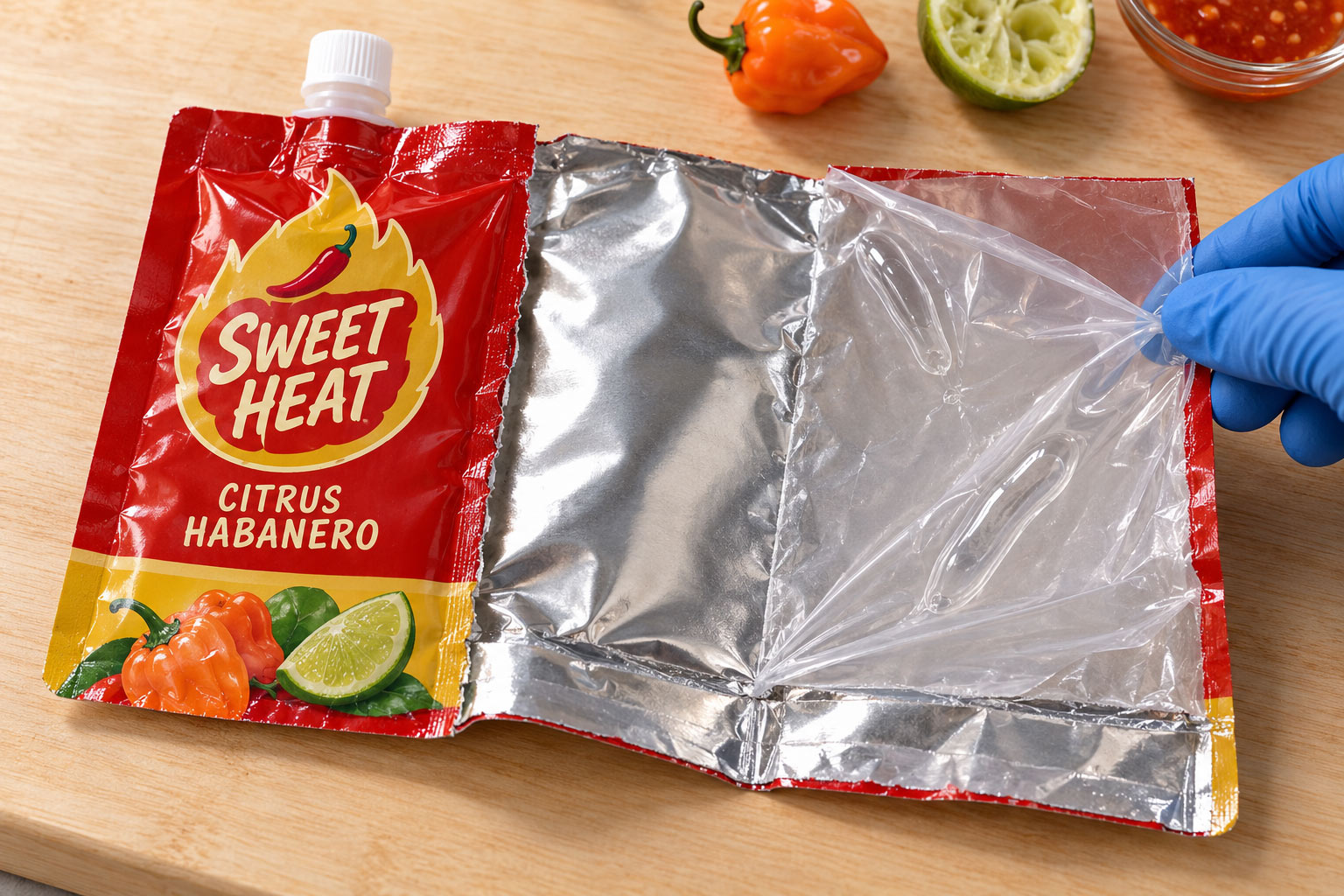
Almost every food pouch is several films glued together. There is usually an outer film that carries the print, a barrier layer such as foil or a metallized film in the middle, and an inner sealant layer that touches the food and melts to form the seals. Thin layers of adhesive bond each film to the next. Together they act like one tough sheet.
When one of those adhesive bonds lets go, the films separate. You see it as bubbles, tunnels, wrinkles or cloudy patches, and you feel it when the inside of the bag slides loose from the outside. Because the seals are made from the inner layer, a seal can also fail even though it was perfect on filling day. The sealant stays welded to itself, but it peels right off the layer it was glued to.
How Can Food Pull a Bag Apart?
Some ingredients do not stay politely on the inside. They slowly move into the sealant layer, pass through it, and reach the adhesive behind it. Once they get there, they can soften or break down that bond.
The packaging industry calls these aggressive products. The usual suspects are:
- Vinegar and other acids, found in pickles, dressings, marinades, ketchup and most hot sauces.
- Citrus oils, from lemon, orange and lime peel, zest and flavorings.
- Essential and spice oils, such as mint, clove, cinnamon, garlic and chili oil.
- Alcohol, in extracts, some sauces and soaked fruit.
- Hot, oily fillings, where heat helps the oil move faster.
None of this happens on the filling line, which is why it is so confusing. The ingredient needs time to travel. Warmth speeds it up, so a hot warehouse, a summer truck or a hot fill can turn a slow problem into a fast one.
How Is This Different From a Bad Seal or a Bad Batch?
A bad seal shows up right away, or as soon as the bag is squeezed in the case. Delamination shows up later, after the product has had time to work on the bond.
A bad batch of film tends to fail no matter what you put in it. Delamination follows the recipe. Your plain pretzel pouches are fine and your salt and vinegar pouches blister. Your original sauce holds up and the new citrus version starts to tunnel. If the problem tracks a flavor, look at the ingredients before you blame the film.
It is also not the same as flavor scalping, where the inner layer absorbs aroma oils and the food slowly loses its taste. Scalping changes what the food tastes like. Delamination changes whether the bag holds together. The same citrus and spice oils can cause both, which is why our post on flavor scalping is worth reading alongside this one.
How Do You Stop It?
You choose a structure that is built for your product, then you prove it with a test before you print thousands of bags.
Tell your supplier everything that goes in the bag. Not just "hot sauce" but the vinegar, the oils, the alcohol, whether it is filled hot, and how long it needs to last. A structure that is perfect for dry granola can be the wrong choice for a vinegar-based sauce. Our guide to sauce packaging covers the other things wet products need.
Use a product-resistant structure. Adhesives and sealant layers are not all the same. Some are made to stand up to acids, oils and alcohol, and those are the ones aggressive foods need. This is a decision about what is inside the pouch, not about how it looks, so it belongs in the conversation when you plan your custom food packaging.
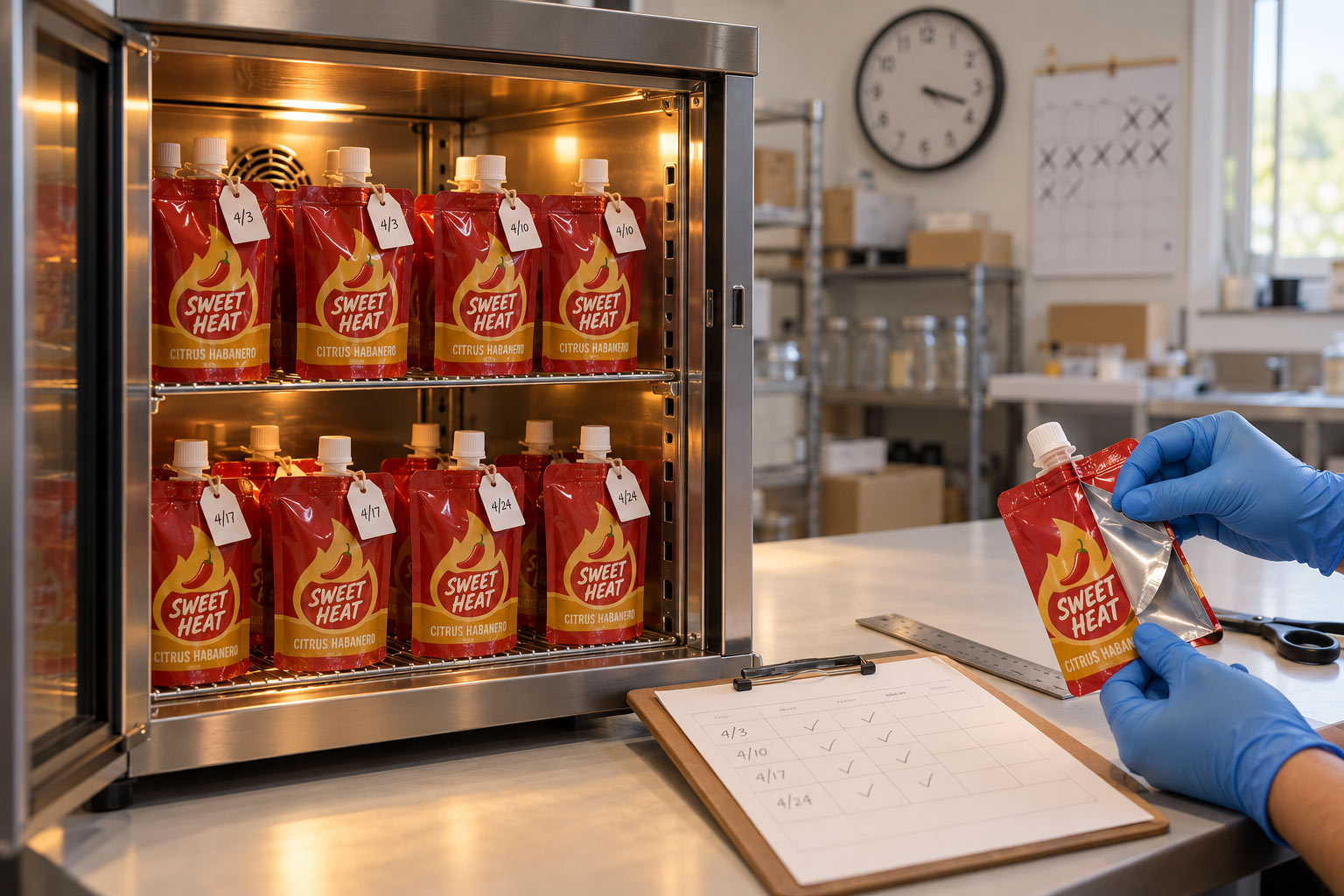
Run a compatibility test with your real product. Fill sample pouches with the actual recipe, seal them, and store some of them somewhere warm for several weeks, because heat brings out problems sooner. Check them every week. Look for blisters, wrinkles and cloudy spots, peel the layers apart by hand to see whether they still hold, and squeeze the seals. A short run on digital printing lets you test the real bag without committing to a full order.
Retest when the recipe changes. A new flavor, a stronger vinegar or a splash of citrus oil can change everything. The structure that passed last year was only tested against last year's recipe.
How Savor Brands Handles This
We would much rather ask too many questions about your recipe than have you discover a problem on a store shelf.
- We ask what is in the product, including acids, oils, alcohol and fill temperature, before recommending a structure.
- We match the adhesive and sealant to the product, not just the barrier and the look.
- We encourage a test with your real product before a full run, especially for sauces, pickles, citrus and spice blends.
- We keep your structure the same on reorders, so a pouch that passed stays the pouch you get.
Wrapping It Up: The Recipe Is Part of the Package
When a pouch blisters, wrinkles or comes apart weeks after filling, the film is not always to blame. Vinegar, citrus oils, spice oils and alcohol can travel through the inner layer and break the bond that holds the pouch together, and heat makes them faster. Tell your supplier the whole recipe, choose a product-resistant structure, test with real product somewhere warm, and test again whenever the recipe changes.
Do that and the bag that looked perfect on filling day still looks perfect when your customer opens it. If you are packaging a sauce, pickle, dressing or a citrus or spice product, tell us about your recipe and we will help you build a pouch that holds up.
Ready to Create Packaging That Elevates Your Brand?
Let's bring your product to life on the shelf.
Get a Free Quote