Your Pouch Is Full. The Window Is Showing the Empty Part.
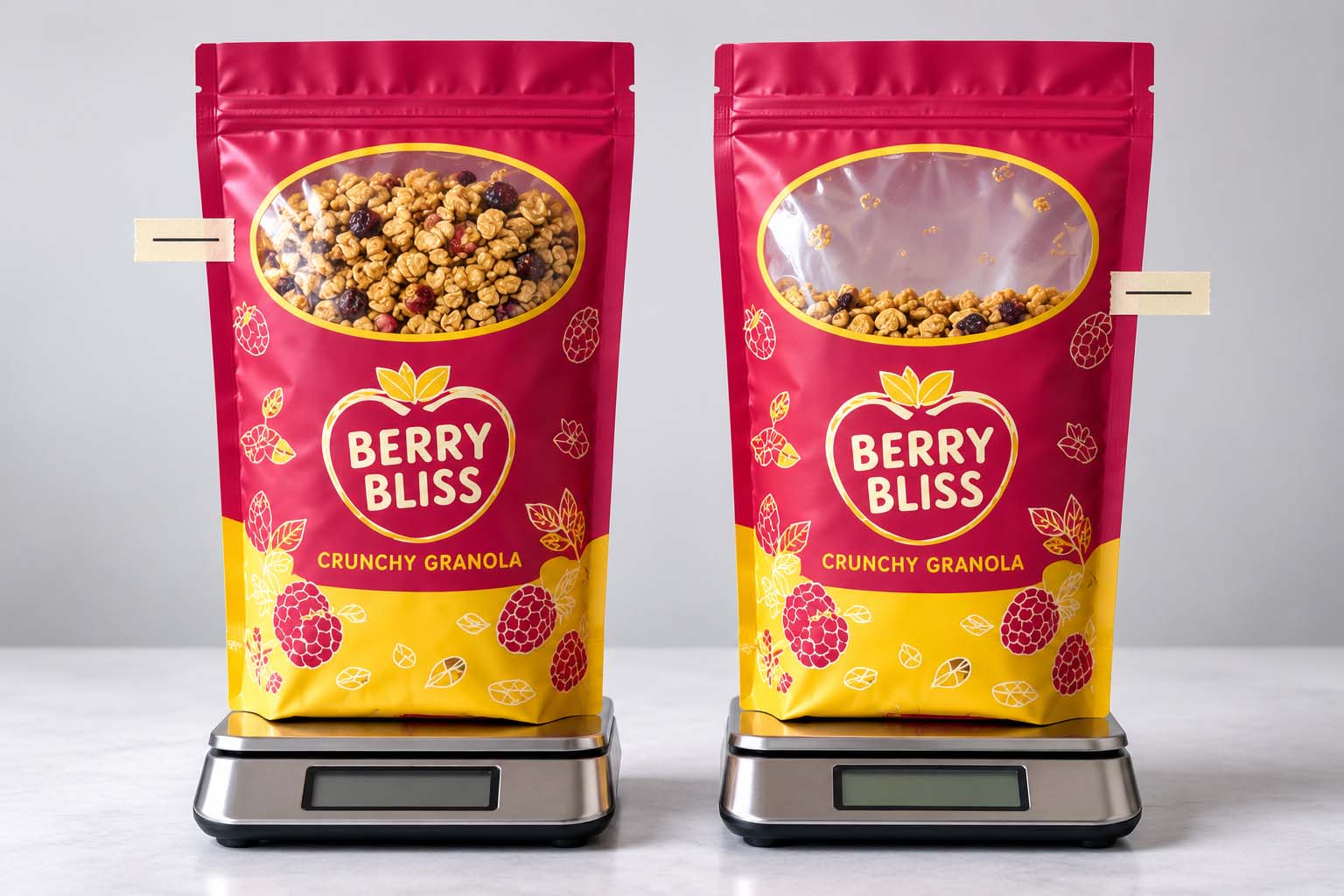
The bag weighs exactly what the label says, and on the shelf it looks half empty. Nothing was short filled. Loose foods settle on the trip from your line to the store, the product drops, and a window placed near the top ends up framing the empty space above it. The fix is to place the window where the product will be after the truck ride, not where it was on the filling line.
Overview
The complaint usually comes with a photo from a store shelf. Your granola, trail mix or cereal pouches sit in a row, and through every clear window the shopper sees air, a few crumbs, and the top of the product sitting well below the window. It looks like the bags were short filled.
You weigh a few. They are right on the label weight, every one of them.
Nothing went wrong on your line. The food moved on the way to the store, and the window was placed for a bag that no longer exists. This post explains why it happens and how to place a window so it shows food every time.
Why Does a Full Pouch Look Half Empty on the Shelf?
Because loose foods settle in transit, and a window near the top ends up showing the space they left behind.
When you fill a pouch, the pieces fall in loosely, with lots of air between them. Then the bag rides a conveyor, gets packed in a case, stacked on a pallet and driven hundreds of miles. Every bump and vibration lets the pieces shake down and nest closer together. The weight never changes, but the product takes up less room, so the top of the fill drops lower in the bag.
A window placed where the product sat on the filling line is now sitting above it. The shopper sees the headspace instead of the food, and the bag reads as short filled even though it is not.
Which Foods Settle the Most?
Anything made of loose, irregular pieces with air between them. The bigger the difference between how the product pours and how it packs down, the more it will drop.
- Granola, cereal and clusters, which settle a lot as the pieces nest together.
- Chips, crackers and puffed snacks, which settle and also break down into smaller pieces that pack tighter.
- Trail mix and nuts, where small pieces sift down between big ones.
- Dried fruit and jerky, which compress under their own weight in taller bags.
- Coffee beans, tea and loose leaf blends, which settle more than most people expect.
Fine powders and dense products like rice or sugar settle less, but they still settle some.
Is It Wrong to Have Empty Space in a Bag?
No. Some empty space is normal and often necessary. Snack bags carry a cushion of air or nitrogen to protect fragile pieces, as our post on snack and chip packaging explains. Zippers need room to close, and settling is going to happen no matter how carefully you fill.
The problem is not the space. It is putting a window right in front of it. A solid panel hides normal headspace completely. A window placed in the wrong spot advertises it to every shopper who picks up the bag.
How Do You Place a Window So It Always Shows Food?
Find where the product actually sits after shipping, then design the window around that line, not the line on your filler.
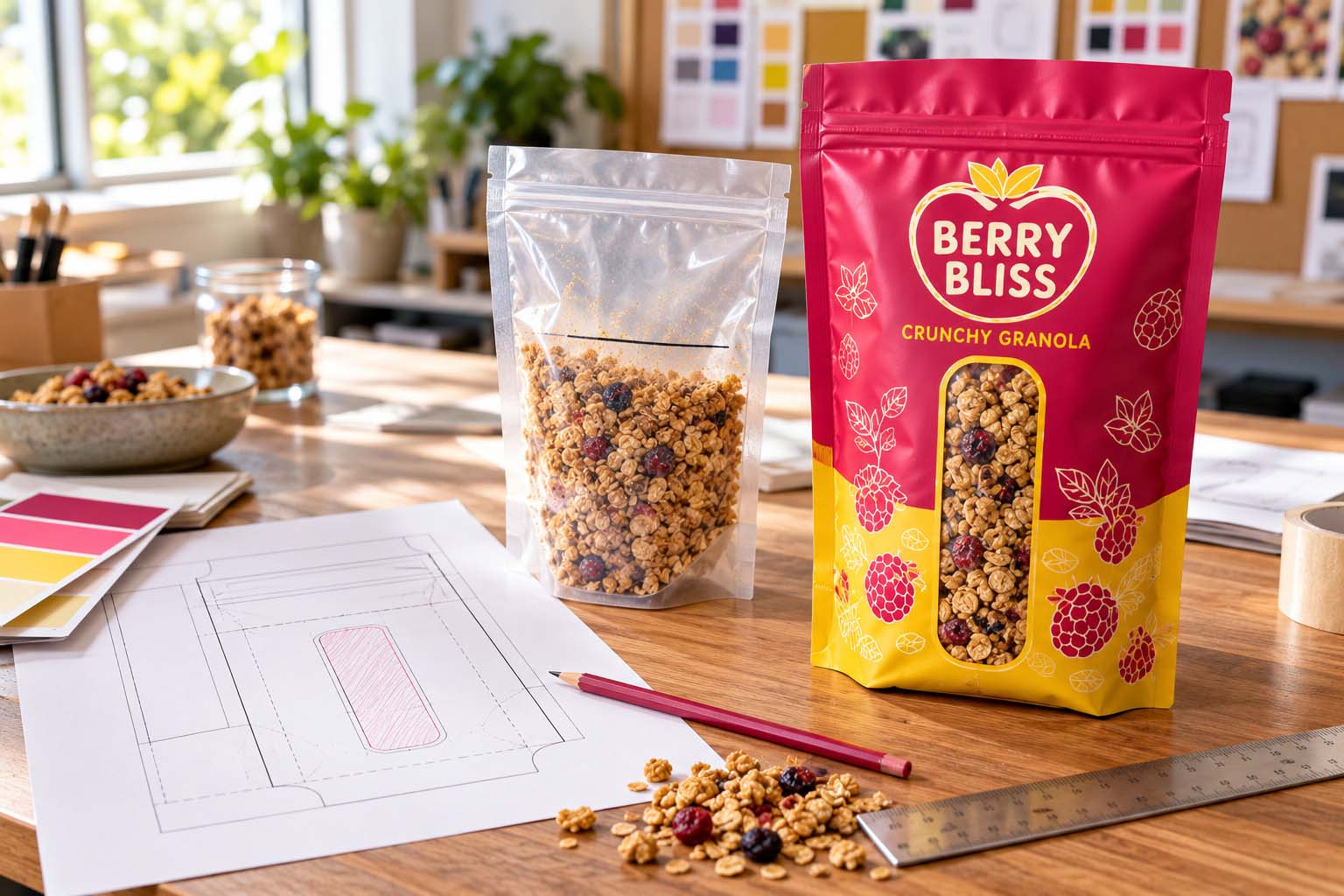
Do a settled fill test before you finalize the dieline. Fill a sample pouch with real product at your real weight, seal it, and shake it, tap it and drop it gently on a table for a minute or two, the way a truck ride would. Then mark where the top of the product ends up. That mark, not the original fill height, is your design line.
Keep the top of the window below the settled line. Leave a margin so normal variation from bag to bag never pushes the product below the window. A smaller window that is always full looks far better than a big one that is half empty.
Use a tall, narrow window instead of a wide one near the top. A vertical strip that runs down the front of the bag always shows product somewhere along its length, even after settling.
Right-size the bag for the settled volume. If the settled product sits far below the top, the bag may simply be too big for the fill weight. A smaller bag looks fuller, costs less and shows the product better. Short runs on digital printing make it easy to test a size before you commit.
Recheck when the recipe changes. A new cluster size, a different nut mix or a lighter cereal can change how much the product settles, and the old window may stop working.
How Savor Brands Handles This
We would much rather move a window on the dieline than hear about it from a store.
- We ask what the product is and how it ships, because loose and fragile foods need a different window position than dense ones.
- We look at window size, shape and position together with the bag size, as part of planning your custom food packaging.
- We help you test with real product before a full run, so the window is placed for the settled fill, not the filler.
- We keep the dieline the same on reorders, so a window that works keeps working.
Wrapping It Up: Design for the Bag the Shopper Sees
A pouch that looks half empty on the shelf is usually not short filled. The product settled on the trip, and the window was placed for the fill height on your line instead of the fill height at the store. Do a settled fill test, keep the window below the settled line, favor tall narrow windows, size the bag to the settled volume, and recheck when the recipe changes.
Do that and every window shows exactly what you want shoppers to see: food. If you are planning a window pouch, tell us about your product and we will help you place it. For the other trade-off windows bring, see why your clear window shortens shelf life.
Ready to Create Packaging That Elevates Your Brand?
Let's bring your product to life on the shelf.
Get a Free Quote