Digital or Rotogravure? The Printing Choice Behind Every Food Bag
Every food bag on a shelf was printed one of two ways, and the method was chosen long before the artwork was. A shopper cannot tell digital from rotogravure by looking. The difference is in how many bags you have to buy, how fast you get them, and how easily you can change the design later.
Overview
Every food bag on a shelf was printed one of two ways, and the method was chosen long before the artwork was. Digital and rotogravure both put your design on the film, and both build the same bag. A shopper holding two finished pouches cannot tell you which press made which one.
The difference is in the economics, not the look. It shows up in how many bags you have to buy, how much that first order costs, how fast it arrives, and how easily you can change the design next time. The short version is this: digital printing fits lower volumes, multiple flavors, and designs that are new or still changing, while rotogravure fits very high volumes of a design that has settled down. This guide explains why that is true so you can tell which side of the line your brand sits on right now.
Two Ways to Get Your Art Onto the Bag
Both methods print onto the same rollstock and build the same formats. What changes is how the image gets onto the film in the first place.
Digital printing works like a very good office printer scaled up for packaging. There are no plates and no tooling. Your artwork goes from a file straight to the press, which lays ink directly onto the roll. Changing the design means changing the file, and nothing else.
Rotogravure, usually just called gravure, prints from engraved cylinders instead. For every color in your design, a metal cylinder is engraved with millions of tiny cells that hold ink, and that cylinder transfers its color onto the film as the roll runs past at speed. The engraving is precise, hard-wearing, and expensive, and it exists only for your specific design. That single difference, a file on one side and a set of engraved cylinders on the other, drives everything else that matters.
Rotogravure Is Built for the Long Run
Gravure is the old gold standard of package printing, and it earned that name. Once the cylinders are engraved, the press runs fast, runs for a long time, and barely varies from the first bag to the millionth. The color is dense and even, fine detail holds, and it handles metallic inks and exact spot colors that are hard to hit any other way.
The catch is the setup. You pay to engrave a cylinder for every color before a single sellable bag comes off the press, and that cost is the same whether you end up printing ten thousand bags or ten million.
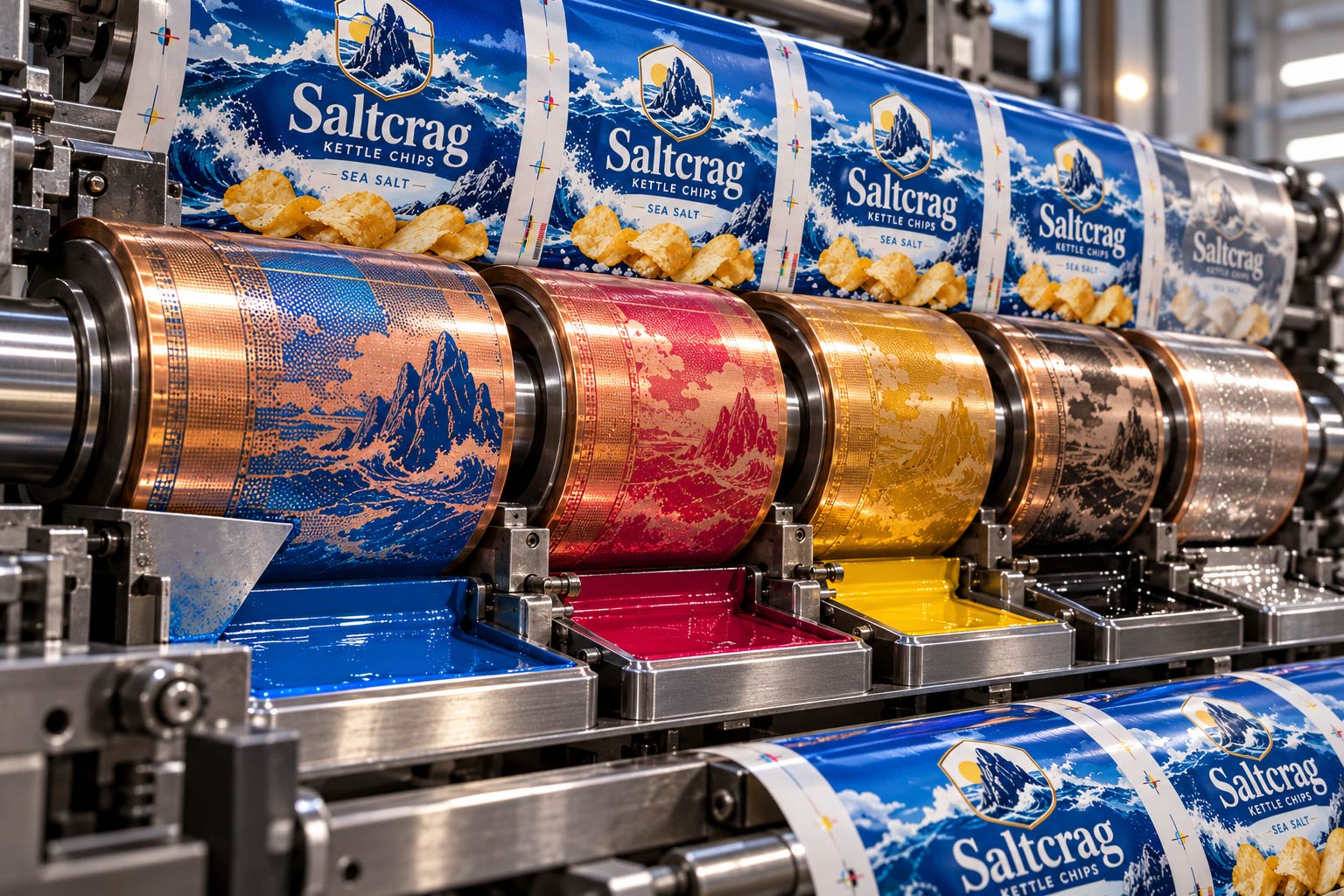
So gravure only makes sense when you can spread that setup across a very large run. Rotogravure printing is where big, established brands live, because they order in the volumes that shrink the cylinder cost down to a fraction of a cent per bag. Order too few against those cylinders and the setup alone can cost more than the bags.
Digital Is Built for Flexibility
Digital printing removes the cylinders entirely, and with them the setup cost and the wait to engrave them. That changes what is possible for a newer or smaller brand.
Because there is no per-color tooling, you can order far fewer bags and still get full, edge-to-edge printed packaging rather than a label stuck on a blank. You can print several flavors in one run without paying a separate setup for each. You can fix a typo, update a claim, or refresh the art for your next order without buying anything new. And the bags arrive sooner, because engraving time is off the schedule. Digital printing is the reason a brand can launch a fully custom printed bag at a few hundred units instead of tens of thousands.
The trade sits at the far end of the volume scale. Digital has a fairly flat cost per bag, so it does not keep getting cheaper the way gravure does once the quantities get huge. At some point, volume tips the math back toward cylinders.
The Number That Decides It Is Your Run Size
If you look at one thing to make this call, look at how many bags you need per design, per order. That single number sorts most of it out.
- Small runs, where you are testing a recipe or launching a first SKU, point to digital. Our custom digital minimum is 500 bags per design, which is low enough to get real printed packaging on the shelf without a warehouse full of inventory.
- Mid-size runs, and especially any brand carrying several flavors or sizes, usually still favor digital, because the flexibility is worth more than the small per-bag savings gravure would offer at that level.
- Very high runs of one stable design are where gravure pulls ahead, because the setup finally disappears into the volume and the per-bag price drops below anything digital can match.
Notice that run size is per design. Five flavors of ten thousand bags each is not one big gravure job, it is five separate cylinder sets. That math is exactly why multi-flavor brands lean digital far longer than their total volume alone would suggest.
Where Digital Does Things Gravure Cannot
Some of digital's advantages are not about cost at all. They are things engraved cylinders simply cannot do.
Because each bag is printed from a file, the file can change from one bag to the next. That means you can version a design, print different names, batch codes, regional text, or limited editions in a single run, with no new tooling. You can run a short seasonal bag and never print it again without stranding a set of cylinders. You can send a new brand to market, watch which flavors sell, and reprint only the winners.
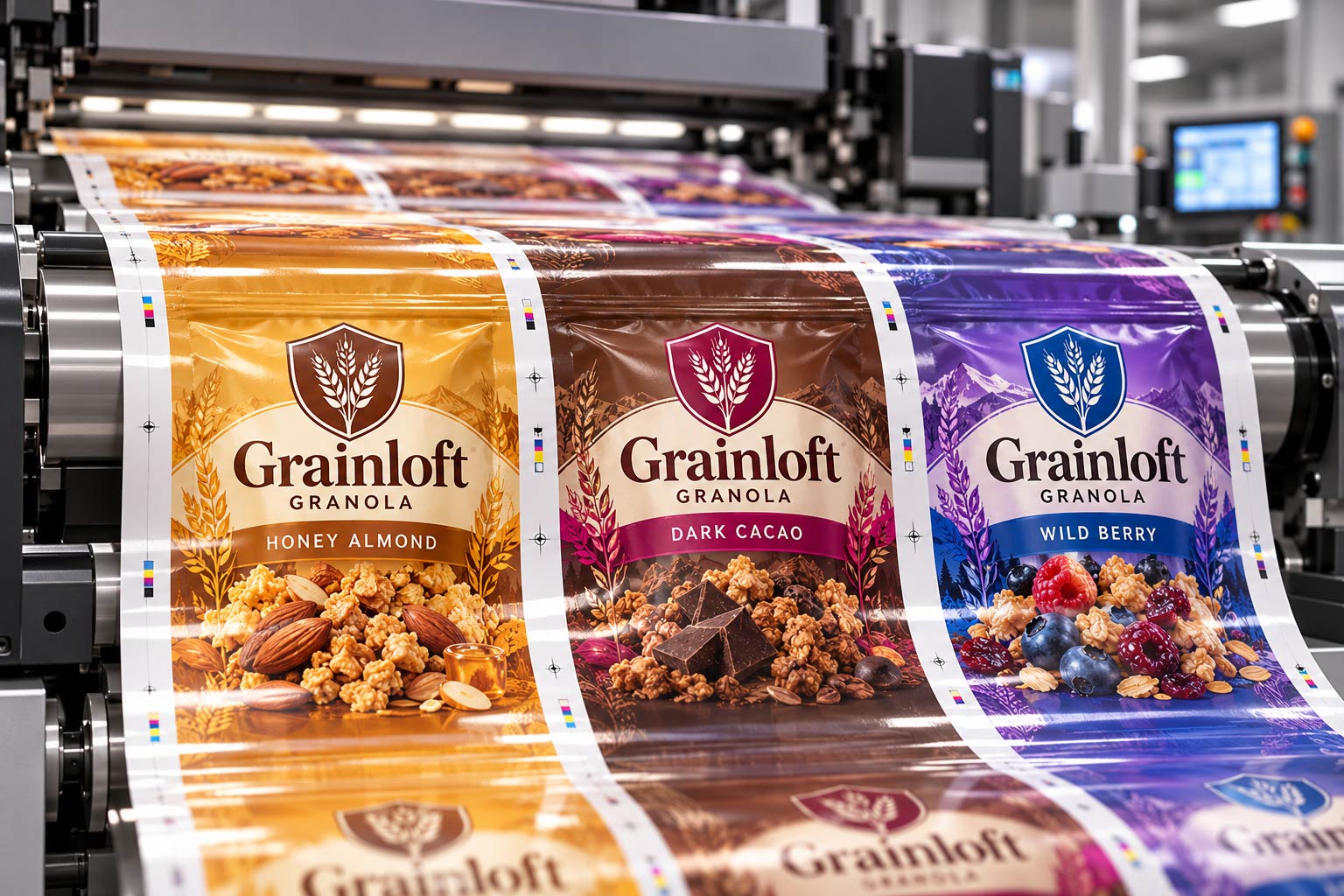
For a brand that is still learning what its shelf should look like, that freedom is often the whole reason to choose digital, long before the cost comparison enters into it.
Where Rotogravure Still Wins
It is worth being just as clear about the other side, because gravure is not the old way that digital replaced. It is still the right answer for a large category of work.
When you are printing one settled design in very large quantities, gravure gives you the lowest cost per bag by a wide margin, the most consistent color across an enormous run, and the easiest path to specific metallics and premium finishes. A national brand selling millions of identical bags a year is not being old-fashioned by using gravure. It is using the method that fits its volume, exactly the way a startup using digital is using the method that fits its.
Most Brands Start Digital and Grow Into It
For a new or growing food brand, these two methods are usually not a one-time choice between rivals. They are two stops on the same road.
A sensible path looks like this. Prove the product first, sometimes on stock bags with a printed label before you commit to any custom print at all. Move to custom digital printing once the brand is set, so you get full printed bags at a low minimum and can still adjust the art. Then, as a hero SKU climbs into very high, steady volume, graduate that one product to gravure for the per-bag savings, while keeping new flavors and seasonal runs on digital. If you are not sure which bag style the printing even goes on yet, start with our guide to food packaging formats, and our custom food and product packaging team can match the press to the stage you are actually at.
Wrapping It Up: Match the Press to the Stage You Are In
Digital and rotogravure are not better and worse. They are built for different volumes, and the whole decision comes down to how many bags you need per design and how often that design will change.
If you are launching, testing, carrying several flavors, or still refining the look, digital gives you real printed packaging at a low minimum with the freedom to change your mind. If you are shipping one proven design in enormous numbers, gravure gives you a cost per bag nothing else can touch. Figure out which of those describes you today, choose that press, and let the other one wait until your volume, not your ambition, says it is time.
Ready to Create Packaging That Elevates Your Brand?
Let's bring your product to life on the shelf.
Get a Free Quote