
Your Pouches Are Not Warped. The Roll Still Remembers.
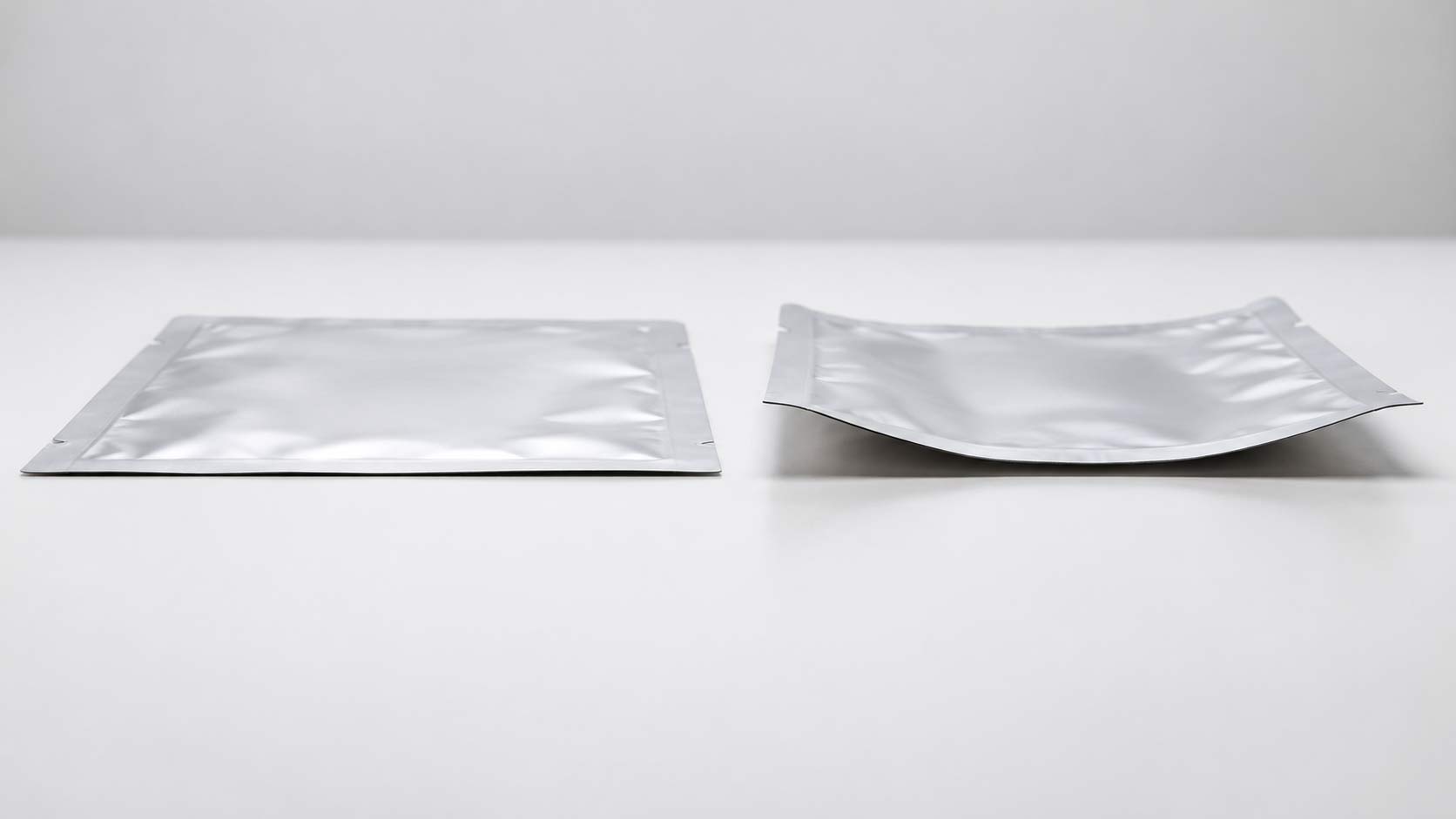
A pallet of pouches arrives and they will not sit flat. They cup, or they lean, or the stack fans out instead of squaring up. On the line they feed crooked, the seal bar does not get a flat surface to work with, and somebody says the bags were cut wrong. They were not. A laminate is several films bonded together and wound under tension, and that stack of materials holds a memory of how it was made.
Overview
The pallet looks fine. You cut the stretch wrap, pull a handful of pouches off the top, and they will not lie down. They cup slightly along one edge, or the whole stack fans out instead of squaring up. On the line they feed crooked, the denester grabs two instead of one, and the seals come out with faint wrinkles running through them.
The conversation that follows is almost always about whether the bags were cut square. They usually were. What you are looking at is not a cutting error or a warped bag. It is a material holding a shape it was given before it was ever a bag, and the reason it holds that shape is worth understanding, because the fix is upstream of anything you can do on the floor.
A Laminate Is Several Materials Arguing With Each Other
Start with what the film actually is. Almost nothing in food packaging is a single layer. A pouch is typically two or three films bonded together with adhesive, each chosen for a different job: one for printing and toughness, one for barrier, one for sealing.
Those films are not the same material. They expand and contract by different amounts when the temperature changes, they take up moisture differently, and they shrink by different amounts as the laminating adhesive cures. Bond them face to face and you have locked two materials with different instincts into one sheet.
When one ply wants to be slightly shorter than the other, the sheet cannot stay flat. It curls toward whichever side is pulling harder. That is the whole mechanism, and it is the same reason a plywood panel cups when one face dries faster than the other.
Then It Gets Wound Onto a Core
The second half of the story is the roll itself.
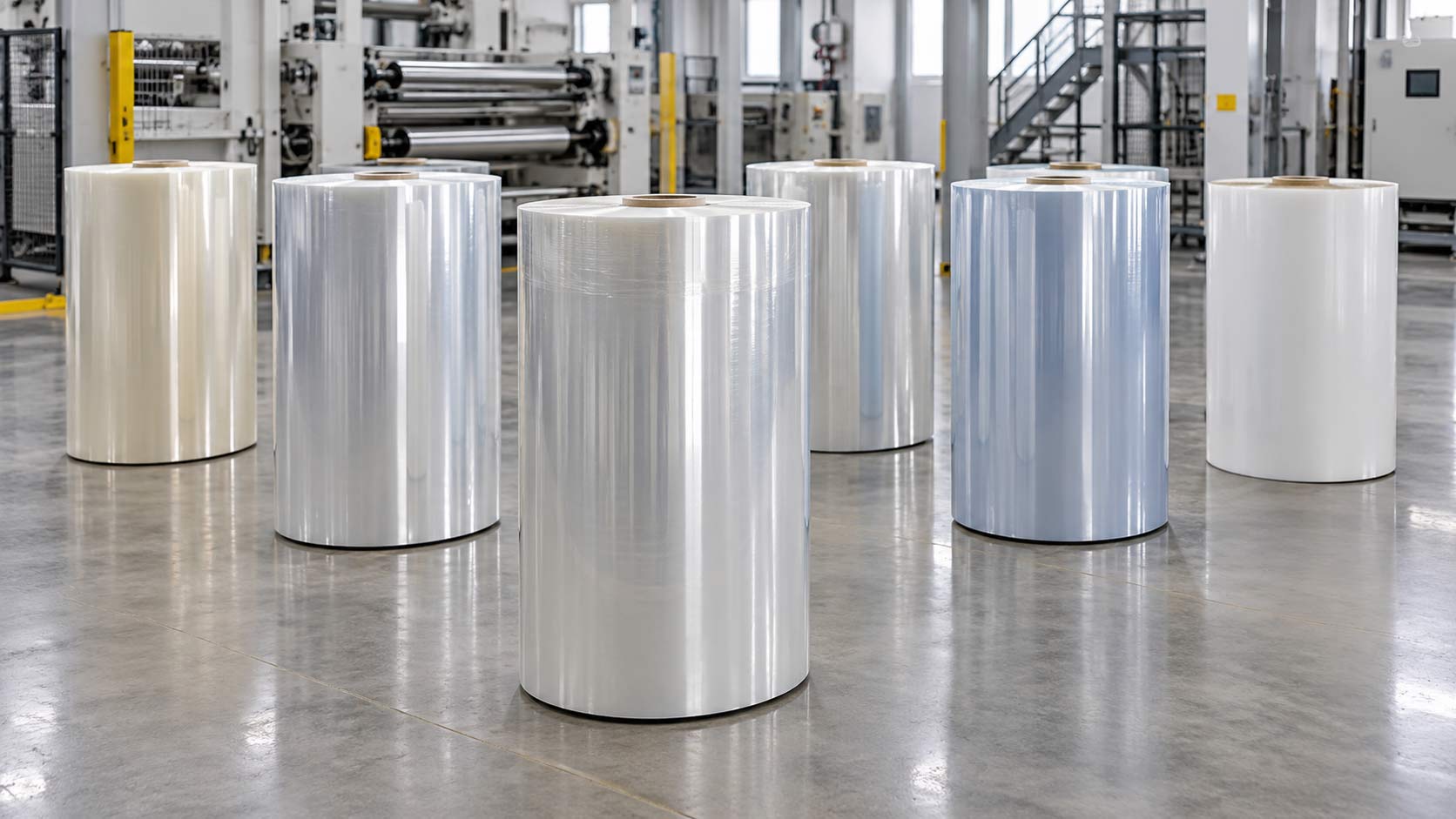
Film is wound onto a core under tension, which is necessary: a loosely wound roll telescopes, shifts, and damages itself. But tension stores energy in the material, and the layers near the core sit at a much tighter radius than the layers near the outside. The film takes a set from that, the way a poster rolled in a tube does.
Those two effects stack. The laminate already wants to curve one way because of how it was bonded, and the winding adds a curve of its own. Depending on which direction each one pulls, they can cancel out or they can add up. This is why the same structure can run beautifully from one roll and badly from another, and why the problem sometimes appears only as a roll runs down toward the core.
What Curl Actually Costs You on the Line
None of this matters until the film has to be handled by a machine, and then it matters a great deal.
- Feeding. A pouch that does not lie flat does not sit predictably in a magazine, so the pick is unreliable and double feeds happen.
- Tracking. On a form fill seal line, a web with curl or sideways bow wanders instead of running true, and registration drifts with it.
- Sealing. A seal bar needs two flat surfaces pressed together. Curl puts a wrinkle in that interface, and a wrinkle is a channel, which is a leak path that passes a visual check and fails later.
- Squaring. Filled pouches that each lean the same way will not stack square, so pallets go out of plumb and loads shift in transit.
- Shelf. A stand up pouch with a curl in the front panel never faces the shopper quite straight.
That sealing point is the expensive one. Everything else announces itself immediately on the line. A wrinkled seal ships.
Why Humidity and Temperature Make It Come and Go
Here is the part that makes curl feel random, and the reason a roll that ran fine in March causes trouble in August.
Some packaging materials take up moisture from the air and change dimension when they do. Anything with a paper or kraft component is especially responsive. So a laminate that is balanced at one humidity is not balanced at another, and the curl can appear, disappear, or reverse direction with the weather and the season.
Temperature does something similar. A roll that has been sitting in a cold trailer and gets pulled straight onto a warm line has a temperature gradient through it, and the layers are not all the same size yet. Give that same roll a day in the plant and it often runs without complaint. The film did not change. It finished changing.
How Savor Brands Handles This
Curl is designed out and conditioned out, not corrected on the line. By the time a pouch is in a magazine, your options are bad ones.
- We balance the structure. A construction can be chosen so the plies pull against each other evenly instead of one dominating, which is a specification decision made before anything is printed.
- We let the laminate cure before it is converted. Adhesive shrinkage happens over time, and converting a laminate before it has settled locks the curl in. This is part of why our lead time is what it is, and it is a trade we make on purpose.
- We ask about your line. Whether you are running premade pouches into a denester or rollstock on a form fill seal machine changes what tolerance is acceptable, and a structure that is fine for one can be a nuisance on the other.
- We tell you how to store and condition it. Where rolls sit, how long before they run, and whether they stay wrapped matters, and it costs nothing once somebody says it out loud.
- We run the material, not just look at it. A sheet that lies flat on a bench can still misbehave at line speed, which is what a trial is for.
Why It Reads as a Cutting Problem
The misdiagnosis is reasonable, because every clue points the wrong way.
The pouch is the thing in your hand. It is the thing with a shape, it is the thing that will not lie flat, and it arrived in a box from a supplier. The obvious theory is that it left the supplier like that because somebody cut it badly or trimmed it off square.
But a cutting error gives you a bag with the wrong dimensions, and if you measure these they are almost always right. The outline is correct. It is the sheet that is not flat, and the sheet was not flat before it was ever cut. Measuring the bag will keep telling you nothing is wrong, which is exactly why the conversation stalls there.
Wrapping It Up: Lay It on a Table Before You Blame the Line
The single most useful thing you can do takes thirty seconds and no equipment.
Take a few pouches from different parts of the shipment, lay them on a flat table, and look at them from the side. If they all lift at the same edge, that is curl, and it is a material and conditioning conversation. If they are random, that is handling. If they lie flat on the table and still misbehave in the machine, now you genuinely are looking at the line.
Do the same with a cold roll before you run it. Let it sit, then check it again. A surprising number of intermittent sealing problems turn out to be a material that simply was not ready yet. If curl is costing you running time, send us the structure you are running and we will tell you whether it is balanced. Our posts on why zippers stop resealing and flex cracking and pinholes cover two more failures that get blamed on the bag when the cause is somewhere else entirely.


Ready to Create Packaging That Elevates Your Brand?
Let's bring your product to life on the shelf.
Get a Free Quote